
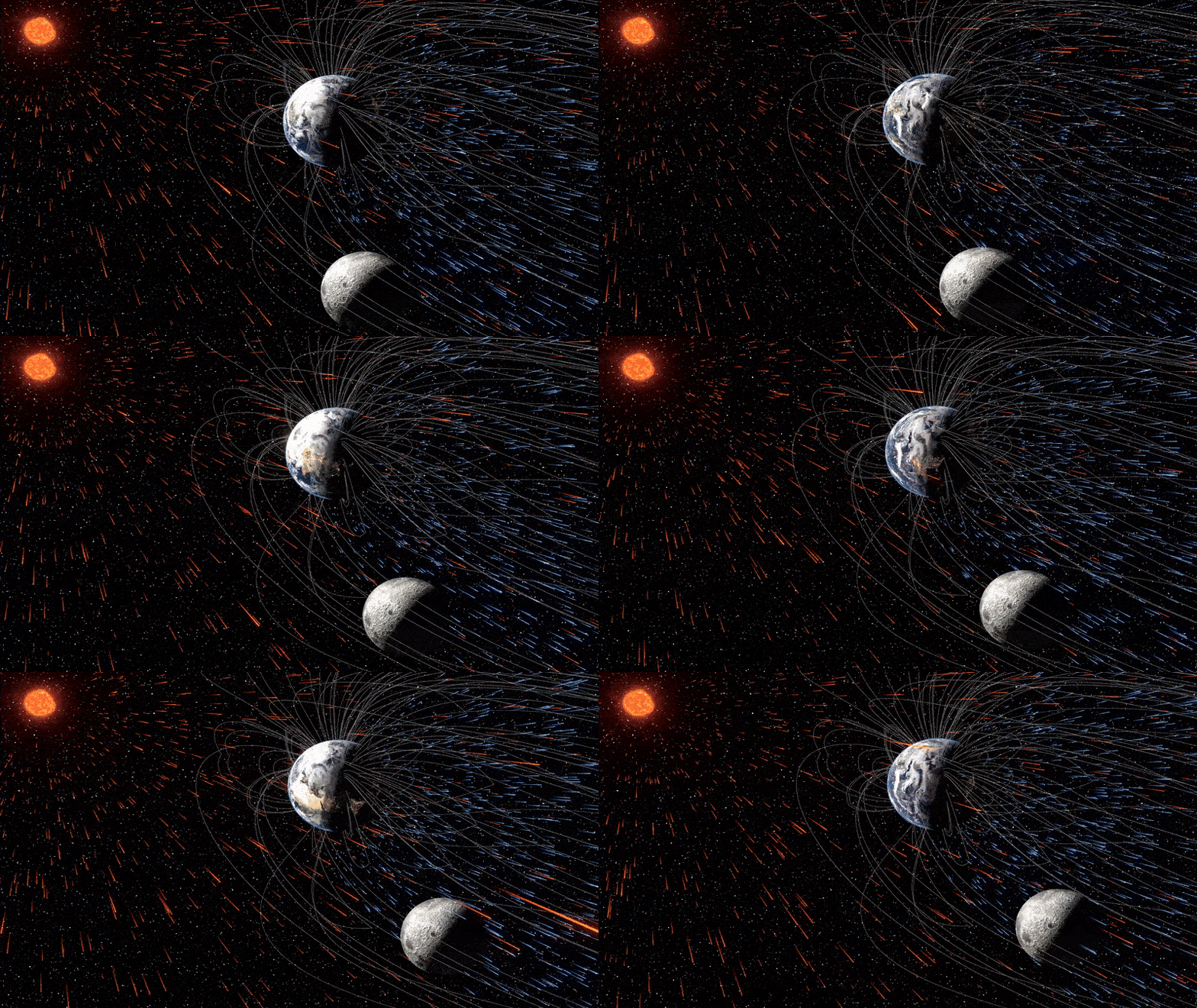
The moon has been quietly absorbing tiny bits of Earth’s atmosphere for billions of years, a new study reveals. This amazing incident of space cannibalism is thanks to the supercharged solar wind and, more importantly, to our planet’s magnetic field.
The discovery overturns a two-decade-old theory about how certain charged particles, known as ions, reach the moon’s surface, and could have major implications for future lunar missions, researchers said.
you may like
Since 2005, a leading theory has suggested that this mass transfer could only have occurred before Earth developed a magnetic field, or magnetosphere, because this invisible force field likely trapped atmospheric ions being blown away from Earth.
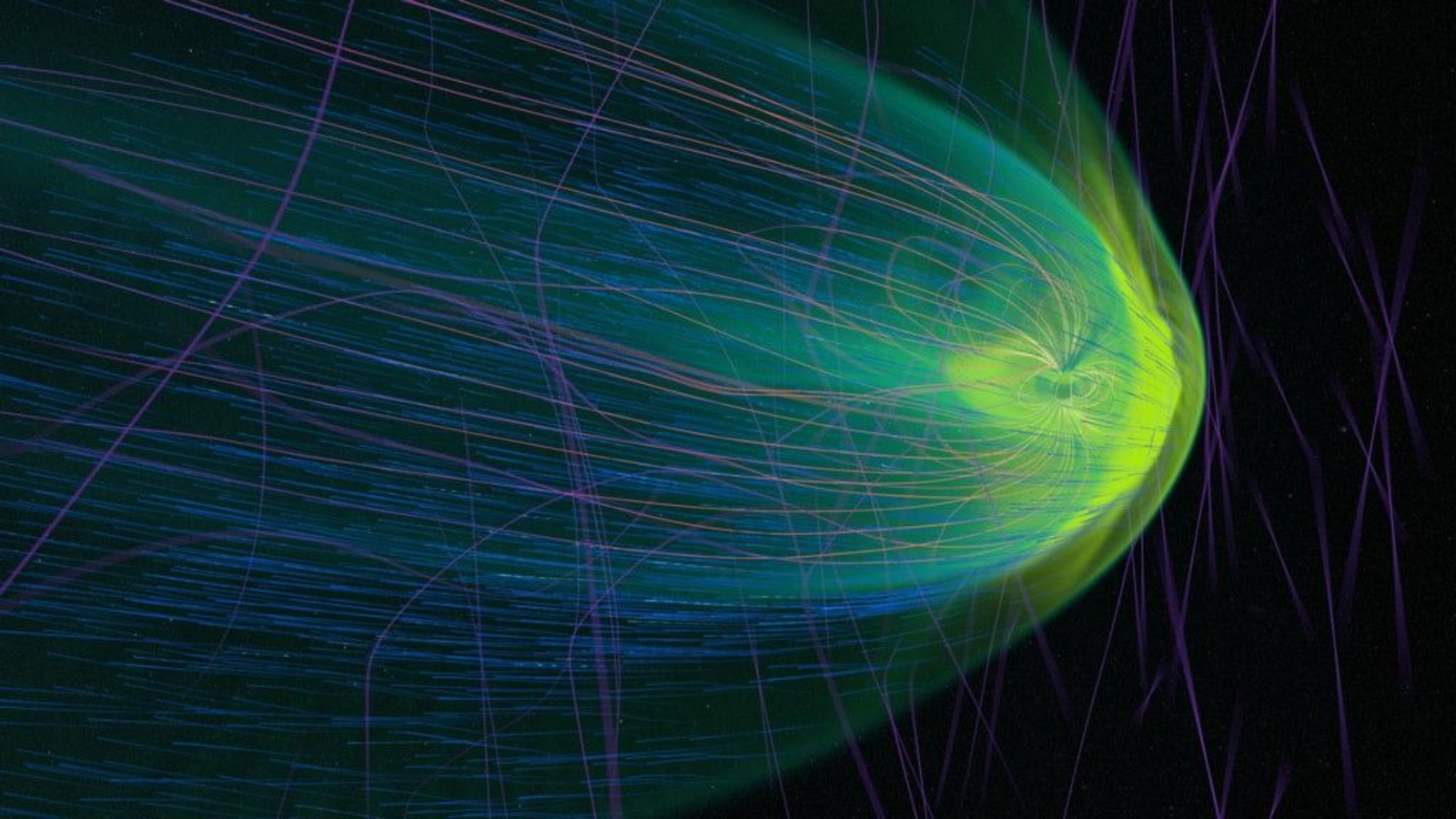
But in a new study published Dec. 11 in the journal Communication, Earth & Environment, scientists combined data from Apollo samples with computer models simulating the evolution of Earth’s magnetosphere and found that the movement of ions through the atmosphere is greatest when the moon passes through Earth’s magnetotail, the largest part of the magnetosphere that always points away from the sun. (This alignment occurs around the full moon of each month when the Earth moves between the moon and the sun).
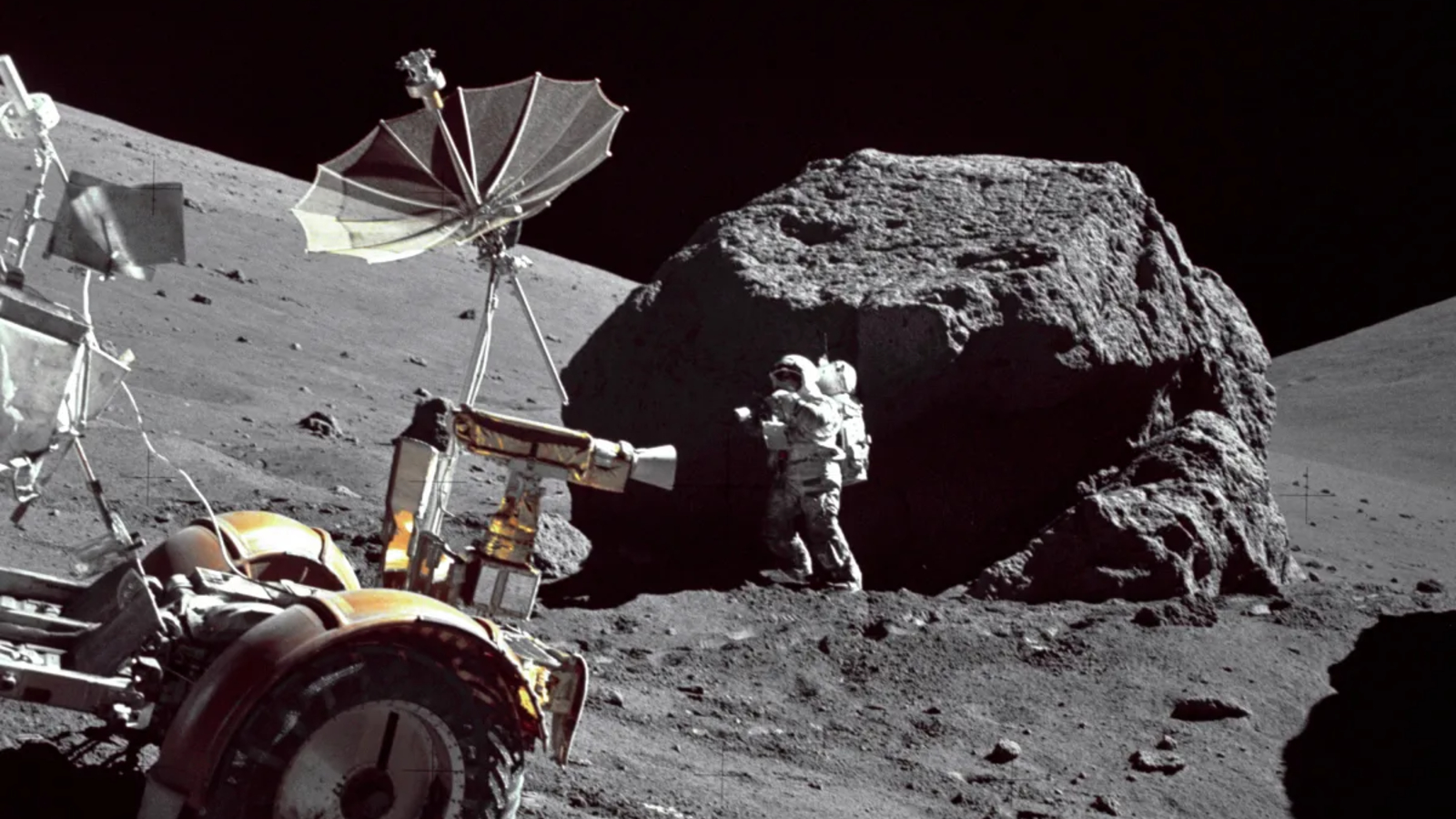
The model revealed that, rather than preventing atmospheric ions from being blown away from Earth, the magnetic field lines within Earth’s tail act as an invisible highway for charged particles, guiding them toward the Moon, where they settle in the lunar regolith.
This means that transport of atmospheric ions probably began soon after the magnetosphere formed about 3.7 billion years ago, and is likely still occurring today.
Until now, scientists thought the moon’s regolith contained only traces of Earth’s oldest atmosphere. But new research suggests that these samples may actually serve as time capsules for the atmosphere and magnetosphere.
“By combining data on particles stored in the lunar soil with computational modeling of how the solar wind interacts with Earth’s atmosphere, we can trace the history of Earth’s atmosphere and its magnetic field,” study co-author Eric Blackman, a theoretical astrophysicist and plasma physicist at the University of Rochester, said in a statement.
As a result, regolith collected by future lunar missions, including NASA’s Artemis mission, which aims to land on the moon by 2028, and China’s lunar exploration mission, which is already returning lunar samples to Earth, could help researchers fill in the holes in Earth’s geological history.
Earth is not the only solar system body that loses parts of itself to the solar wind. Mercury is often seen with long comet-like dust tails that are blown off its surface, and the moon also has a tail of ablated sodium ions that Earth repeatedly passes over.
By further studying how Earth loses its atmosphere to the moon, researchers hope to learn more about how this has happened elsewhere in our near universe.
“Our study may have broader implications for understanding early atmospheric escape on planets like Mars, which currently lack a global magnetic field but have had magnetic fields similar to Earth’s in the past,” study lead author Shvonkar Paramanik, a planetary scientist at the University of Rochester, said in a statement. Future research could help scientists “gain insight into how these processes shape the habitability of planets,” he added.
