
Close Menu
  • Home
  • Identity
  • Inventions
  • Future
  • Science
  • Startups
  • Spanish
What's Hot

Why measuring methane production is important

Infy ​​hackers resume operations with new C2 servers after Iran internet blackout ends

BIOSAFIRE advances naturally derived flame retardants using lignins and tannins

Facebook X (Twitter) Instagram
  • Home
  • About Us
  • Advertise with Us
  • Contact Us
  • DMCA
  • Privacy Policy
  • Terms & Conditions
  • User-Submitted Posts
Facebook X (Twitter) Instagram
Fyself News
  • Home
  • Identity
  • Inventions
  • Future
  • Science
  • Startups
  • Spanish
Fyself News
Home » Researchers discover new way to boost immune response to cancer
Inventions

Researchers discover new way to boost immune response to cancer
userBy userJanuary 8, 2026No Comments2 Mins Read
Share Facebook Twitter Pinterest Telegram LinkedIn Tumblr Email Copy Link
Follow Us
Google News Flipboard
Share
Facebook Twitter LinkedIn Pinterest Email Copy Link

Researchers at the University of Southampton have developed a promising new way to boost the body’s immune system’s response to cancer.

They used a specially designed multifaceted antibody to make the immune response more active against cancer-killing T cells.

Antibodies work by “capturing” and “clustering” multiple immune cell receptors, thereby boosting the signal that tells T cells to attack cancer.

They achieved this by focusing on an immune receptor called CD27, which requires a matching key (ligand) to activate T cells. This ligand is naturally produced in response to infection, but cancers lack this signal, and T cells are able to elicit only a weak response against cancer cells.

Tetraantennary antibodies revolutionize immune responses

Antibodies act like master keys, but the most commonly used antibodies are Y-shaped molecules with two prongs, meaning they can only bind to two receptors at the same time.

Antibodies have revolutionized cancer treatment, but some cancers don’t respond because T cells don’t receive all the signals they need to fully activate.

The antibody the researchers developed has four prongs, allowing it to capture more receptors and improve the body’s immune response.

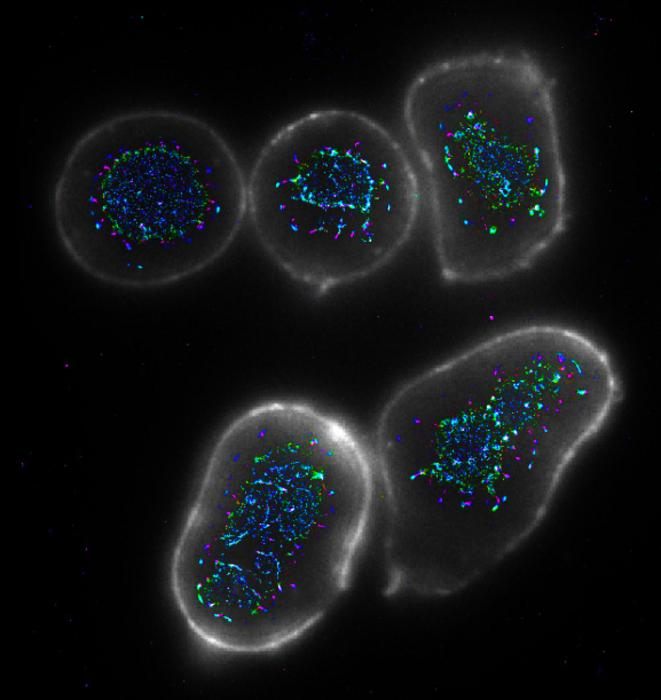
They also force all the CD27 receptors they hold together to clump together with the help of a second cell. This amplifies the signal and mimics the body’s natural activation of CD27.

Professor Aymen Al Shamkhani from the University of Southampton, who led the study, explains:

“Antibodies are reliable molecules that make for great drugs. But the natural antibody form wasn’t powerful enough, so we needed to create a more effective version.”

New antibodies target T cells more effectively

In laboratory studies using mouse and human immune cells, the new antibody was more effective than standard Y-shaped antibodies at activating CD8+ T cells, the “special power” of the immune system, resulting in stronger anti-tumor responses.

By increasing CD27’s responsiveness to therapeutic targets, the findings provide a blueprint for developing next-generation immunotherapies that harness the immune system to more effectively fight cancer.

Professor Al Shamkhani concluded: “This approach could help improve cancer treatments in the future by enabling the immune system to reach its full potential.”


Source link

#CreativeSolutions #DigitalTransformation. #DisruptiveTechnology #Innovation #Patents #SocialInnovation
Follow on Google News Follow on Flipboard
Share. Facebook Twitter Pinterest LinkedIn Tumblr Email Copy Link
Previous ArticleEvidence suggests that dark matter and neutrinos interact
Next Article Get hands-on with a prototype of Clicks’ Communicator, a new BlackBerry-like smartphone
user
  • Website

Related Posts

Why measuring methane production is important

February 5, 2026

BIOSAFIRE advances naturally derived flame retardants using lignins and tannins

February 5, 2026

European Commission launches €605 million Africa Initiative IV

February 4, 2026
Add A Comment
Leave A Reply Cancel Reply

Latest Posts

Why measuring methane production is important

Infy ​​hackers resume operations with new C2 servers after Iran internet blackout ends

BIOSAFIRE advances naturally derived flame retardants using lignins and tannins

n8n critical flaw CVE-2026-25049 allows execution of system commands via malicious workflows

Trending Posts

Subscribe to News

Subscribe to our newsletter and never miss our latest news

Please enable JavaScript in your browser to complete this form.
Loading

Welcome to Fyself News, your go-to platform for the latest in tech, startups, inventions, sustainability, and fintech! We are a passionate team of enthusiasts committed to bringing you timely, insightful, and accurate information on the most pressing developments across these industries. Whether you’re an entrepreneur, investor, or just someone curious about the future of technology and innovation, Fyself News has something for you.

Castilla-La Mancha Ignites Innovation: fiveclmsummit Redefines Tech Future

Local Power, Health Innovation: Alcolea de Calatrava Boosts FiveCLM PoC with Community Engagement

The Future of Digital Twins in Healthcare: From Virtual Replicas to Personalized Medical Models

Human Digital Twins: The Next Tech Frontier Set to Transform Healthcare and Beyond

Facebook X (Twitter) Instagram Pinterest YouTube
  • Home
  • About Us
  • Advertise with Us
  • Contact Us
  • DMCA
  • Privacy Policy
  • Terms & Conditions
  • User-Submitted Posts
© 2026 news.fyself. Designed by by fyself.

Type above and press Enter to search. Press Esc to cancel.