
Investigating the impact of space weather on Earth
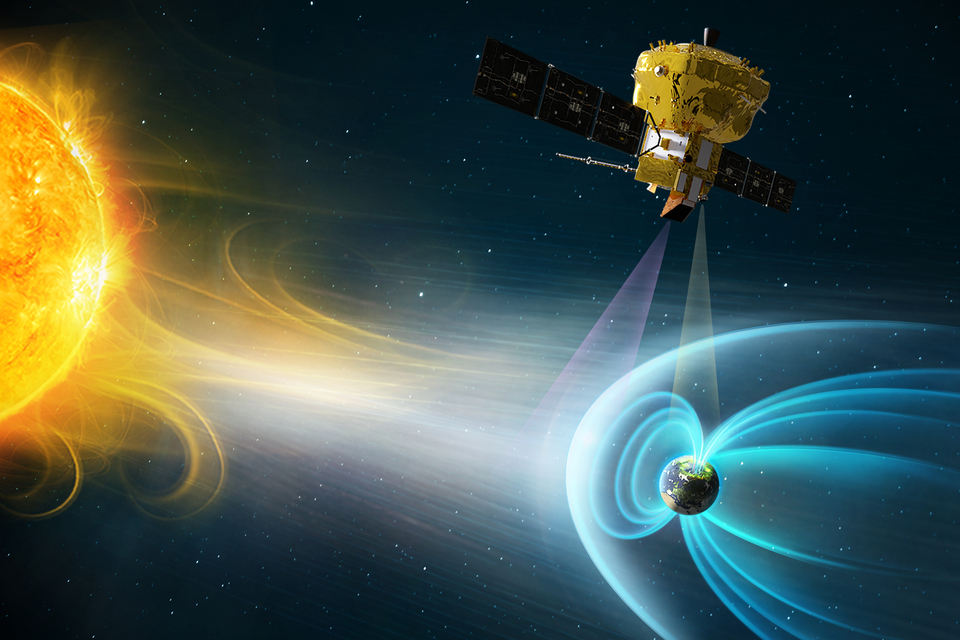
The new mission will use cutting-edge scientific methods to more fully understand the relationship between the Sun and Earth, helping to advance scientific knowledge and better understand the effects of space weather.
The SMILE mission will provide global 3D imaging of the Earth’s magnetosphere for the first time and investigate the dynamic response of the magnetosphere to solar wind influences.
SMILE is expected to answer three questions.
What is the fundamental mode of interaction between the solar wind and the magnetosphere during the day? What defines the substorm cycle? How do coronal mass ejection storms originate and what is their relationship with substorms?
The impact of extreme space weather on modern technology
Extreme space weather can disrupt modern technology, creating magnetic storms that affect satellite navigation, shortwave communications, and power grids.
A recent ESA study estimated that the potential socio-economic impact in Europe of a single extreme space weather event could reach €15 billion. Much of this confusion can be avoided with accurate predictions.
Relationship between the Earth’s magnetosphere and the solar wind
Earth’s magnetosphere is the strongest of all the rocky planets in the solar system and is thought to have played an important role in Earth’s habitability.
Scientists believe that the loss of the magnetosphere is the main reason Mars has lost most of its atmosphere and surface water.
To answer these questions, SMILE provides scientists with data and information about the location and shape of Earth’s outer magnetospheric boundaries (i.e., magnetopause, bowshock, and magnetospheric cusp) and auroras, and how the solar wind behaves next to them.
UK’s leading role in the SMILE mission
Leadership across mission science and SXI instruments will enable the UK team to shape SMILE’s scientific data in line with requirements and areas of expertise.
Deep knowledge of the equipment means that UK research sites are well placed to understand and exploit data in the post-launch research and discovery phase.
Chelmsford-based Teledyne e2v supplies SXI CCD detector devices priced at about $100. £1.5 million contract with ESA.
A joint industry-academia knowledge exchange with the Open University on the CCD development program will improve the space radiation resistance of the devices and sustain this important UK technology for commercial sales and export opportunities.
British company Photek Ltd has also been contracted to assemble cameras for UVI equipment.
The fields in which the UK is a world leader in planetary science (Earth and beyond), solar physics, space plasma and astrophysics are all underpinned by the science explored by SMILE.
The UK SMILE team is already conducting preliminary work with the Met Office Space Weather Operations Center to support its work with SMILE data.
Source link

