
Developing the microelectronics and photonics value chain in Quebec

Quebec needs to focus on microelectronics and photonics to become more globally competitive.
Quebec’s technology industry is at a strategic inflection point. On September 17, 2025, PRIMA Québec published a groundbreaking study titled “Developing a secure microelectronics and photonic value chain in Quebec.” The analysis, led by the SIA/Yole Group consortium, highlights specific niche areas where the state can position itself as a world leader while leveraging its significant mineral and material resources.
Sponsored by Innovation, Science and Economic Development Canada (ISED), the Ministry of Economy, Trade and Industry (MEIE), the Ministry of Natural Resources and Resources (MRNF), the Quebec Tecnam Innovation Zone, and the Ministry of Optonique and Electronic Systems Industry. At the Center of Excellence for the Province of Quebec (ISEQ), this research represents an important milestone for Quebec’s industrial and scientific strategy. It provides a detailed depiction of the Québec and international ecosystem, offering concrete pathways by which companies and institutions can strengthen their competitiveness in an ever-changing global landscape.
Comprehensive strategy overview
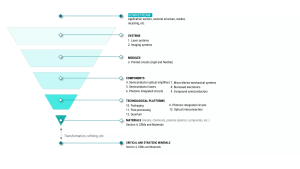
This study provides an in-depth analysis of the entire value chain of microelectronics and photonics, two areas that remain essential to strategic industries such as energy, aerospace, electric vehicles, defense, and life sciences. More than 85 minerals and materials used in these fields were investigated and evaluated. Fifteen of these were identified as important or strategic to Quebec’s interests.
Each market segment was analyzed according to four criteria: technology overview, market outlook, stakeholders involved, and Quebec’s position. Critical minerals were also analyzed with respect to their geopolitical context, export restrictions, economic vulnerabilities, and even local potential in terms of production, refining, and recycling. This rigorous methodology is based on research that includes more than 150 publications and more than 20 interviews with industry and institutional experts, providing a comprehensive overview of the opportunities and challenges facing states.
Seven themes that will guide the future
The analysis identified seven key themes to guide the state’s industrial and scientific strategy. These measures will ensure the sustainable development of the sectors concerned, while stimulating innovation and strengthening competitiveness.
The first theme concerns critical mineral resources, the availability and security of which are critical to sustaining regional value chains. Quebec enjoys privileged access to certain strategic minerals. Research shows that this benefit should be optimized through advance planning and targeted investment.
The second theme focuses on value chain integration and calls for increased cooperation between researchers, manufacturers, and user industries to ensure local production and improve resilience to global disruptions.
The third theme is joint research and development. Partnerships between universities, research centers and businesses can be leveraged to accelerate innovation while delivering internationally competitive solutions.
The fourth theme focuses on the recovery of mine residues, including the use of “urban mines” resulting from e-waste and industrial waste. This approach belongs to the circular economy vision and can reduce the state’s import dependence while limiting its environmental impact.
The fifth theme is industrial sophistication. Although some emerging technologies in microelectronics and photonics look promising, large-scale production remains a challenge. Industrial planning and investment in the right infrastructure are essential for turning innovation into commercial success.
The sixth theme calls for the creation of national and international strategic alliances. In a global context characterized by protectionism and the concentration of critical minerals in certain countries, the Alliance will help secure resources and expand Quebec’s access to international markets.
Finally, the seventh theme concerns the development of a culture that fosters synergies between sectors. Fostering collaboration between industry and science creates a more resilient and dynamic ecosystem that can respond quickly to changes in global markets.
International situation that calls for action
According to the report, the current international climate requires a new perspective on supply chains and industrial strategy. Increasing protectionism and control of critical minerals and materials by certain countries poses significant risks to strategic industries, but also business opportunities for regions that can secure and integrate production capacity at a regional level.
In this context, microelectronics and photonics can play a central role in many industrial fields. Digital and energy-related technologies rely on specific materials and complex processes that require scientific expertise, industrial innovation and vertical integration. Quebec is home to these assets, with an innovative industrial structure, recognized expertise and privileged access to certain strategic resources.
Strategies to stimulate innovation and create business opportunities
“Québec has everything it needs to play a key role in the global energy and digital transition,” said Marie-Pierre Ippersiel, President and CEO of PRIMA Québec. “By highlighting the potential behind our microelectronics and photonics sector, along with our strategic minerals and materials, this study identifies niche areas that can stimulate innovation, create business opportunities and position our companies and researchers as leaders on the international stage.”
This vision relies on collaboration between relevant industrial and scientific stakeholders and our ability to secure resources and foster regional innovation. Here, the report points to Ambition 2035, a concrete roadmap that will help Quebec strengthen its position in the global market while developing sustainable and competitive solutions.
PRIMA Québec, a catalyst for collaborative innovation
PRIMA Québec plays a central role in promoting and supporting the advanced materials ecosystem. The organization works to foster Quebec’s economic development by bringing together researchers, businesses and public partners by fostering collaborative innovation. Through government and private sector support, PRIMA Québec is a driver of strategic partnerships, technology experimentation, and dissemination of expertise.
This approach not only helps Quebec companies strengthen their competitiveness, but also enables them to play an active role in global technological transformation. The evolving microelectronics and photonics sector provides fertile ground for innovation, value creation and strengthening the circular economy, leveraging local resources while minimizing environmental impact.
Strengthening global positioning
This study highlights Quebec’s potential to become a leader in emerging microelectronics and photonics technologies. By mobilizing local resources, talent and infrastructure, the state can further secure and integrate value chains while meeting global needs for strategic technologies.
Developing critical minerals, joint R&D investments, and strengthening strategic alliances remain essential to converting technological potential into economic success. Public and private stakeholders must therefore seize these opportunities to foster innovation while strengthening Quebec’s role on the international stage.
By combining scientific expertise, industrial innovation and responsible supply strategies, Quebec positions itself as a model for sustainable and competitive technology development that can meet global challenges while fostering regional prosperity.
This article will also be published in the 25th issue of the quarterly magazine.
Source link

