
Close Menu
  • Home
  • Identity
  • Inventions
  • Future
  • Science
  • Startups
  • Spanish
What's Hot

Consumer watchdog warns about Google’s AI agent shopping protocols — Google says she’s wrong

Ring founder details camera company’s ‘intelligent assistant’ era

Doctors think AI can play a role in medicine, but maybe not as chatbots

Facebook X (Twitter) Instagram
  • Home
  • About Us
  • Advertise with Us
  • Contact Us
  • DMCA
  • Privacy Policy
  • Terms & Conditions
  • User-Submitted Posts
Facebook X (Twitter) Instagram
Fyself News
  • Home
  • Identity
  • Inventions
  • Future
  • Science
  • Startups
  • Spanish
Fyself News
Home » What is the world’s oldest river?
Science

What is the world’s oldest river?

userBy userJanuary 11, 2026No Comments4 Mins Read
Share Facebook Twitter Pinterest Telegram LinkedIn Tumblr Email Copy Link
Follow Us
Google News Flipboard
Share
Facebook Twitter LinkedIn Pinterest Email Copy Link

Rivers may seem as old as hills, but like anything else in nature, they have a life cycle. Many grow, leaving a meandering mark on the landscape, and eventually die. However, some rivers last longer than others. So which is the oldest river in the world today?

The winner is older than the dinosaurs. Australia’s Finke River, or Larapinta River in the indigenous Arrernte language, is between 300 and 400 million years old.

This network of rivers and waterways stretches over 400 miles (640 kilometers) across the Northern Territory and South Australia. Due to the arid conditions in the center of the continent, rivers flow only intermittently. For most of the year, it exists as a series of isolated waterholes. However, by combining geological records, weathering profiles, and radionuclide measurements of surrounding sediments and rocks, scientists were able to date the river system back to the Devonian (419 million to 359 million years) or Carboniferous (359 million to 299 million years) period.

you may like

One of the strongest pieces of evidence for its antiquity is a geological anomaly called transaxial drainage, said Victor Baker, a geomorphologist at the University of Arizona. Rather than flowing parallel to resistant rock structures such as quartzite, the Finke River traverses these hard mineral formations as it passes through the MacDonnell Ranges of central Australia.

Because water always takes the easiest path, it is counterintuitive that rivers flow toward hard rocks rather than along them. The existence and origin of drainage across this axis therefore reveals important details about the historical course of the Finke River.

“There is some suggestion that pre-existing drainage was flowing as this area expanded,” Baker told LiveScience. “This is called an antecedent phenomenon. Basically, the rivers were there before the mountains were formed, and as the crust is pushed up, the rivers are carved away.”
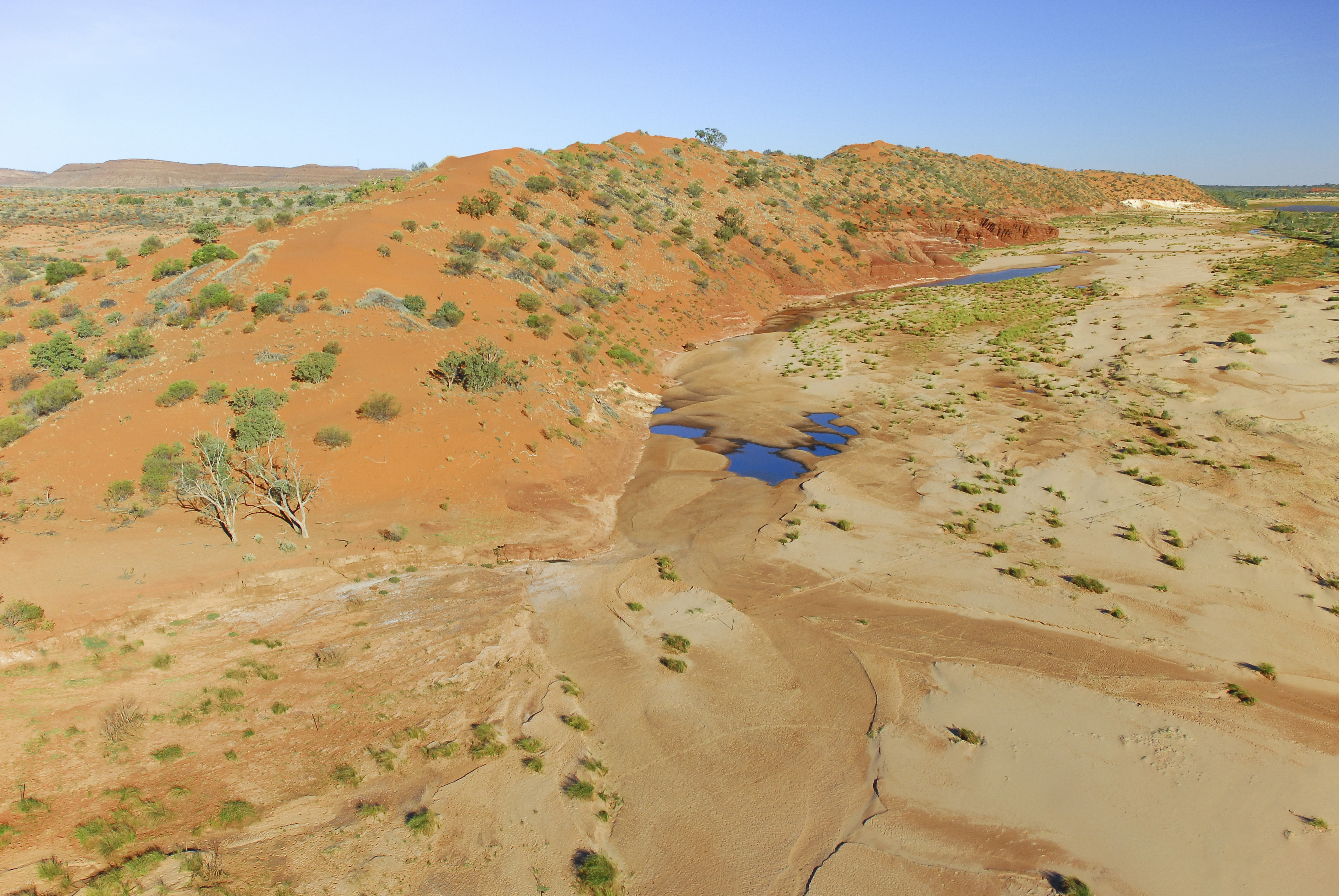
A little bit of blue spreads out in the desert covered with shrubs.

The Finke River flows into sand dunes on the edge of the Simpson Desert in Australia’s Northern Territory. (Image credit: Auscape/Universal Images Group, Getty Images)

The MacDonnell Ranges (also known as Chorica in Arrernte) were formed as part of the Alice Springs Orogeny (a tectonic mountain building event that occurred between 300 and 400 million years ago), and the Finke Ranges are at least as old as these ranges.

Subsequent evidence comes from erosion and weathering, which produce specific chemical profiles. This information shows how and where the surface interacted with the atmosphere and water flows over time. Scientists can also use the radioactive signature of certain isotopes (elements with different numbers of neutrons in their atomic nuclei) to infer the ages of these rocks. Because radioactive isotopes decay at a constant rate, it is possible to estimate when a rock was formed by calculating backwards from the relative proportions of various isotopes. Combining these data points creates a roadmap for piecing together the history and evolution of the Finke River.

However, rivers are constantly changing, with some growing larger each year and others drying up completely. So why did the Finke regime last so long?
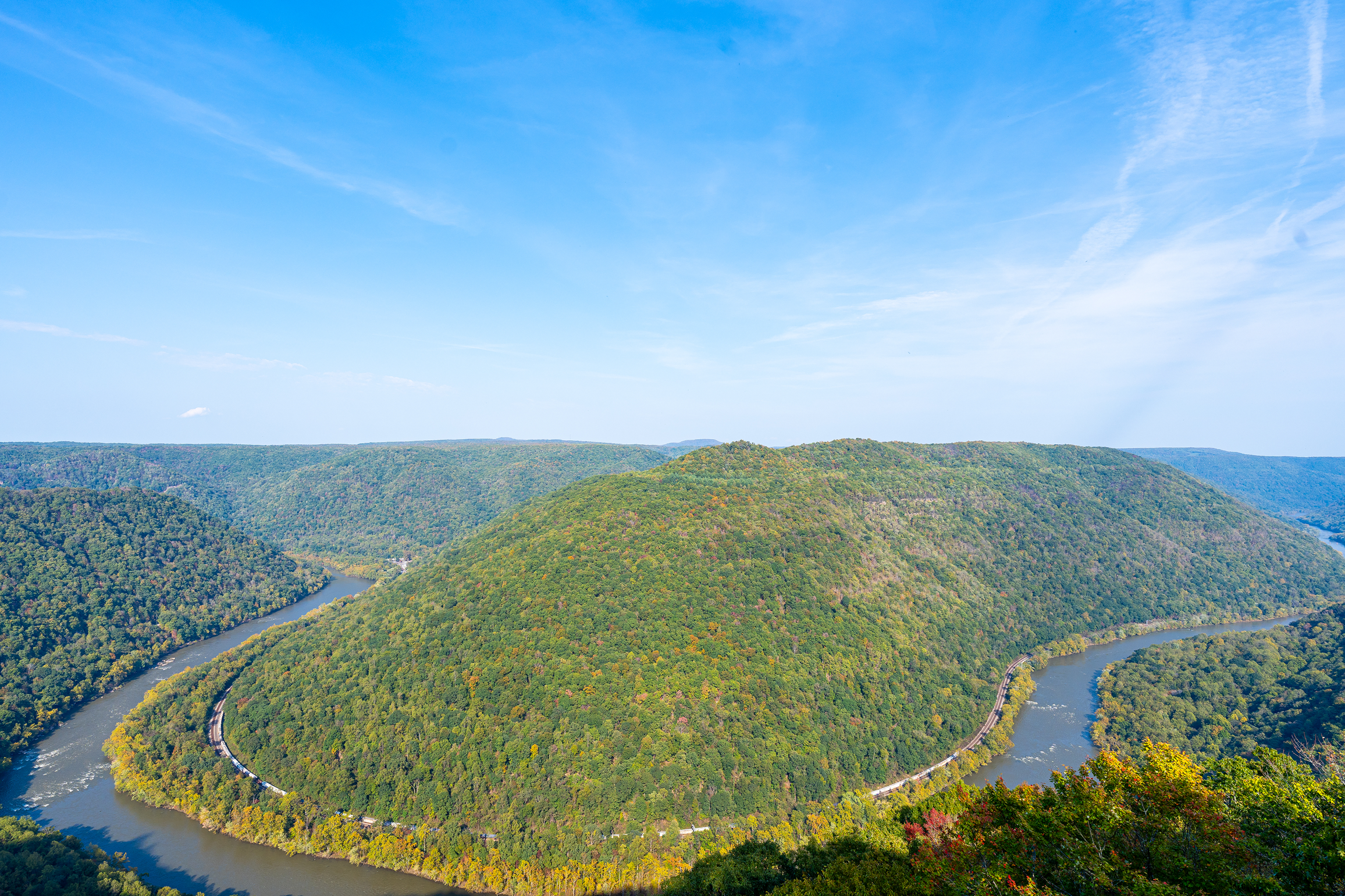
West Virginia's New River Gorge National Park as seen from the beautiful Grand View overlook.

The New River, found in West Virginia’s New River Gorge National Park, is approximately 300 million years old. (Image credit: Eli Wilson/Getty Images)

“Rivers can disappear if a large input of sediment overwhelms them (e.g., a volcanic eruption), or if the landscape changes so dramatically that flowing water takes a new course across the landscape (e.g., advancing and retreating glaciers),” Colorado State University geologist Ellen Wall told LiveScience in an email.

you may like

Additionally, “climate change and human consumption of water could cause rivers to stop flowing,” Wall said. “The stability of the Earth’s crust and the lack of glaciers during the Pleistocene (2.6 million to 11,700 years ago) led to a longer lifespan.”

For the Finke people, Australia has had an unusually stable landscape for a very long time. The continent, located in the middle of the Australian plate, has experienced virtually no significant tectonic activity in the past hundreds of millions of years, Baker explained. As a result, the Finke River system was able to develop and expand with little interruption for most of its history.

As for the future, it is difficult to say how long Finke will continue as coach.

“Long lasting [rivers] That’s probably going to continue,” Wall said. However, “many dryland rivers” such as the Finke have been “significantly altered by human water consumption”.

He added: “This amount is likely to increase in the future as global water consumption continues to rise and global warming is making many arid regions even drier.”

If the Finke River dries up, Baker said the runner-up could be the New River. The river dates back about 300 million years and currently flows through Virginia, West Virginia, and North Carolina.

What’s Inside the Earth Quiz: Test your knowledge about Earth’s hidden layers


Source link

#Biotechnology #ClimateScience #Health #Science #ScientificAdvances #ScientificResearch
Follow on Google News Follow on Flipboard
Share. Facebook Twitter Pinterest LinkedIn Tumblr Email Copy Link
Previous ArticleOpenAI reportedly asks contractors to upload actual work from past work
Next Article Giant cosmic ‘sandwich’ is the largest planet-forming disk ever observed — Space Photo of the Week
user
  • Website

Related Posts

DNA from ancient viral infections aids embryo development, mouse study finds

January 12, 2026

Metal compound identified as potential new antibiotic thanks to robot performing ‘click chemistry’

January 12, 2026

Astronomers may have already discovered the “Great Comet of 2026,” and it may soon be visible to the naked eye.

January 12, 2026
Add A Comment
Leave A Reply Cancel Reply

Latest Posts

Consumer watchdog warns about Google’s AI agent shopping protocols — Google says she’s wrong

Ring founder details camera company’s ‘intelligent assistant’ era

Doctors think AI can play a role in medicine, but maybe not as chatbots

Long-running web skimming campaign steals credit cards from online checkout pages

Trending Posts

Subscribe to News

Subscribe to our newsletter and never miss our latest news

Please enable JavaScript in your browser to complete this form.
Loading

Welcome to Fyself News, your go-to platform for the latest in tech, startups, inventions, sustainability, and fintech! We are a passionate team of enthusiasts committed to bringing you timely, insightful, and accurate information on the most pressing developments across these industries. Whether you’re an entrepreneur, investor, or just someone curious about the future of technology and innovation, Fyself News has something for you.

Castilla-La Mancha Ignites Innovation: fiveclmsummit Redefines Tech Future

Local Power, Health Innovation: Alcolea de Calatrava Boosts FiveCLM PoC with Community Engagement

The Future of Digital Twins in Healthcare: From Virtual Replicas to Personalized Medical Models

Human Digital Twins: The Next Tech Frontier Set to Transform Healthcare and Beyond

Facebook X (Twitter) Instagram Pinterest YouTube
  • Home
  • About Us
  • Advertise with Us
  • Contact Us
  • DMCA
  • Privacy Policy
  • Terms & Conditions
  • User-Submitted Posts
© 2026 news.fyself. Designed by by fyself.

Type above and press Enter to search. Press Esc to cancel.