
Transitioning to PFAS-free firefighting foam
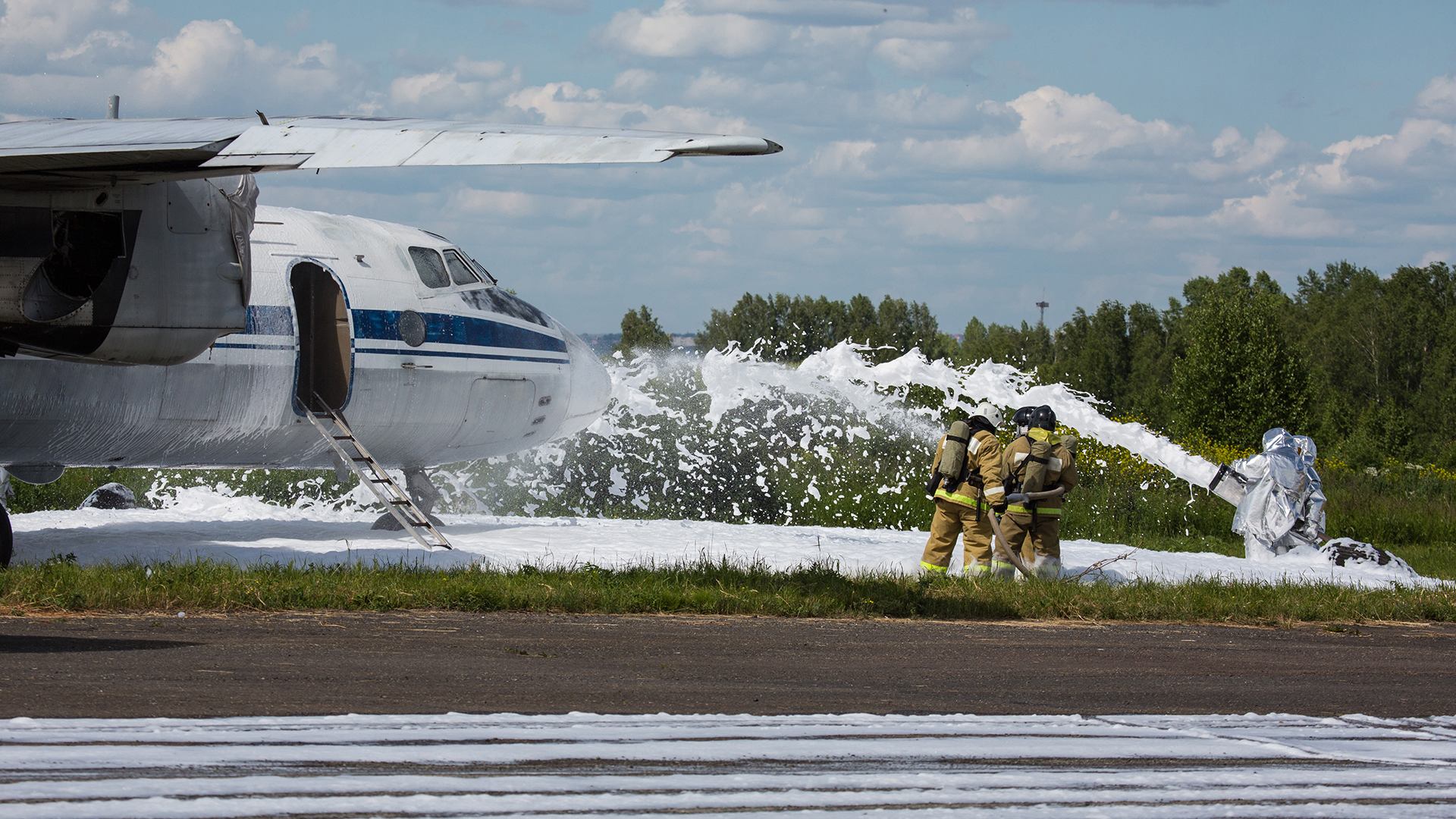
Jerry Buck, senior fire protection engineer at Jensen Hughes, provides guidance on how the fire industry can support the phaseout of PFAS in fire extinguishing foams.
Perfluoroalkyl and polyfluoroalkyl substances (PFAS) are valued for their excellent fire-fighting properties, but they pose significant environmental and health hazards. Historically, one of the most common firefighting foams was aqueous film-forming foam (AFFF), used to suppress flammable liquid fires. However, the same properties that make PFAS useful in firefighting efforts also make them highly persistent in the environment. Once released, PFAS can accumulate in soil, groundwater, wildlife, and humans, where they can persist for years or even decades.
Increasing scientific evidence links exposure to PFAS with a variety of environmental and public health concerns, prompting increased scrutiny of the use of AFFF. Firefighters, military personnel, and communities near training grounds and airports have been identified as particularly susceptible to contamination. As awareness increases, so too does regulatory action, litigation, and efforts to transition to safer alternatives.
AFFF is currently at the center of a global reassessment of how to balance the effectiveness of emergency responses with long-term environmental and human health protection. As a result, manufacturers around the world are transitioning to alternatives to permanently phase out fire extinguishing foams containing PFAS.
Jerry Buck is a senior fire protection engineer at fire protection consultancy Jensen Hughes and has extensive experience evaluating the capabilities of fluorine-free foams (i.e., AFFF alternatives). Innovation Platform spoke with Jerry to learn how the fire protection industry can adapt to PFAS-free alternatives.
Can you elaborate on the current scale of the PFAS-containing firefighting foam problem and why it poses such a threat to health?
The environmental regulatory landscape has changed significantly over the past 50 years since PFAS, including AFFF, were first invented and introduced.
AFFF became the industry standard for fighting liquid fuel fires in the late 1970s and early 1980s due to its superior fire suppression capabilities compared to other products at the time. Unaware of the potential dangers of PFAS, minimal precautions, if any, were taken when the product was released into the environment without regard to use, extinguishing, calibration of proportional equipment, or training.
PFAS components do not break down in the environment or in the human body, and over many years permeate through the soil and into groundwater and aquifers in high-utilization areas. Some PFAS have been linked to both human and animal health effects, and significant research in this area is ongoing.
What are the main concerns from the fire protection industry regarding banning PFAS in fire extinguishing media?
Initial concerns were related to the new product’s reduced ability to extinguish fires. The advantages of AFFF provided some tolerance for manual foam application during extinguishing and suboptimal fixed extinguishing systems.
Although the gap in performance between new products and AFFF is narrowing, on-the-job training of firefighters and due diligence in designing new systems for these new products are required to increase the likelihood of success.
What are the key challenges and complexities surrounding phasing out PFAS-containing foams?
Knowledge and cost were the biggest hurdles. Specifically, it’s about knowing how and when to migrate, and the associated costs. An excellent source of information on the topic of transition is the NFPA Fire Protection Research Foundation’s Fire Fighting Foam: Fire Services Roadmap website. This roadmap systematically shows how to understand current regulations and when to transition, how to dispose of discharged foam in terms of equipment cleaning and disposal of waste fluids and traditional concentrates, foam selection and implementation, minimizing firefighter exposure, and cleaning and documentation.
The costs associated with disposing of AFFF concentrate and wastewater (i.e., rinsate used for cleaning), replacing systems and/or system components, and purchasing new products can be significant.
How do firefighting foam manufacturers approach producing effective and reliable alternatives?
The majority of PFAS-containing AFFF manufacturers, at least the most prominent, have discontinued AFFF production and are developing, testing, and listing/approving new PFAS-free forms (referred to in the industry as fluorine-free forms). Most of these manufacturers have provided guidance on transitioning to these new products or directed consumers/end users to the most relevant and up-to-date information.
How can end users help with the migration? What do they need to know?
End users play a critical role and need to be knowledgeable about the issues, including the various aspects covered in the roadmap document.
How can technology and innovation support the transition to PFAS-free firefighting foams?
The obvious answer is to disseminate relevant information about the issue. A specific area worth mentioning is the selection of alternative products. There are several opportunistic organizations selling alternatives to AFFF with minimal or no fire performance testing or approval.
The second area where technology can help is cleaning (and verifying cleanliness) traditional AFFF systems and hardware.
Do you think anything needs to change to further accelerate the phase-out?
From a manual fire suppression perspective, the ability to effectively use these new products will be key to future success. This definitely requires some hands-on training, but that is now a thing of the past. The industry will need to reconsider how firefighters are trained to fight liquid fuel fires using these new firefighting foams.
This article will be published in an upcoming PFAS Special Focus Publication in January.
Source link

