
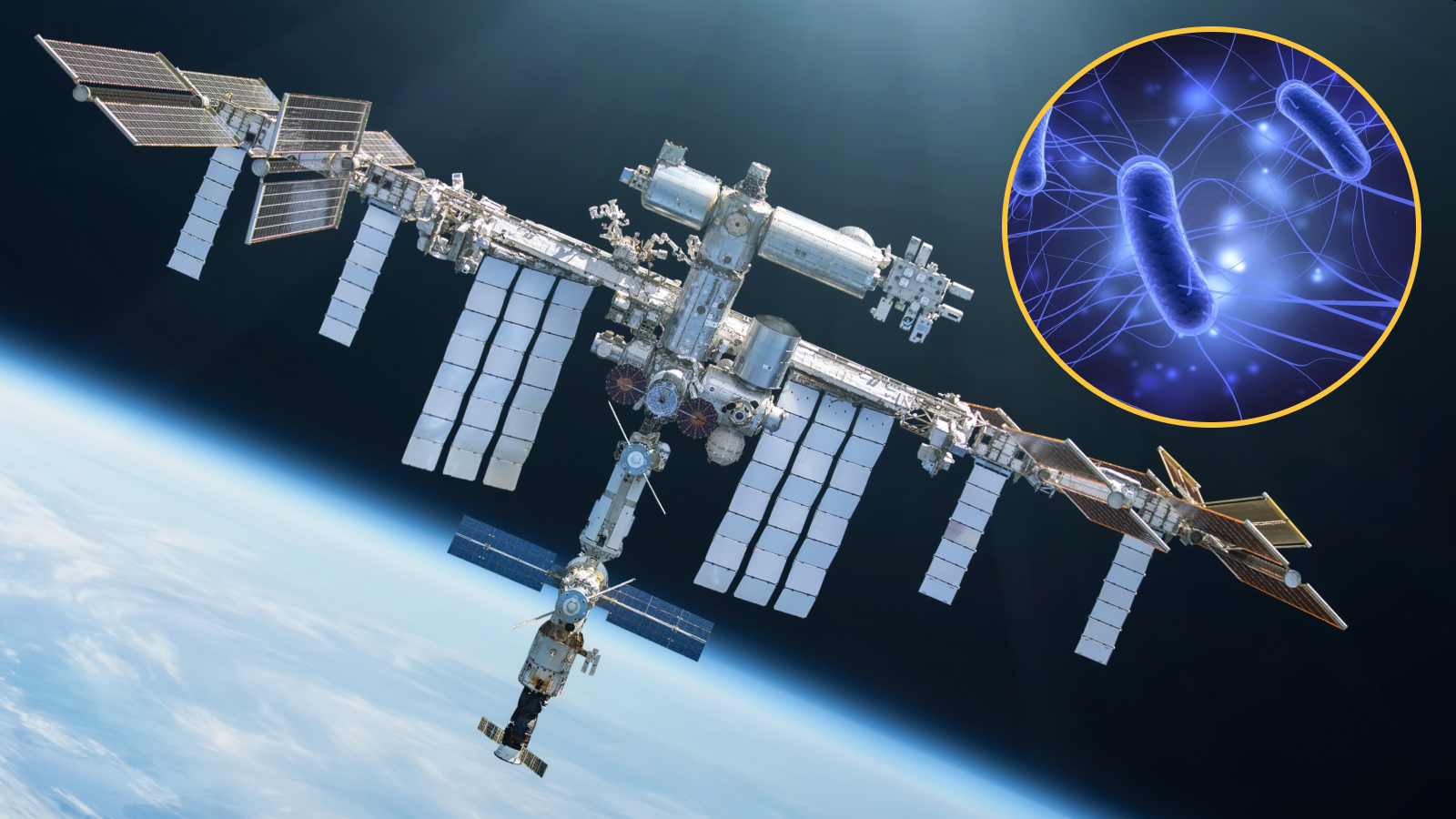
Bacteria and the viruses that infect them, called phages, are engaged in an evolutionary arms race. But when combat takes place in microgravity, its evolution follows a different trajectory, a study conducted on the International Space Station (ISS) has found.
As bacteria and phages wage war, bacteria evolve better defenses to survive, while phages evolve new ways to break through those defenses. The new study, published Jan. 13 in the journal PLOS Biology, details how that skirmish plays out in space and reveals insights that could help design better drugs against antibiotic-resistant bacteria on Earth.
you may like
Analysis of space station samples reveals that microgravity fundamentally alters the rate and nature of phage infection.
Phages were able to infect and kill bacteria in space, but the process took longer than in Earth samples. In an earlier study, the same researchers hypothesized that infection cycles would be slower in microgravity because fluids do not mix as well in microgravity as they do in Earth’s gravity.
“This new study confirms our hypothesis and expectations,” said study lead author Srivasan Raman, an associate professor in the Department of Biochemistry at the University of Wisconsin-Madison.
On Earth, gravity constantly stirs liquids that contain bacteria and viruses. Warm water rises, cold water sinks, and heavier particles settle to the bottom. This keeps everything moving and colliding with each other.
Nothing stirs in space. Everything is just floating. So, because bacteria and phages no longer bumped into each other as often, phages had to adapt to a much slower pace of life and be more efficient at catching passing bacteria.
Experts believe that understanding this alternative form of phage evolution could help develop new phage therapies. These new infection treatments use phages to kill bacteria or make them more vulnerable to traditional antibiotics.
“If we can understand what phages do at the genetic level to adapt to microgravity, we can apply that knowledge to experiments with resistant bacteria,” Nicole Kaplin, a former astrobiologist at the European Space Agency who was not involved in the study, told Live Science in an email. “And this could be a positive step in the race to optimize antibiotics on the planet.”
you may like
Whole-genome sequencing revealed that both bacteria and phages on the ISS have accumulated unique genetic mutations not observed in samples on Earth. Space-based viruses have accumulated certain mutations that increase their ability to infect bacteria and bind to bacterial receptors. At the same time, E. coli has developed mutations that protect it from phage attacks and improve its survival in microgravity, including by tweaking its receptors.
The researchers then used a technique called deep mutational scanning to examine changes in the virus’s receptor-binding proteins. They discovered that adaptations caused by the unique space environment may have practical applications back home.
When the phages were transported to Earth and tested, space-adapted changes in their receptor-binding proteins increased their activity against E. coli strains that commonly cause urinary tract infections. These strains are usually resistant to T7 phage.
“It was a serendipitous discovery,” Raman said. “We didn’t expect that to happen. [mutant] The phages we identified on the ISS will kill pathogens on Earth. ”
“These results show how space can help improve the activity of phage therapy,” said Charlie Moe, assistant professor in the Department of Bacteriology at the University of Wisconsin-Madison, who was not involved in the study.
“But to achieve these results, we need to consider the costs of sending phages into space and simulating microgravity on Earth,” Mo added.
In addition to helping fight infections in patients confined to Earth, this research could help create more effective phage therapies for use in microgravity, Mo suggested. “This could be important for the health of astronauts on long-duration space missions, such as missions to the Moon or Mars, or extended stays on the ISS.”
