
Scientists continue to push the boundaries of astronomy and cosmology thanks to next-generation instruments that can see further and more clearly than ever before.
Through these efforts, astronomers have observed some of the earliest galaxies in the universe. This, in turn, led to the refinement of theories and chronology of galaxy formation and evolution.
you may like
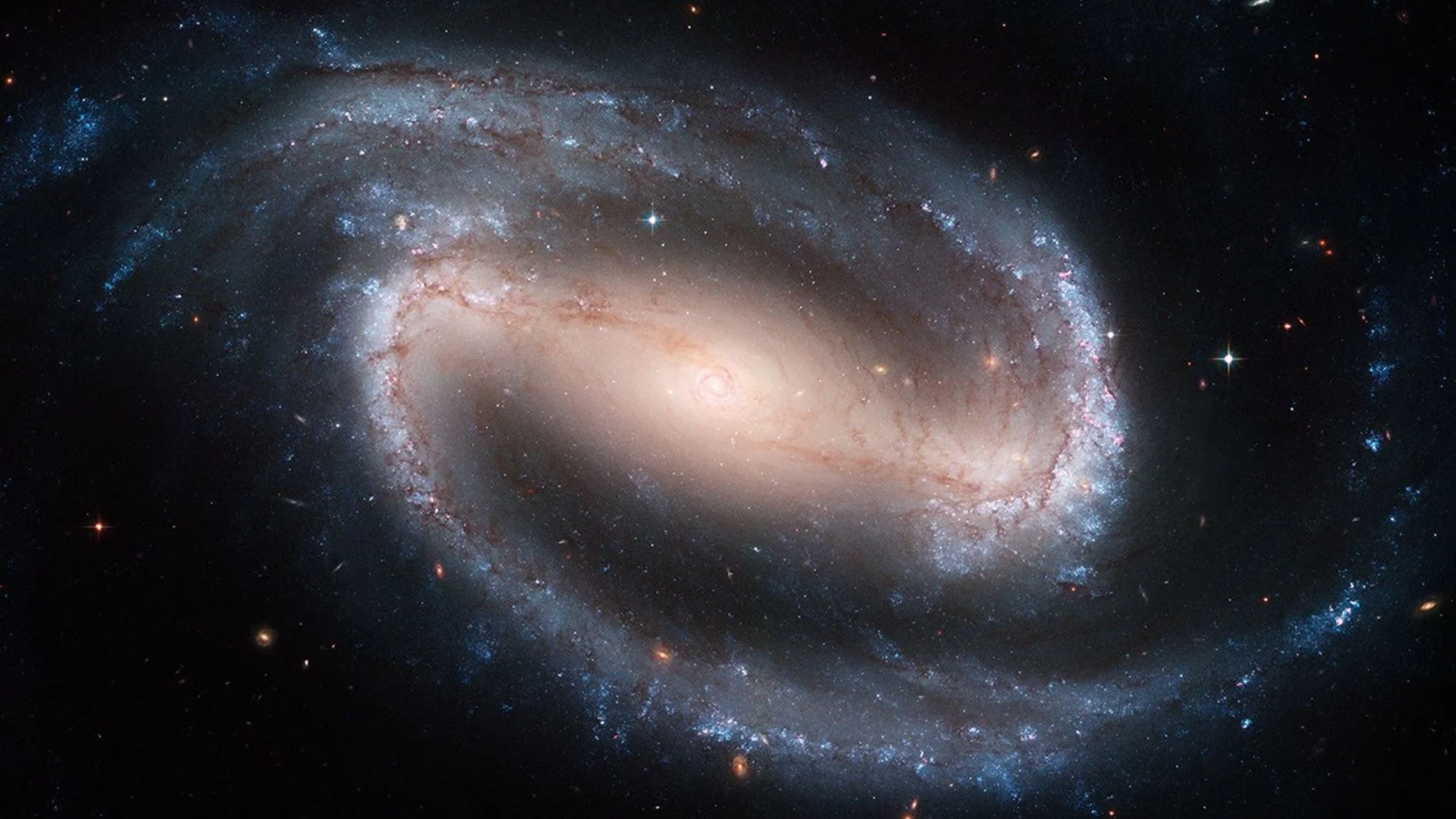
According to the Hubble series, galaxies are classified as elliptical, spiral, or lenticular based on their morphological characteristics. Galaxies typically start out as irregular disks but evolve to form spiral arms (also known as spiral galaxies) that extend from a central bulge.
Bar-like spirals, such as those in the Milky Way, have stars arranged in a bar-like line across their centers, and play an important role in the evolution of stars by pouring gas from the outside in, feeding the supermassive black hole at the center, and suppressing star formation throughout the stellar disk.
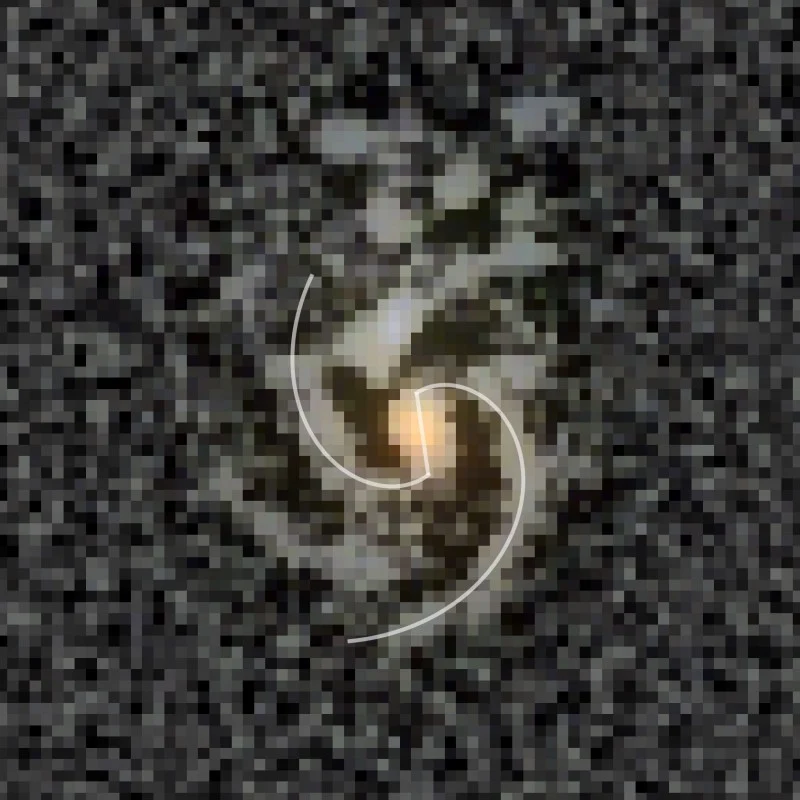
Researchers have reported older barred spiral galaxies, but analysis of these candidates has been inconclusive because the observations were made using gravitational lensing and redshift measurements. The former method is hampered by lens effects that often blur the light from distant objects, while redshift measurements introduce errors and uncertainties of 10-15%. Neither method is as conclusive as the spectroscopy used to verify the age of COSMOS-74706.
Some simulations suggest that bars were forming within galaxies as far back as 12.5 billion years, so the discovery of barred spiral galaxies this early in the universe is not entirely surprising. However, observational evidence for such structures is much more difficult to obtain, making this an important discovery that helps constrain the timescale of galaxy evolution. Ivanov said in a press release from UPitt.
This galaxy developed a bar 2 billion years after the universe’s birth. 2 billion years after the Big Bang. This is the highest redshift spectroscopically confirmed lensless barred spiral galaxy. Basically, I don’t think this is the time to expect to find many of these objects. This helps limit the timescale of bar formation. And it’s really interesting.
A version of this article originally appeared on Universe Today.
