
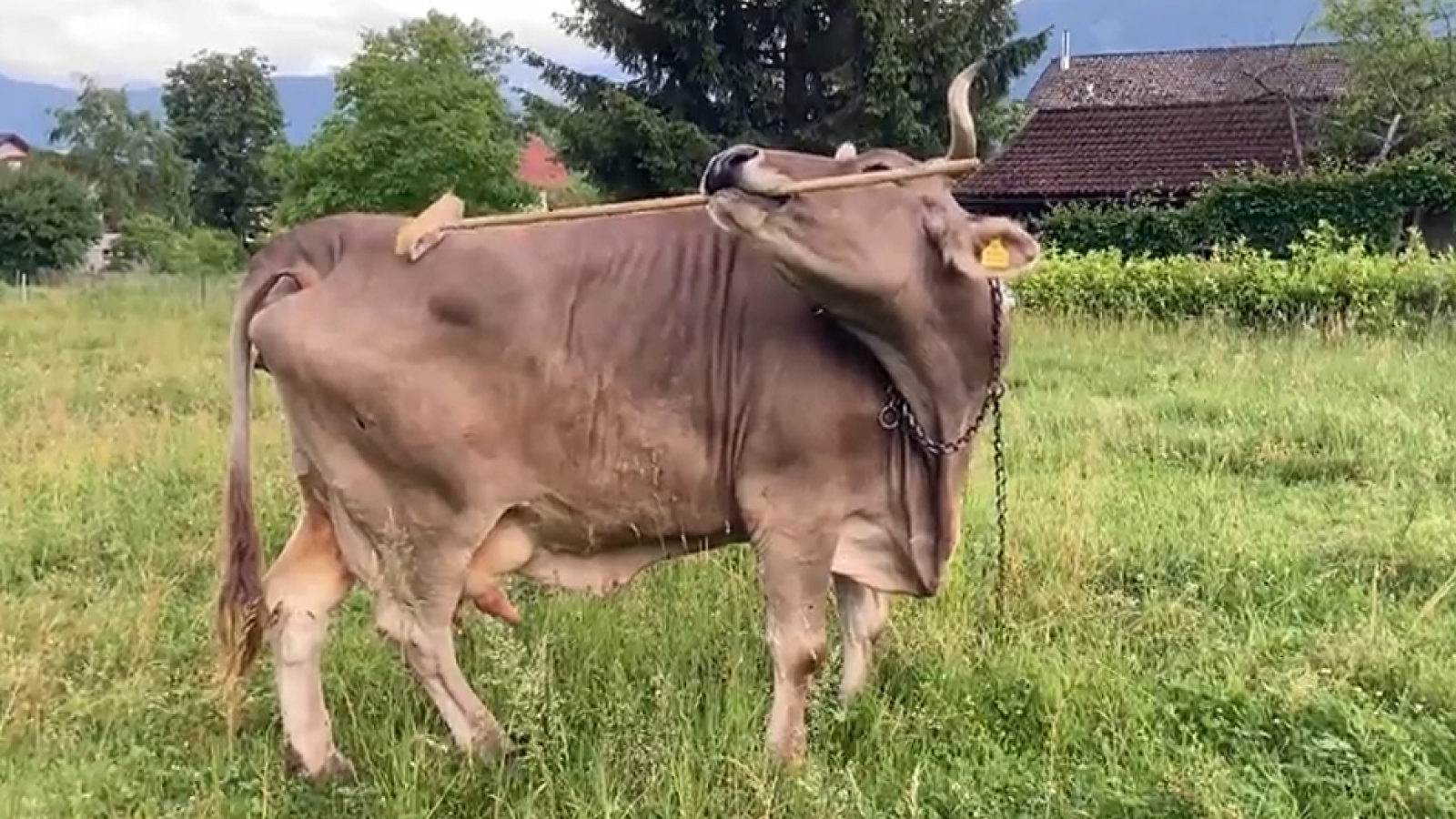
For the first time, cows have been recorded not only using tools, but also choosing which parts of their bodies to use when scratching.
you may like
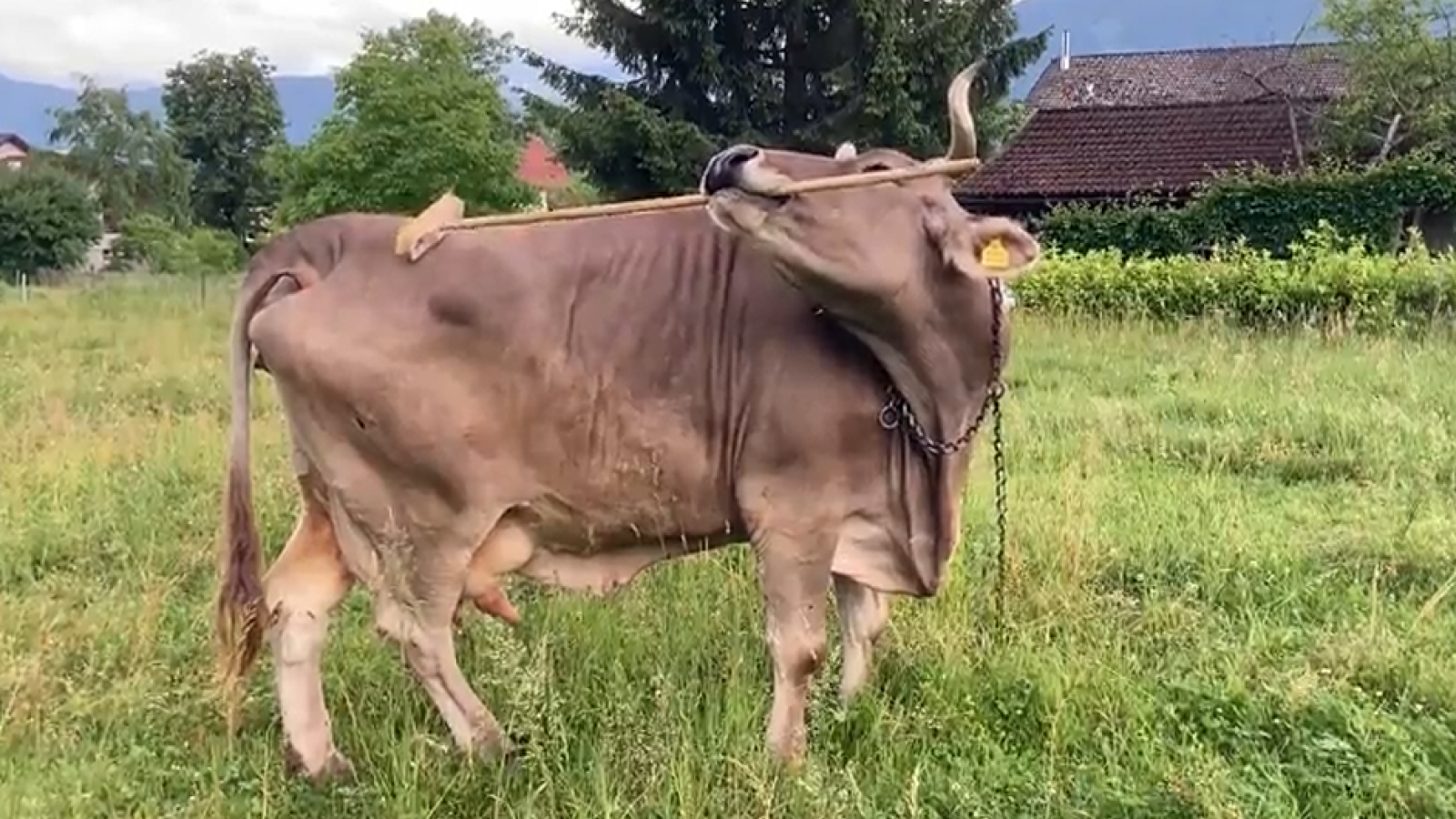
“People tend to think that anything animals do with objects is tool use, and sometimes we get videos of animals randomly interacting with objects, like, ‘My cat is using tools because it uses an Amazon box as a house.’ But this video was different,” Auersperg told Live Science. “It exhibited the kind of behavior I would expect from a more rigorous definition of tool use, where the tool is an embodied part of the animal and we see it being used as a direct extension of her body.”
After watching the video, Auersperg and her colleague Antonio Osuna Mascaro, also an animal cognition researcher at the College of Veterinary Medicine, set out to meet Veronica and test her. They repeatedly placed a deck brush or broom on the ground in front of her in random orientations and watched what she would do.
“We decided to use a broom because a broom has a functional end and a non-functional end, so we predicted that if Veronica was really sensitive to the functional properties of the tool, she would prefer to use the broom end,” Osuna Mascaro told Live Science.
Veronica grabbed objects by the end of the broom handle and scratched herself with the end of the broom about 2.5 times more often than the other way around. But after a while, a more subtle pattern emerged.
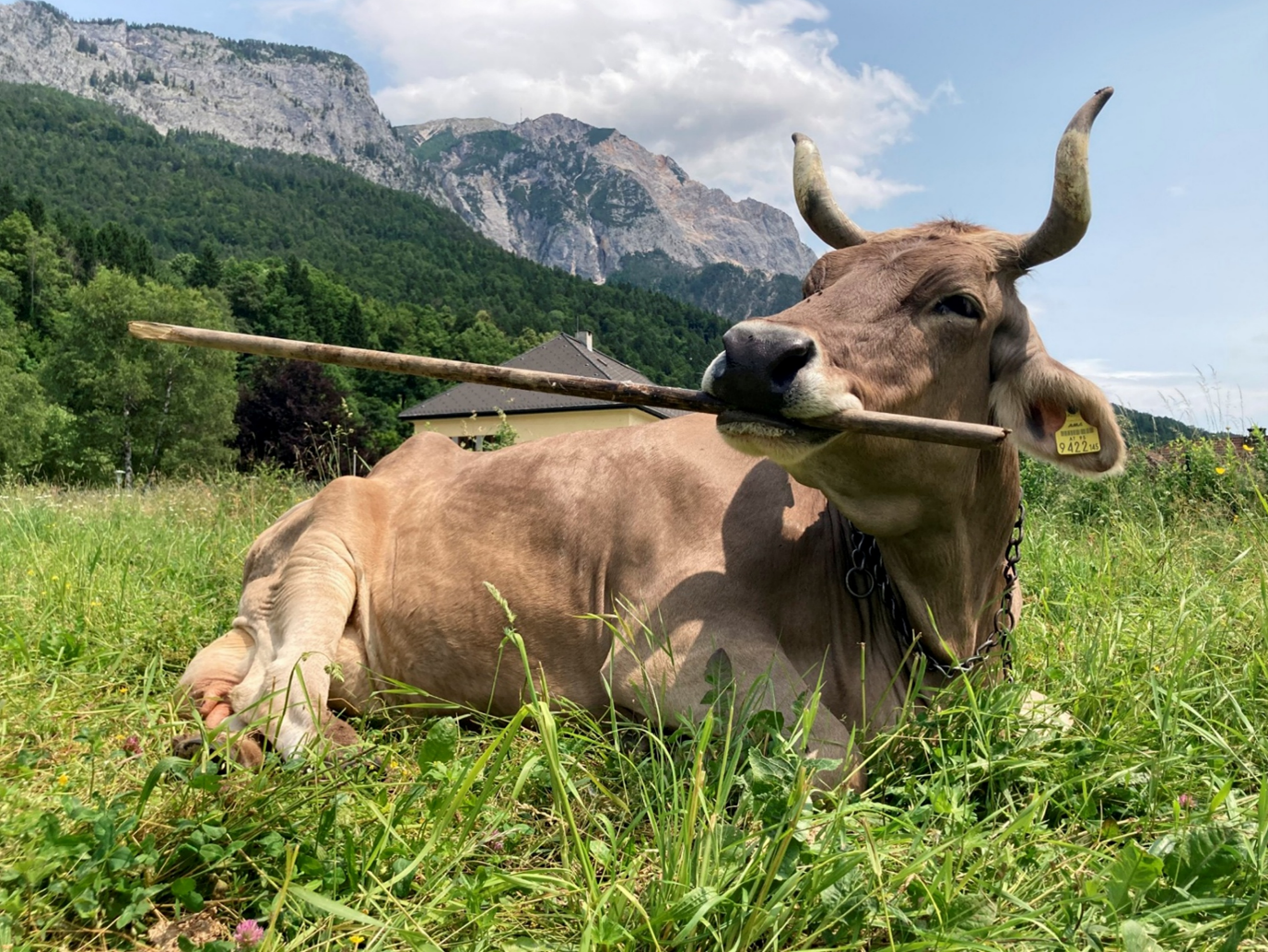
After 70 sessions, if Veronica tried to scratch the thick skin on her back, she usually held the thin end of the broom in her mouth and scratched herself thoroughly with a large abrasive brush. If I wanted to scratch more sensitive areas, like my belly button or breasts, I grabbed the end of the broom brush and gently scrubbed my body with the thin handle.
The study was published Monday (January 19) in the journal Current Biology.
Osuna Mascaro said Veronica’s actions show that she didn’t just happen to use the tool in any orientation when picking up the broom, but that she knew which part of her body she was going to scratch before picking it up.
you may like
For example, when she tried to scratch her sensitive anus, she would raise her tail in anticipation and adjust her grip on the tool to ensure she could reach it.
The readjustment wasn’t easy. To pick up the brush, Auersperg said, Veronica extended her tongue, wrapped it around the tool, brought it to her mouth, and pushed the brush between her bottom teeth and the hard dental pads at the top of her mouth. This means that the tool is very firmly fixed and cannot be easily adjusted. Veronica would sometimes release the tool before scratching, grab it again in a different location, and aim the tool at an area of her body that she couldn’t reach with her previous grip.
Auersperg said this behavior is very different from cows who simply use scratching pads. Scratching something is just an interaction between an animal and an object. For it to count as tool use, the animal must be responsible for the orientation of the object, like Veronica.
“There is absolutely no doubt that this is tool use,” Josep Cole, a comparative psychologist at the University of St. Andrews in Scotland who was not involved in the study, told Live Science. “You can clearly see that the cows are using the end of the brush depending on where they are scratching, which is really cool.”
Gloria Sabatini, an animal biologist at Italy’s National Research Council’s Department of Cognitive Primatology and the Primate Center in Rome, who was not involved in the study, agrees.
“Veronica exhibits a form of egocentric tool use: using tools against oneself. This type of tool use is easier than using tools against external objects or surfaces for a number of reasons,” she told Live Science via email. “One is that you are directly aware of the impact that using the tool has on you and can immediately modify and change the position of the tool.”
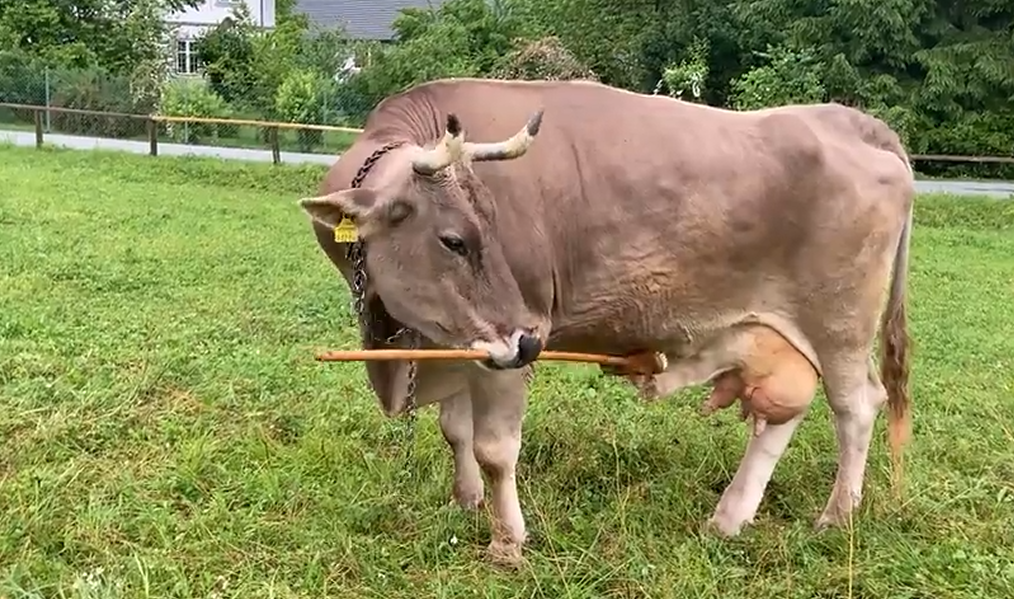
The discovery represents the first documented case of tool use and multipurpose tool use in cattle, Osuna Mascaro said. This behavior can be partially explained by the fact that Veronica is kept as a family pet. She experiences different meadows and stables in the winter, and there are many objects falling in the meadow for her to interact with.
“Veronica was lucky to have the opportunity to experience a reality every day that is more complex and exciting than what is typically presented to cows. Through the daily interaction of mind, body, and environment, animals develop and improve their abilities and skills,” Sabatini said.
However, this is not a one-time event. Osuna Mascaro also identified a video on social media showing a Brahmin bull (Bos indicus) using a stick to scratch an itch.
Given that the two species diverged more than 500,000 years ago and have been domesticated separately ever since, Professor Osuna Mascaro suggested that Veronica may demonstrate the potential for innovation that may have been present in cows for thousands of years.
“This does not mean that ancient cows were tool users, but rather that these animals had the ability to innovate spontaneous solutions to complex problems,” Auersperg said. “Cows play with objects when they’re young. They love playing with balls, ropes and sticks. So if cows have an enriched environment, they’ll probably show these innovative behaviors more often.”
