
EU accelerates quantum readiness with €50 million photonic chip trial
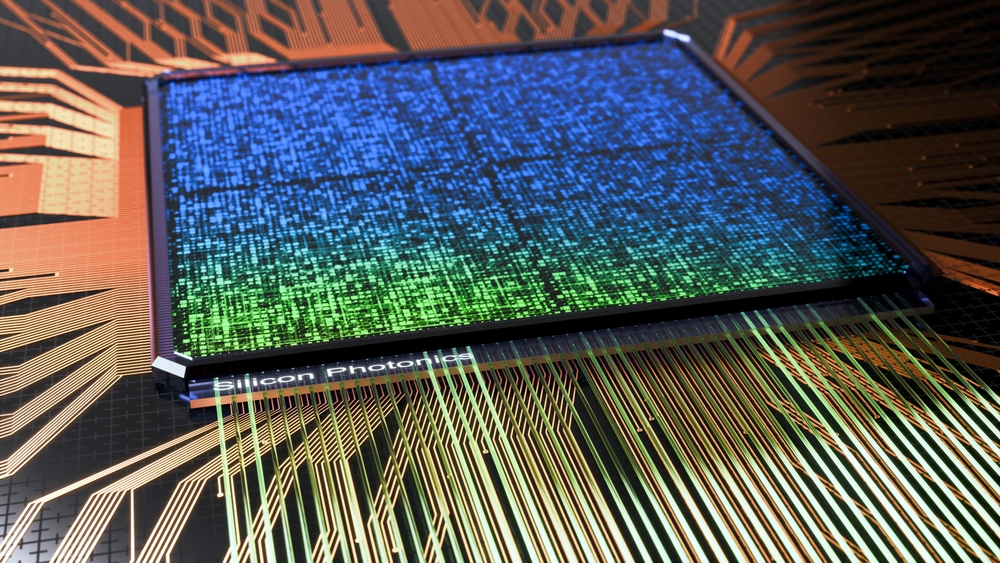
Photonic chips are rapidly emerging as one of Europe’s most strategic technologies in the global race towards practical quantum systems.
From 2026, Europe’s new major pilot project, Quantum Photonics (P4Q), will bring together expertise from across the continent to turn fragile laboratory breakthroughs into robust, manufacturable, quantum-ready components.
Spanning 12 European countries and backed by significant public investment, P4Q is designed to reliably produce photonic chips that operate consistently at scale, one of the biggest bottlenecks in quantum innovation.
From lab experiments to industrial-grade photonic chips
Quantum technology relies heavily on light. Photons are used to transmit information, enable ultra-precise measurements, and form the backbone of quantum communication networks. However, many photonic chips still struggle to move beyond laboratory environments.
P4Q meets this challenge head-on by focusing on reproducibility, standardization, and manufacturability. This project aims not to prove that quantum photonic devices work only once, but to ensure that they work every time, under real-world conditions and on an industrial scale.
This transition marks a significant shift from academic research to deployable technology, strengthening Europe’s position in quantum manufacturing and reducing dependence on non-European supply chains.
Real-world applications: sensors, computing, and secure networks
The impact of more reliable photonic chips extends far beyond the quantum laboratory.
In sensing applications, these chips could be used to detect extremely small amounts of contaminants in water systems or to measure ultra-weak biological signals with unprecedented precision in medical laboratories.
In computing, photonic chips are essential building blocks for scalable quantum computers, helping to control, route, and measure quantum states.
Meanwhile, in communications, entangled photons are used to power quantum-safe networks that protect data from interception.
To support these demanding applications, P4Q improves key performance metrics, including reduced optical loss, stability at cryogenic temperatures, and seamless integration into large-scale quantum systems.
Building a common European manufacturing ecosystem
One of P4Q’s defining strengths is its scale and diversity. The project brings together 29 partners, including universities, research and technology organizations, start-ups, foundries, and large industrial companies.
A central focus is the development of process design kits (PDKs) and assembly design kits (ADKs). These tools help designers and manufacturers work from the same standards, reducing errors and accelerating innovation.
Multiple photonic platforms are supported, including silicon nitride (SiN), thin film lithium niobate (TFLN), and alumina (AlOx), giving developers the flexibility to choose the best technology for each application.
Equally important is the expansion of testing and production facilities. By scaling up shared infrastructure, P4Q lowers the barrier to entry for small businesses and startups, giving them access to high-quality manufacturing without prohibitive upfront costs.
Investment, schedule and technology readiness
The total investment in P4Q amounts to 50 million euros, which will be divided equally between European funds and state contributions.
The project consists of eight coordinated work packages, targeting Technology Readiness Level 8 (TRL-8) and Manufacturing Readiness Level 8 (MRL-8). This means the technology is ready for large-scale demonstration and further industrialization.
Strengthening Europe’s quantum future
By focusing on reliable and scalable photonic chips, P4Q lays the foundation for a new generation of quantum technologies that can confidently move from prototype to production.
As global competition intensifies, this concerted European effort will position photonic chips not only as a scientific advance but as the basis for future digital infrastructure.
Source link

