


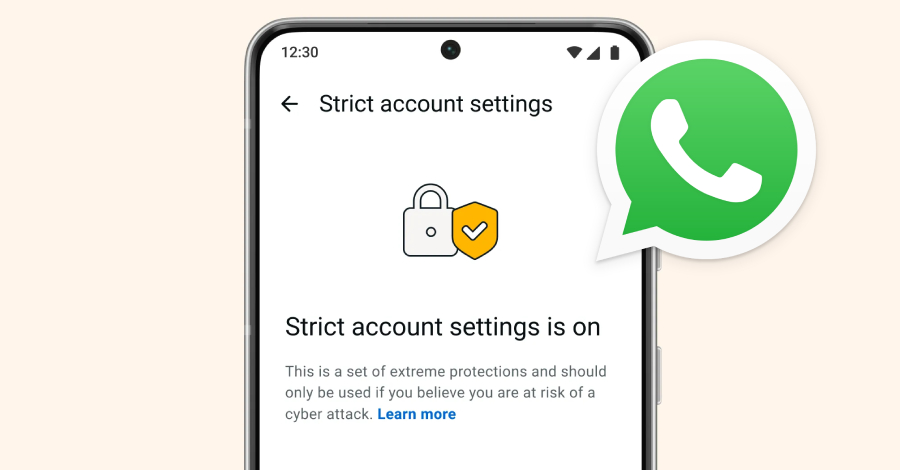

Meta announced Tuesday that it is adding stricter account settings to WhatsApp to protect some users from advanced cyberattacks.
This feature, similar to Lockdown Mode in Apple iOS and Advanced Protection in Android, is intended to protect individuals, such as journalists and public figures, from advanced spyware by trading some features for increased security.
Enabling this security mode locks some account settings to the most restrictive options while blocking attachments and media from people who are not in the user’s contacts.
“This lockdown-style feature further strengthens the security of WhatsApp with just a few taps by locking your account to its most restrictive settings, including automatically blocking attachments and media from unknown senders, silencing calls from people you don’t know, and restricting other settings that may limit how the app works,” Mehta said.

This feature is[設定]>[プライバシー]>[詳細]You can enable it by navigating to . Mehta said the feature will be rolled out in stages over the next few weeks.
At the same time, the social media giant announced it will adopt the use of the Rust programming language for its media sharing features to protect users’ photos, videos, and messages from spyware attacks. The development is described as “the world’s largest deployment of a library written in Rust.”

The company also said that its use of Rust has enabled the development of a secure and high-performance cross-platform library (“wamedia”) for sharing media on WhatsApp across devices, adding that it is investing in three approaches to address memory safety issues.
Design your product to minimize unnecessary attack surface exposure Invest in security guarantees for the rest of your C and C++ code Choose memory-safe languages by default for new code
“WhatsApp has added protections such as CFI, an enhanced memory allocator, and more secure buffer handling APIs,” the company said. “This is an important step forward in adding additional security behind the scenes for our users and is part of our continuous defense-in-depth approach.”