
Tesla will discontinue Model S and Model X
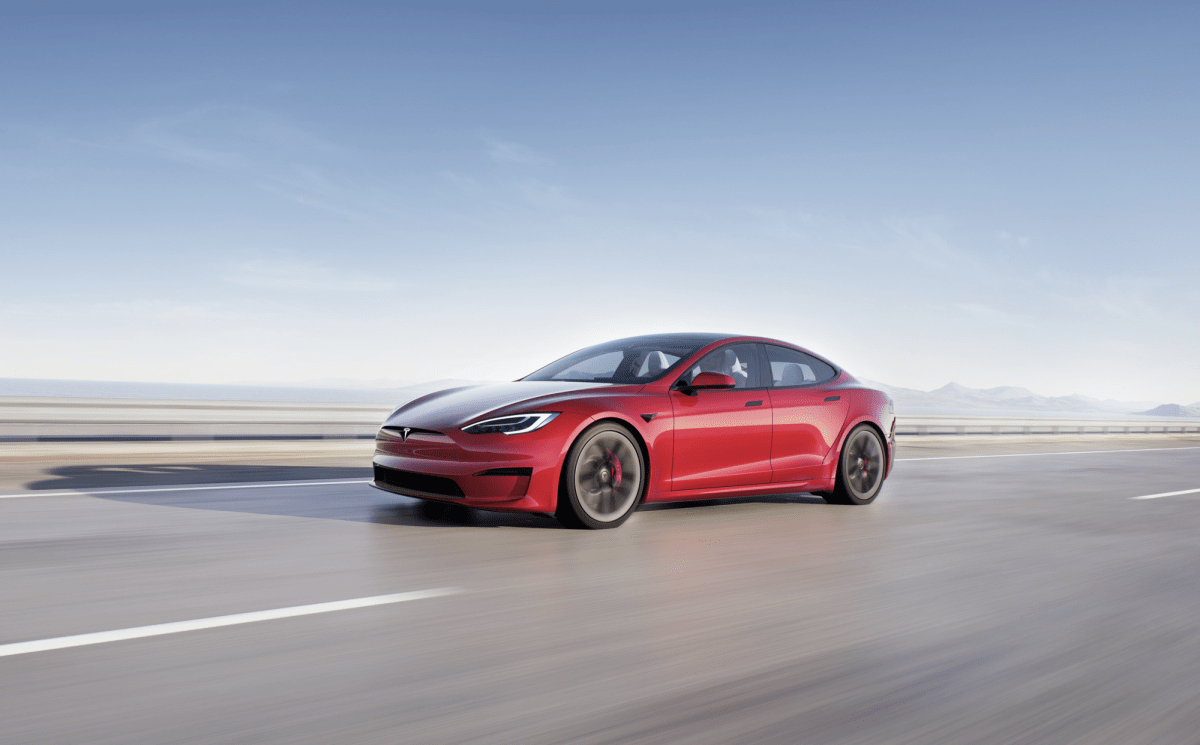
Tesla will end production of its Model S sedan and Model X SUV, CEO Elon Musk announced Wednesday during the company’s quarterly earnings conference.
He said the company plans to produce the final versions of both electric vehicles next quarter, adding that the company will provide support to existing Model S and Model X owners “for as long as people own the cars.”
“It’s time to end the Model S and X program with basically an honorable discharge, because we’re really moving into a future based on autonomy,” he said. “If you’re interested in purchasing the Model S and Model X, now is the time to order.”
Both the Model S and Model X are manufactured at the company’s Fremont, California, factory. Once production ends, Tesla will build Optimus robots in the same factory space, Musk said. Production of Tesla’s Cybertruck, which is built at the company’s factory outside Austin, will continue.
Tesla launched the Model S in 2012, which is considered the first car to have widespread appeal for electric vehicles. Model X was Tesla’s second major electric vehicle program.
Tesla always aimed for its more affordable models, the Model 3 sedan and Model Y SUV, to significantly outsell their predecessors.
However, despite the interior and exterior renovations, sales of both models have remained flat in recent years. Tesla faces increasing competition in the luxury EV space from traditional automakers as well as startups like Rivian and Lucid Motors.
tech crunch event
san francisco
|
October 13-15, 2026
“It’s a little bit sad, but it’s time…to end the S program and the X program,” Musk said.
Tesla’s first design from scratch
The Model S wasn’t Tesla’s first car. That title was given to the first generation Roadster. But the Model S was Tesla’s first car built from scratch.
This removed many of the Roadster’s trade-offs and paved the way for the Model S to become one of the first true mass-market electric cars.
Tesla launched the sedan in 2012 with a base price of $57,400. The car had a floor-mounted battery, making it roomier and far more dynamic than the few other all-electric cars on sale at the time.
Tesla also offered the Model S with multiple battery sizes, allowing customers to pay for more EV range.
The car quickly became popular, with Tesla collecting more than 10,000 reservations by the time the first deliveries began in June of that year. By 2013, it was Motor Trend’s Car of the Year, beating out the best gas-powered cars around the world.
“Essentially, the Tesla Model S is a really nice car that you just happen to plug in to refuel,” MotorTrend writes.
Tesla iterated on the Model S over the next few years. It changed its battery options and even offered larger battery packs with software-limited range to give customers a sort of “buy now, pay later” attitude.
The Model S is the first Tesla to feature Ludicrous Mode, allowing it to accelerate from 0 to 60 mph in just 2.8 seconds. It’s a refreshing feature, and it’s also become one of Tesla’s sharpest word-of-mouth marketing tools.
Tesla continues to improve the Model S, giving it industry-leading range than most other EVs, and in 2021 it received a complete redesign of the exterior and interior. But by that point, Tesla’s success was skyrocketing thanks to the much cheaper Model 3 and Model Y.
Fabergé SUV
Model X wasn’t that simple.
Although it was first teased before the Model S was launched in 2012, the Model X SUV didn’t hit the roads until 2015. When it hit the road, it was equipped with a very complex folding ‘Falcon Wing’ rear door.
These make getting in and out of the Model X very easy. But doors, like the rest of the SUV, have proven over the years to be extremely difficult to manufacture at scale with reliable quality. Musk ended up calling it the “Fabergé of cars.” It paid homage not only to its luxurious style and features, but also to the fragile nature of the Model X.
The Model But production issues plagued the new version as well, with Musk admitting in early 2022 that Tesla made a mistake in halting production of the redesigned Model X before it was ready to be manufactured at scale.
It’s been a while
In retrospect, the retirement of the Model S and Model X was a long time coming.
Musk himself said in 2019 that Tesla is still building these “niche” cars for “more emotional reasons than anything else.”
“They’re actually not that important to our future,” Musk said at the time.
At that point, Tesla was still selling tens of thousands of Model S and Model X SUVs per quarter. But the company’s first truly new model, the Cybertruck, was about to arrive.
In 2019, it was revealed that Tesla had big plans for the Cybertruck. The company said it will sell the basic version for $40,000 and produce 250,000 units a year. Delays caused by the coronavirus pandemic and the vehicle’s complex new design brought the vehicle to market much later than expected.
Despite the Cybertruck blowing up on the road, Tesla continues to publicly support it, including during Wednesday’s earnings call. The envisaged 2 million backlog never materialized, and neither did the $40,000 base price. Tesla has struggled to sell just a few thousand units per quarter since then.
The failure of the Cybertruck probably gave some cover to the Model S and Model X. Not only did the two Legacy EVs help slightly offset the flashy truck’s abysmal popularity, but Tesla also treated the three vehicles as “other models” when reporting quarterly sales, making it difficult to say how poorly the Cybertruck fared.
But Musk says Tesla is now a company focused on solving autonomy for cars and robots. That appears to have been the case with the Model S and Model X eventually.
They may not be very important [Tesla’s] The future 7 years ago. But they have always been important in the company’s early days and in building its mask as the ultra-wealthy businessman that now looms over modern society.
Source link

