



watch on
New technology fires laser beams at drones to charge them mid-air, unlocking the potential for “infinite flight.”
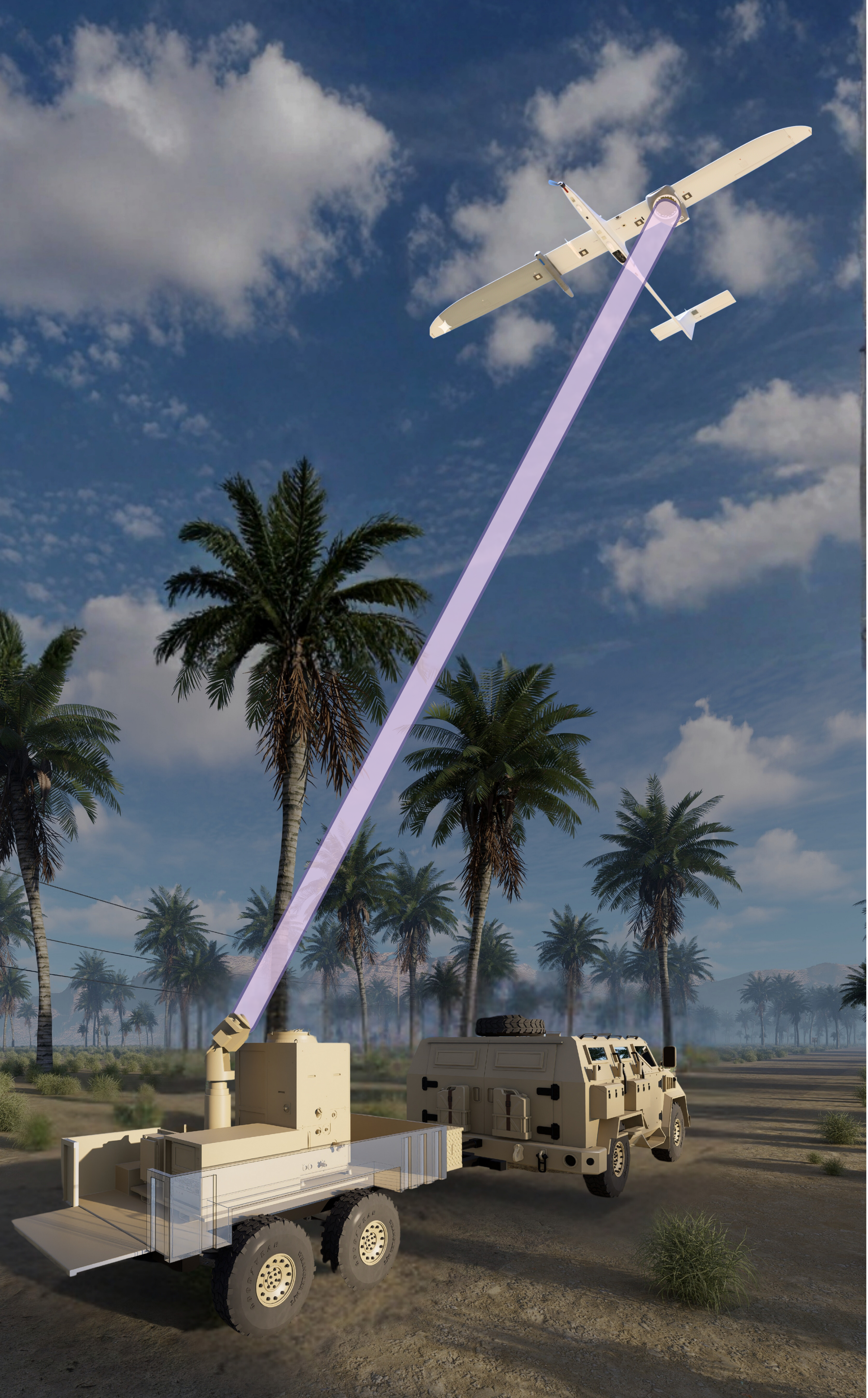
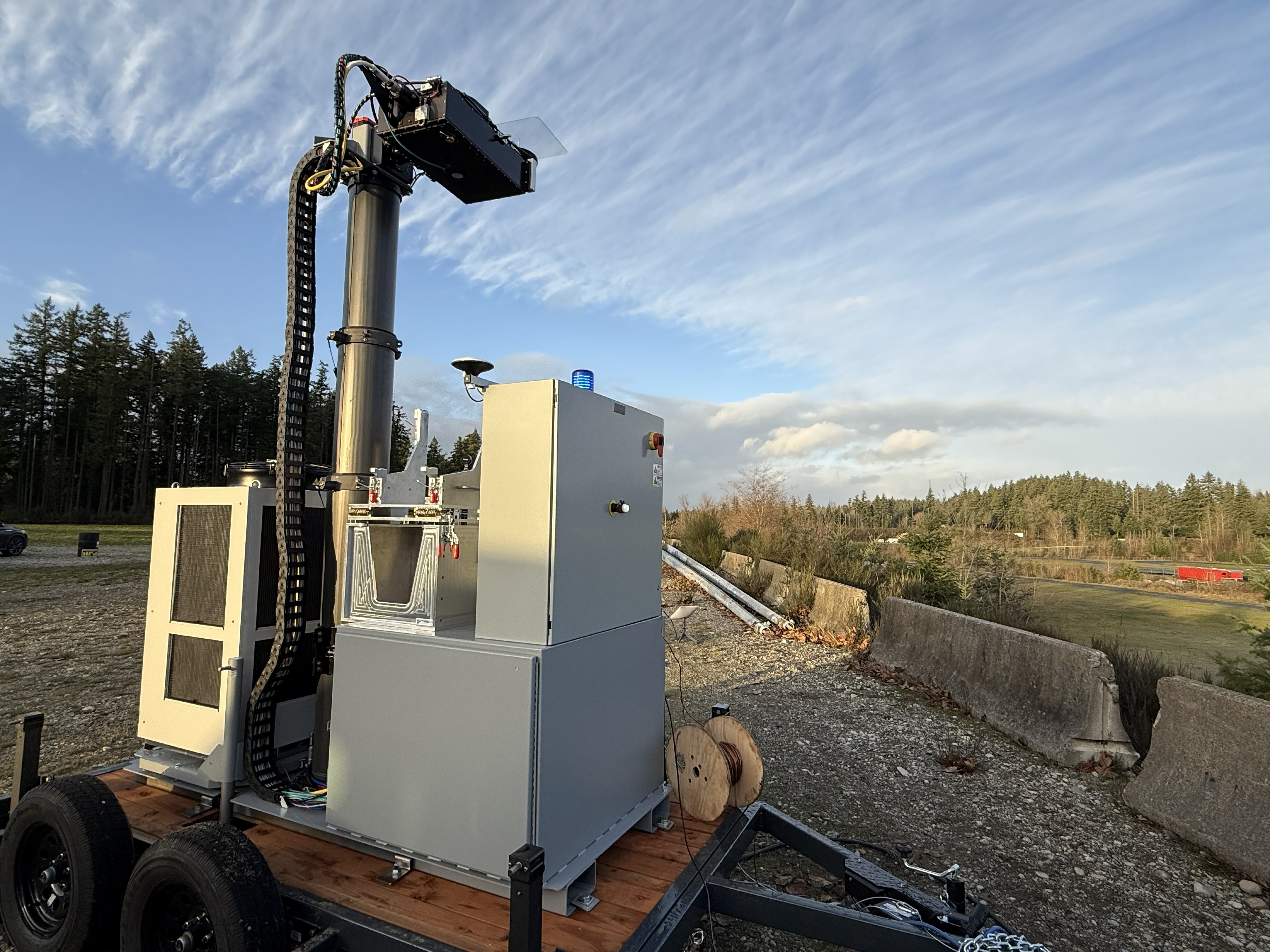
Powerlight Technologies representatives said the system works by combining a ground-based transmitter with a receiver on a drone, also known as an unmanned aircraft system (UAS). The company says the transmitter combines sophisticated software designed to precisely control the laser beam with hardware capable of sustaining kilowatt (or thousands of watts) of power transmission. For comparison, typical lab lasers operate on the milliwatt scale, or thousands of watts.
you may like
For comparison, the Raven RQ-11B, a hand-launched intelligence, surveillance, and reconnaissance drone developed for the U.S. military, has an operational altitude of 150 to 1,000 feet (46 to 305 meters) above ground level and 10,500 feet (3,200 meters) above sea level. Larger drones can reach altitudes of up to 60,000 feet (18,288 meters).
Integrated control software can also be linked with software on the UAS to provide telemetry monitoring and control. This interoperability means data and commands can be exchanged between PowerLight’s tracking and beam control system and the drone’s onboard avionics and telemetry systems. It can be used to send battery charge information to operators on the ground, allowing them to dynamically change power delivery to ensure the laser is always on target and efficiently powered.
“We are building intelligent mesh energy network capabilities,” Tom Nugent, PowerLight’s chief technology officer and co-founder, said in a statement. “Our transmitter communicates with the UAS, tracks its speed and vector, and delivers energy exactly where it is needed. We have now successfully tested our power transfer and tracking algorithms.”
endless flight
The drone body has a built-in receiver. Weighing just 6 pounds (2.7 kilograms), the receiver receives laser energy from a ground-based transmitter and converts it to battery power using a laser power converter.
Solar power laser power converters work similarly to solar cells, capturing light and converting it into electrical current. However, they are optimized for monochromatic, high-intensity laser light rather than broad-spectrum sunlight.
The receiver also includes an embedded control module. This module continuously collects real-time telemetry about the drone’s location and operations and relays that information to operators on the ground. It is also possible to establish bidirectional light-based communication links, where information can be sent and received using optical signals.
The system was developed in collaboration with the U.S. Department of Defense (DoD). It will be integrated into the long-range high-endurance drone K1000ULE developed by Kraus Hamdani Aerospace. The K1000ULE is fully electric and designed for persistent long-range missions in support of the U.S. Navy and Army.
Previous tests have shown the potential for wireless power transfer via lasers. For example, the Defense Advanced Research Projects Agency has demonstrated more than 800 watts of power transfer from a laser 5.3 miles (8.6 kilometers) away.
However, the PowerLight system is a step toward actual deployment on mobile platforms. Although recent tests have proven the viability of the transmitter and receiver, Powerlight has not yet conducted flight tests scheduled for early this year.