
Archaeologists have discovered 5,000-year-old rock art in the Sinai desert depicting ancient Egypt’s brutal conquest of the region.
The work “ghastly demonstrates how the Egyptians colonized the Sinai Peninsula and subjugated its population,” the archaeologists said in a statement.
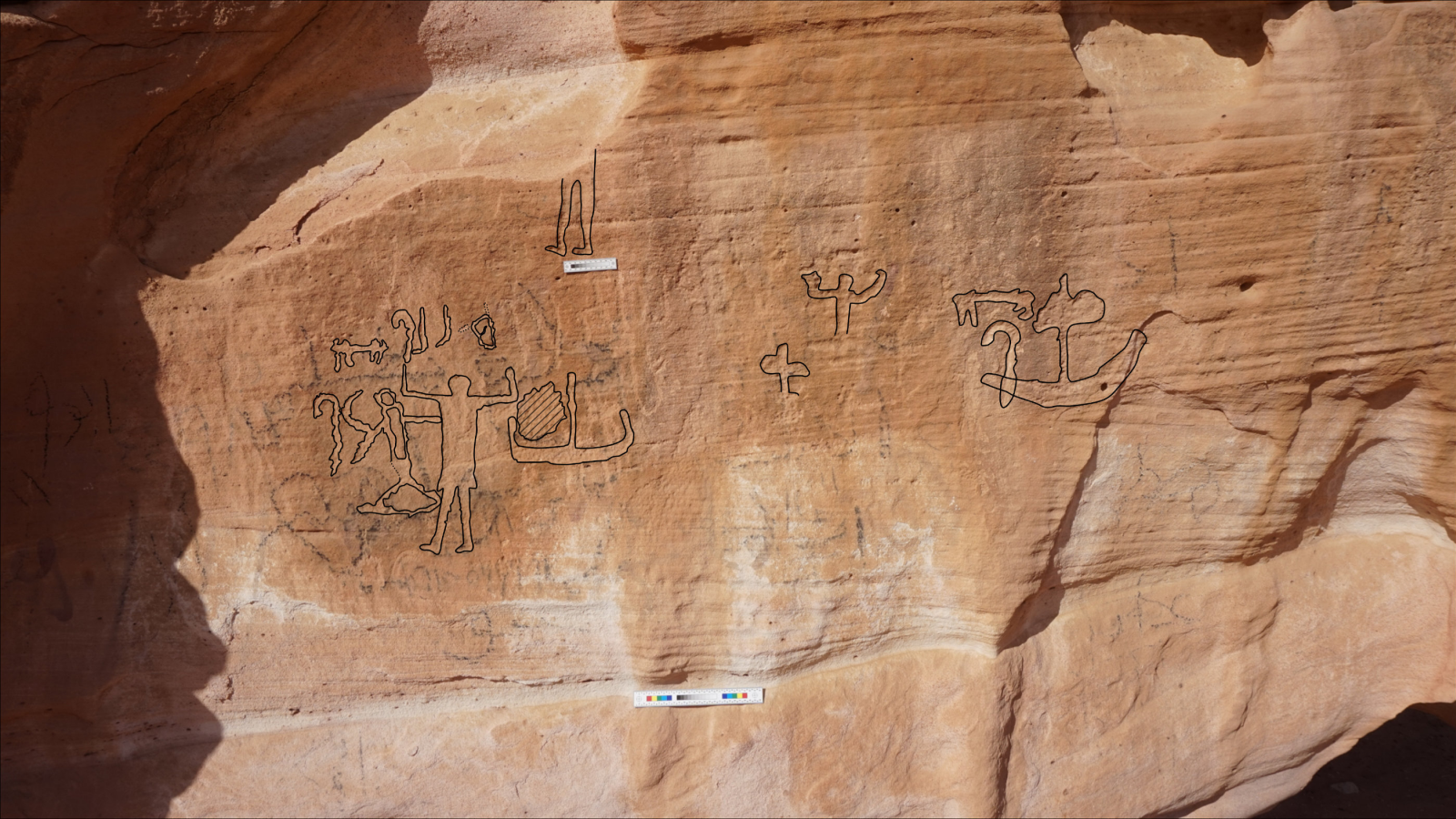
The scene depicts a man with his arms raised in triumph, and a man kneeling with an arrow in his chest, his hands tied behind his back. There was also a boat nearby, as well as an inscription mentioning Min, an Egyptian god associated with fertility, as “ruler of the copper region,” the archaeologists said in a new study published in the 2025 edition of the journal Blatter Abrahams.
you may like
”[Looking] “The overall structure suggests that the ship was associated with the Egyptian rulers, the victorious man with the god Min, and the subdued and killed man with the local population,” the archaeologists wrote in their diary.
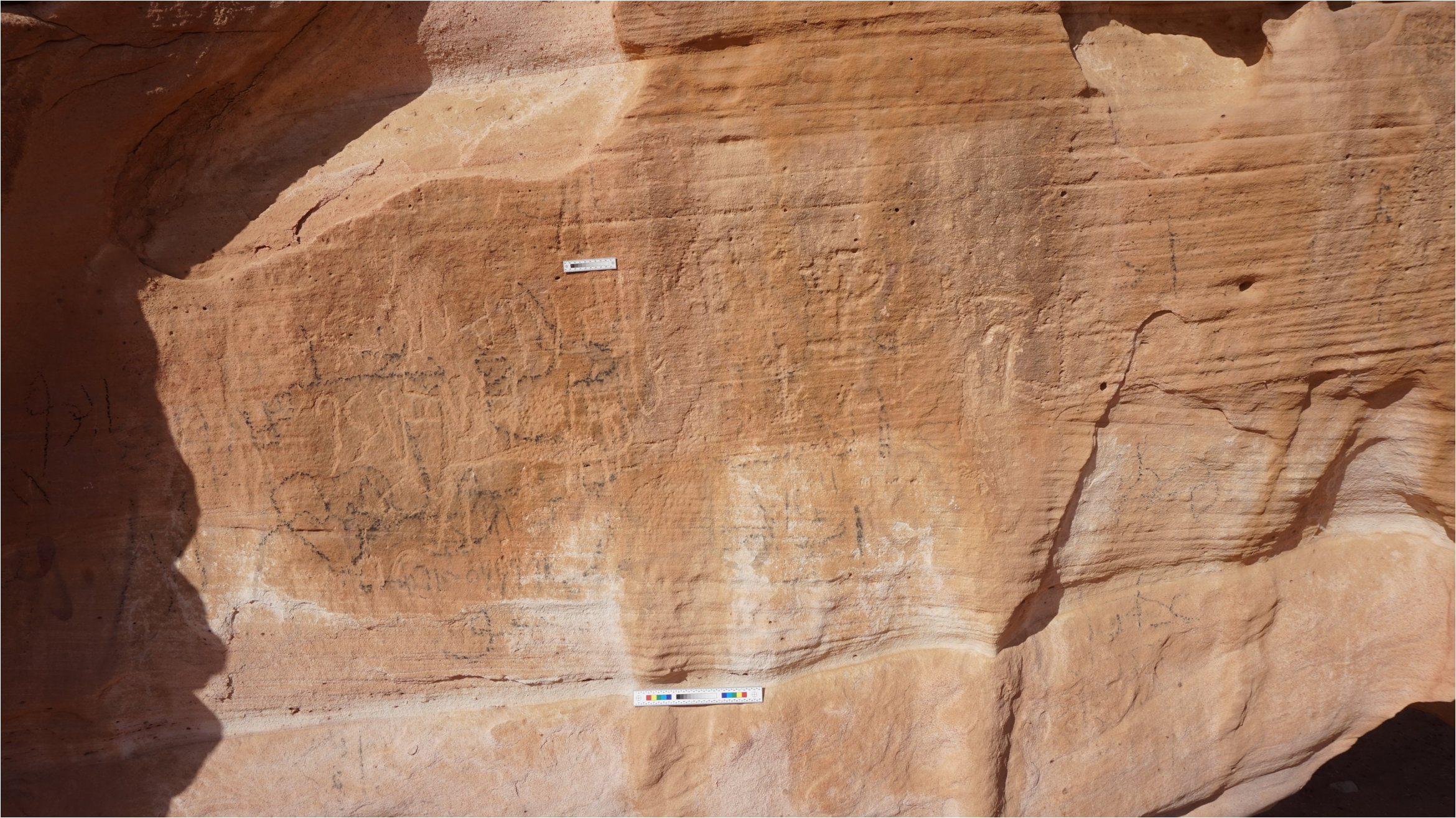
Other examples of rock art dating back about 5,000 years have previously been discovered in the Sinai Peninsula, suggesting that the Egyptians conquered the region around that time.
“The motivation for Egyptian expeditions to southwestern Sinai was not simply territorial expansion in the abstract, but more specifically the availability of mineral resources, particularly copper and turquoise,” the researchers wrote.
Study co-author Ludwig Morenz, a professor of Egyptology at the University of Bonn, said the Sinai Peninsula at the time was primarily inhabited by nomadic tribes. “This tablet certainly represents one of the earliest depictions of domination in another realm,” Morenz told Live Science in an email.
One interesting detail is that there was an inscription next to the statue in the boat that could have listed the names of Egyptian rulers, but it was deliberately erased, the archaeologists noted in their journals. It is unclear who deleted it, when, and why. There have been several instances in Egyptian history where a pharaoh’s name was erased after a new pharaoh assumed power, but it is unclear whether this is the case here.
The rock art was discovered during a survey conducted in 2025 by archaeologist Mustafa Nour El-Din of the Aswan Inspection Department of the Egyptian Ministry of Antiquities. Archaeologists believe that more rock art remains to be discovered nearby.
“The research is just beginning and we are planning our first large-scale campaign,” the team wrote.
