
Close Menu
  • Home
  • Identity
  • Inventions
  • Future
  • Science
  • Startups
  • Spanish
What's Hot

Sam Altman took a very harsh stance on Claude’s Super Bowl ad

Alphabet won’t tell investors about Google and Apple’s AI deal

Tinder looks to AI to fight ‘swipe fatigue’ and dating app burnout

Facebook X (Twitter) Instagram
  • Home
  • About Us
  • Advertise with Us
  • Contact Us
  • DMCA
  • Privacy Policy
  • Terms & Conditions
  • User-Submitted Posts
Facebook X (Twitter) Instagram
Fyself News
  • Home
  • Identity
  • Inventions
  • Future
  • Science
  • Startups
  • Spanish
Fyself News
Home » ‘Textbooks need to be updated’: Juno spacecraft reveals Jupiter is smaller and flatter than we thought
Science

‘Textbooks need to be updated’: Juno spacecraft reveals Jupiter is smaller and flatter than we thought

userBy userFebruary 4, 2026No Comments3 Mins Read
Share Facebook Twitter Pinterest Telegram LinkedIn Tumblr Email Copy Link
Follow Us
Google News Flipboard
Share
Facebook Twitter LinkedIn Pinterest Email Copy Link

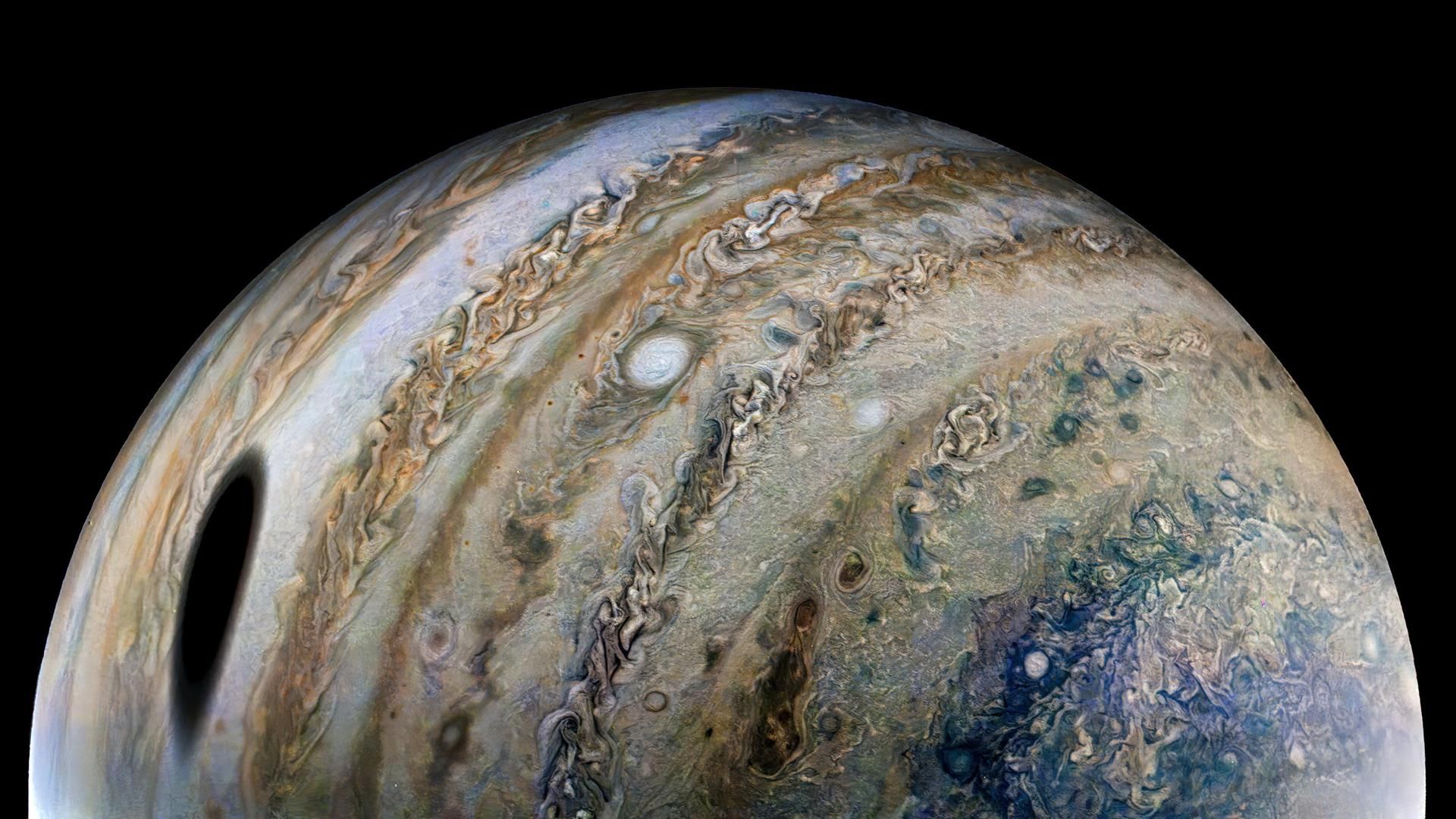
Jupiter is slightly smaller and flatter than scientists thought for decades, a new study has found.

Researchers used radio data from the Juno spacecraft to refine measurements of the solar system’s largest planet. Although the differences between the current measurements and previous measurements are small, models of Jupiter’s interior and other gas giants like Jupiter outside our solar system have improved, the researchers reported in the journal Nature Astronomy on February 2.

“Textbooks need to be updated,” study co-author Yohai Caspi, a planetary scientist at the Weizmann Institute of Science in Israel, said in a statement. “Of course, Jupiter’s size hasn’t changed, but the way we measure Jupiter has changed.”

you may like

Until now, scientists’ understanding of Jupiter’s size and shape was based on six measurements made by the Voyager 1 and 2 and Pioneer 10 and 11 missions. These measurements, which have since been adopted as a standard, were carried out using radio beams about 50 years ago, according to the statement.

But the Juno mission has been collecting data on Jupiter and its moons since arriving at the gas giant in 2016, and has collected even more radio data over the past two years. With that additional data, researchers have now refined measurements of Jupiter’s size to about 1,300 feet (400 meters) in each direction.

“You can figure out Jupiter’s size and shape just by knowing its distance and observing how it rotates,” Caspi said. “But to make really accurate measurements, we need more sophisticated methods.”
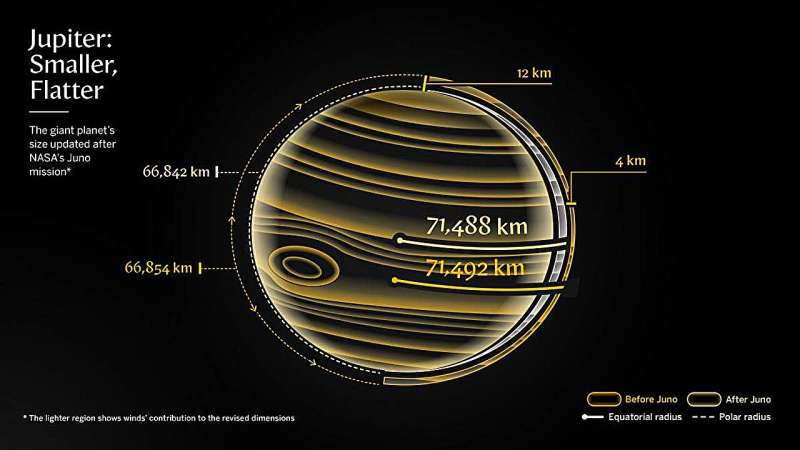
Diagram showing Jupiter as a circle and previous and current estimates of Jupiter's size as lines.

A diagram of Jupiter showing the differences between Juno’s observations and those of the Voyager and Pioneer spacecraft. (Image source: Weizmann Institute of Science)

bending light

In the new study, scientists tracked how the radio signal returning to Earth from Juno curves as it passes through Jupiter’s atmosphere and is cut off when Jupiter blocks the signal completely. These measurements allowed the team to explain Jupiter’s winds, which slightly change the shape of the gas planet. They then used that information to accurately calculate the shape and size of the planet.

Get the world’s most fascinating discoveries delivered straight to your inbox.

Using the new data, the research team calculated that the radius of the planet from pole to center is 41,534 miles (66,842 km). This is 7.5 miles (12 km) smaller than previous measurements. The newly calculated radius at the equator is 44,421 miles (71,488 km), 2.5 miles (4 km) smaller than previously thought.

“These few kilometers are important,” study co-author Eli Galanti, an expert on gas giant planets at the Weizmann Institute of Science, said in a statement. “By shifting the radius by a small amount, Jupiter’s interior model fits both the gravity data and atmospheric measurements much better.”

The updated measurements will improve our understanding of Jupiter’s interior and help scientists interpret data from gas giants outside our solar system, the researchers wrote in a study.

“This research helps us understand how planets form and evolve,” Caspi said in a statement. “Jupiter was probably the first planet to form in our solar system, and studying what happens inside it brings us closer to understanding how our solar system and planets like us formed.”

Galanti, E., Smirnova, M., Ziv, M., Fonsetti, M., Caruso, A., Buccino, DR, Hubbard, WB, Militzer, B., Bolton, S. J., Guyot, T., Held, R., Levin, S.M., Parisi, M., Park, R.S., Stephs, P., Tortola, P., Withers, P., Zanoni, M., & Caspi, Y. (2026). Jupiter’s size and shape. Nature. https://doi.org/10.1038/s41550-026-02777-x


Source link

#Biotechnology #ClimateScience #Health #Science #ScientificAdvances #ScientificResearch
Follow on Google News Follow on Flipboard
Share. Facebook Twitter Pinterest LinkedIn Tumblr Email Copy Link
Previous ArticleHow early decisions shape incident response investigations
Next Article LanzaTech aims for Humberside as sustainable aviation fuel facility
user
  • Website

Related Posts

A deer carrying the rotting head of a vanquished enemy and a playful lynx shortlisted for the Nuveen People’s Choice Award for Wildlife Photographer of the Year.

February 4, 2026

Terrifying photo of polar bear mother and cub resting in the mud in the summer heat

February 4, 2026

Scientists map thousands of ways ‘city-killer’ asteroid 2024 YR4 could hit the moon, resulting in an explosion as bright as Venus

February 3, 2026
Add A Comment
Leave A Reply Cancel Reply

Latest Posts

Sam Altman took a very harsh stance on Claude’s Super Bowl ad

Alphabet won’t tell investors about Google and Apple’s AI deal

Tinder looks to AI to fight ‘swipe fatigue’ and dating app burnout

Lunar Energy raises $232 million to deploy home battery storage to support power grid

Trending Posts

Subscribe to News

Subscribe to our newsletter and never miss our latest news

Please enable JavaScript in your browser to complete this form.
Loading

Welcome to Fyself News, your go-to platform for the latest in tech, startups, inventions, sustainability, and fintech! We are a passionate team of enthusiasts committed to bringing you timely, insightful, and accurate information on the most pressing developments across these industries. Whether you’re an entrepreneur, investor, or just someone curious about the future of technology and innovation, Fyself News has something for you.

Castilla-La Mancha Ignites Innovation: fiveclmsummit Redefines Tech Future

Local Power, Health Innovation: Alcolea de Calatrava Boosts FiveCLM PoC with Community Engagement

The Future of Digital Twins in Healthcare: From Virtual Replicas to Personalized Medical Models

Human Digital Twins: The Next Tech Frontier Set to Transform Healthcare and Beyond

Facebook X (Twitter) Instagram Pinterest YouTube
  • Home
  • About Us
  • Advertise with Us
  • Contact Us
  • DMCA
  • Privacy Policy
  • Terms & Conditions
  • User-Submitted Posts
© 2026 news.fyself. Designed by by fyself.

Type above and press Enter to search. Press Esc to cancel.