


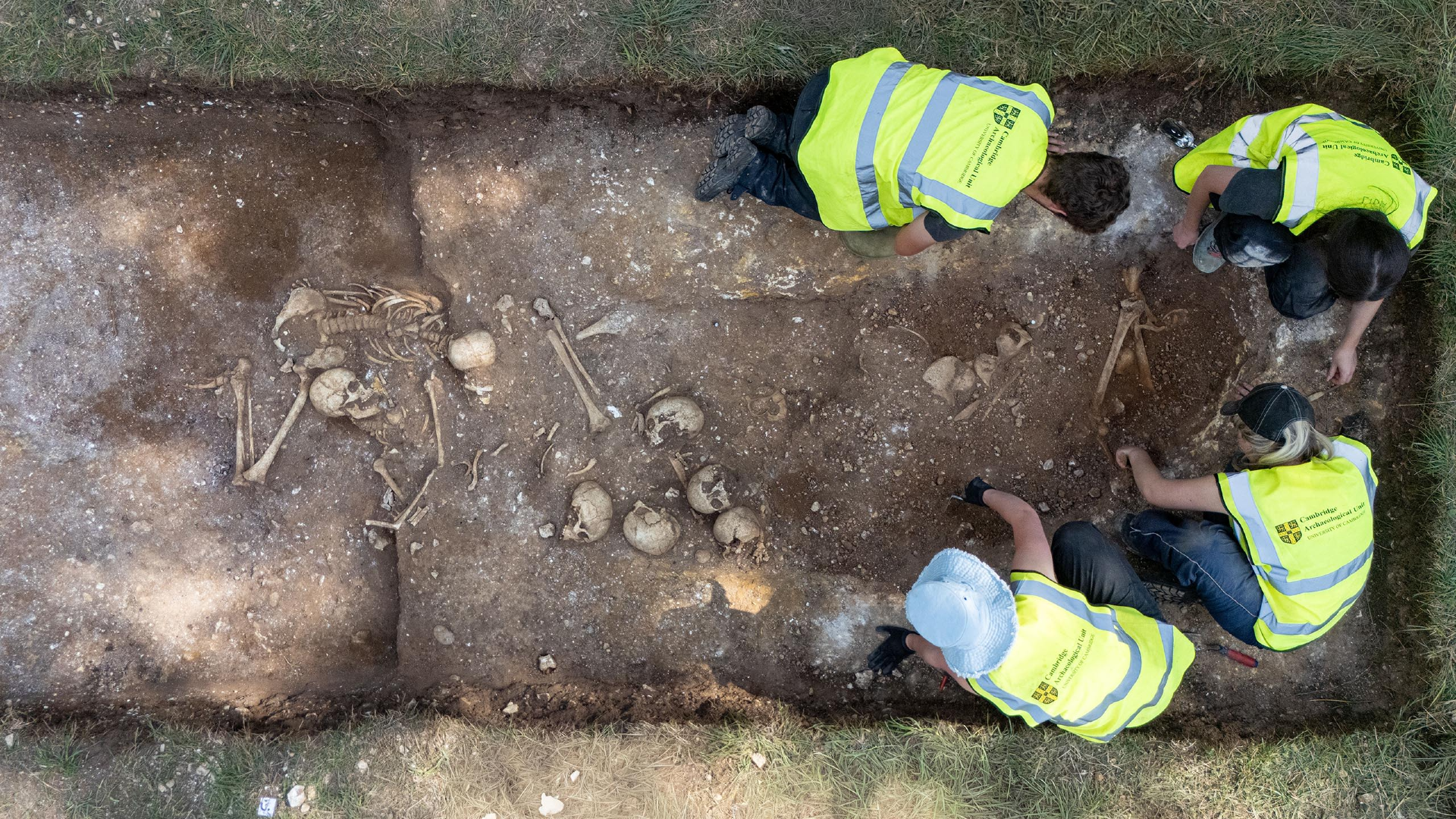
Archaeologists have unearthed a Viking-era pit filled with the dismembered bodies of 10 people outside Cambridge, England. This unusual mass grave also contains the remains of a very tall man who underwent brain surgery and may be related to a 9th century conflict between the Saxons and Vikings.
In the summer of 2025, a team of professional and student archaeologists excavated the pit during a training excavation at Wandlebury Country Park, about 3 miles (5 km) south of Cambridge. Previous archaeological excavations in the area revealed an Iron Age hillfort used in the 2nd century AD. It was just outside the hill fort that archaeologists discovered a 13-by-3.3-foot (4-by-1-meter) hole.
you may like
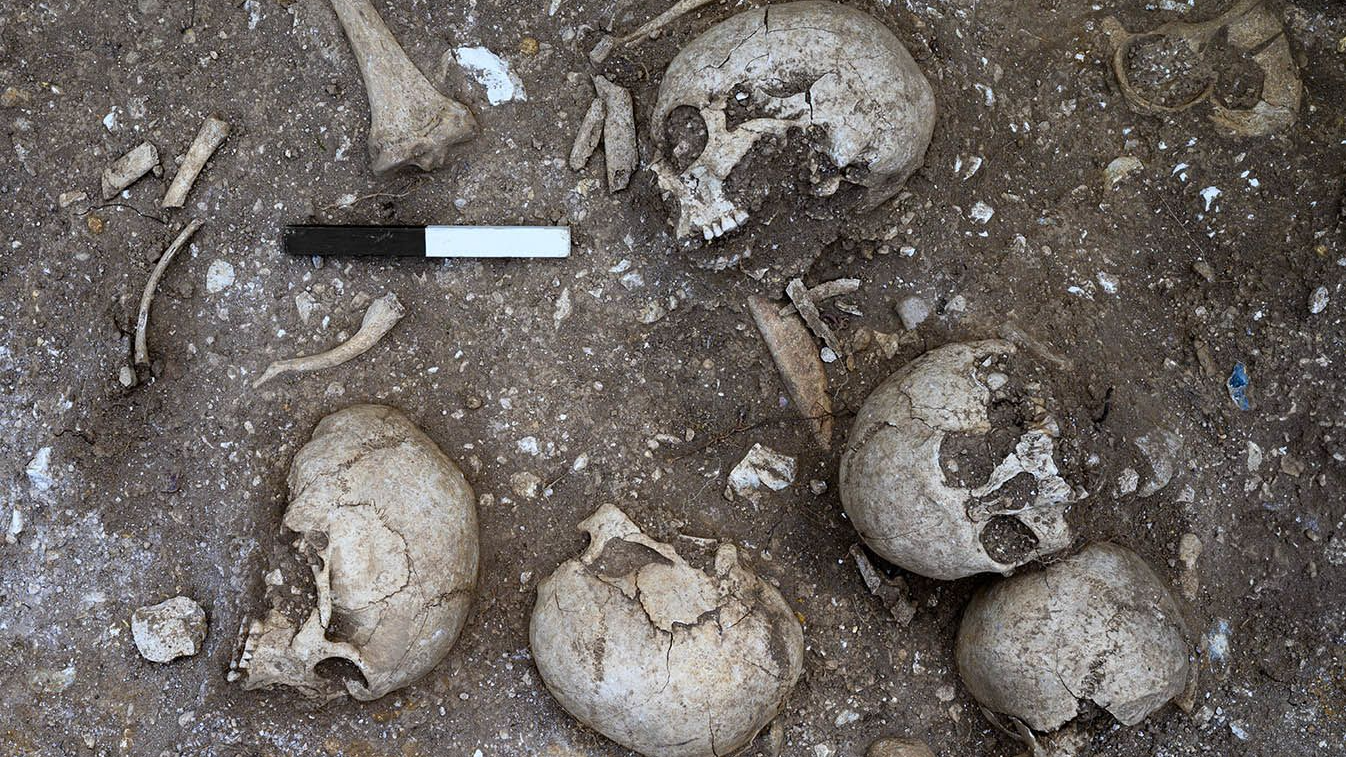
“The disarticulated body parts may have been previously displayed as trophies, then collected and buried with those who were executed or massacred,” Aldred said. Individual body parts “could have been in a state of decomposition and literally broken apart when they entered the hole,” he added.
During the 9th century, Aldred said, the area that is now Cambridge was a kind of “frontier zone” in the wars between the Saxons and the Vikings. One skeleton has been carbon dated to between 772 and 891 AD, so “we suspect this hole is related to those conflicts,” Aldred said.
However, the lack of injuries associated with medieval battles means that those in the pits are unlikely to have died in battle. “Those buried may have been subjected to corporal punishment, which may have something to do with Wandlebury being a sacred or well-known meeting place,” Aldred said.
“It was sobering to identify more severed bones than ever before and realize the extent of the suffering that had occurred,” Grace Grandfield, an undergraduate student at the University of Cambridge who took part in the excavation, said in a statement.
Giant with a hole in his head
One particular human skeleton found face down in a hole has given researchers insight into the person’s health problems.
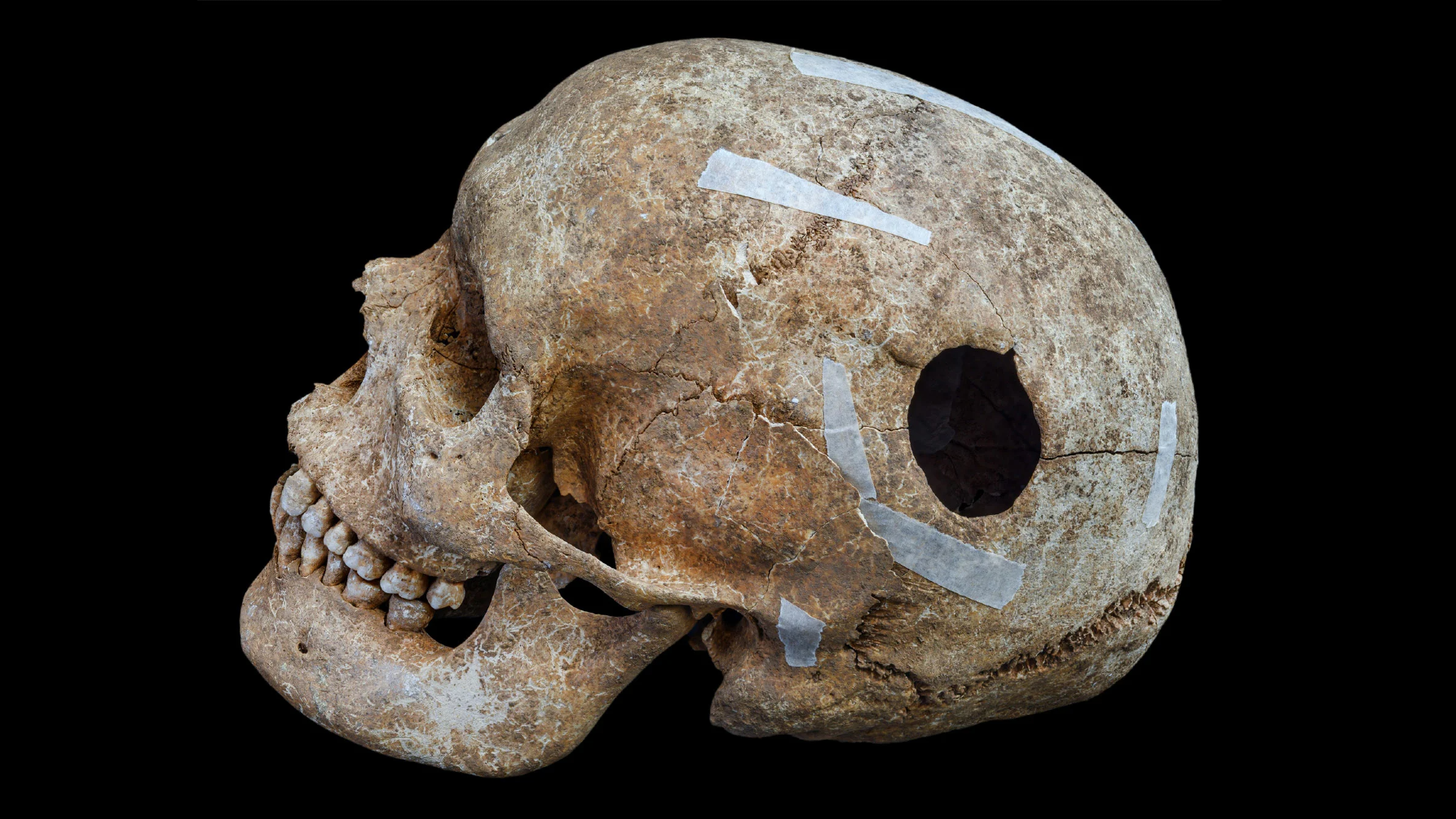
The remains of the man, who was between 17 and 24 years old at the time of his death, revealed that he may have been approximately 6 feet 5 inches (1.95 meters) tall. This was an impressive height for a time when the average height for men was 5 feet 6 inches (1.68 meters). He also has a 1.2 inch (3 centimeter) oval hole in his skull, which may have something to do with his towering stature.
“This person may have had a tumor that affects the pituitary gland and causes an excess of growth hormone,” Trish Beers, an osteologist at the University of Cambridge, said in a statement.
you may like
Pituitary gigantism is a condition characterized by overproduction of growth hormone during puberty and is usually caused by a benign tumor called an adenoma. When growth hormone is secreted in excess, a child’s height increases significantly. This condition can put strain on the circulatory and skeletal systems that have to maintain large, heavy bodies.
“If there was such a condition in the brain, the pressure inside the skull would have increased, causing the headache,” Beers said. This may have necessitated a type of brain surgery called trepanation, in which the brain’s protective membrane is exposed by drilling or scraping away from the skull.
The hole in the man’s skull may have been to relieve pressure on the brain, “not unusual for head injuries today,” Biers said.
A statement said the University of Cambridge’s School of Archeology and the Cambridge Archeology Unit had been conducting student training excavations at Wandlebury for several years, but this was the first time since 1976 that human remains had been discovered. The discovery featured on a recent episode of BBC Two’s Digging for Britain.
Further scientific analysis of the 10 skeletons is planned. Experts aim to use DNA and chemical analysis techniques to investigate people’s health and ancestry. These results should also reveal whether the deceased was a Viking.