

Close Menu
  • Home
  • Identity
  • Inventions
  • Future
  • Science
  • Startups
  • Spanish
What's Hot

APT36 and SideCopy launch cross-platform RAT campaign against Indian companies

Rethinking plastic packaging with innovative biomaterials and AI

Public training opens the door to crypto mining in Fortune 500 cloud environments

Facebook X (Twitter) Instagram
  • Home
  • About Us
  • Advertise with Us
  • Contact Us
  • DMCA
  • Privacy Policy
  • Terms & Conditions
  • User-Submitted Posts
Facebook X (Twitter) Instagram
Fyself News
  • Home
  • Identity
  • Inventions
  • Future
  • Science
  • Startups
  • Spanish
Fyself News
Home » Astronauts capture glowing salty pink Valentine’s Day ‘hearts’ in Argentina — Earth as seen from space
Science

Astronauts capture glowing salty pink Valentine’s Day ‘hearts’ in Argentina — Earth as seen from space

userBy userFebruary 10, 2026No Comments4 Mins Read
Share Facebook Twitter Pinterest Telegram LinkedIn Tumblr Email Copy Link
Follow Us
Google News Flipboard
Share
Facebook Twitter LinkedIn Pinterest Email Copy Link

simple facts

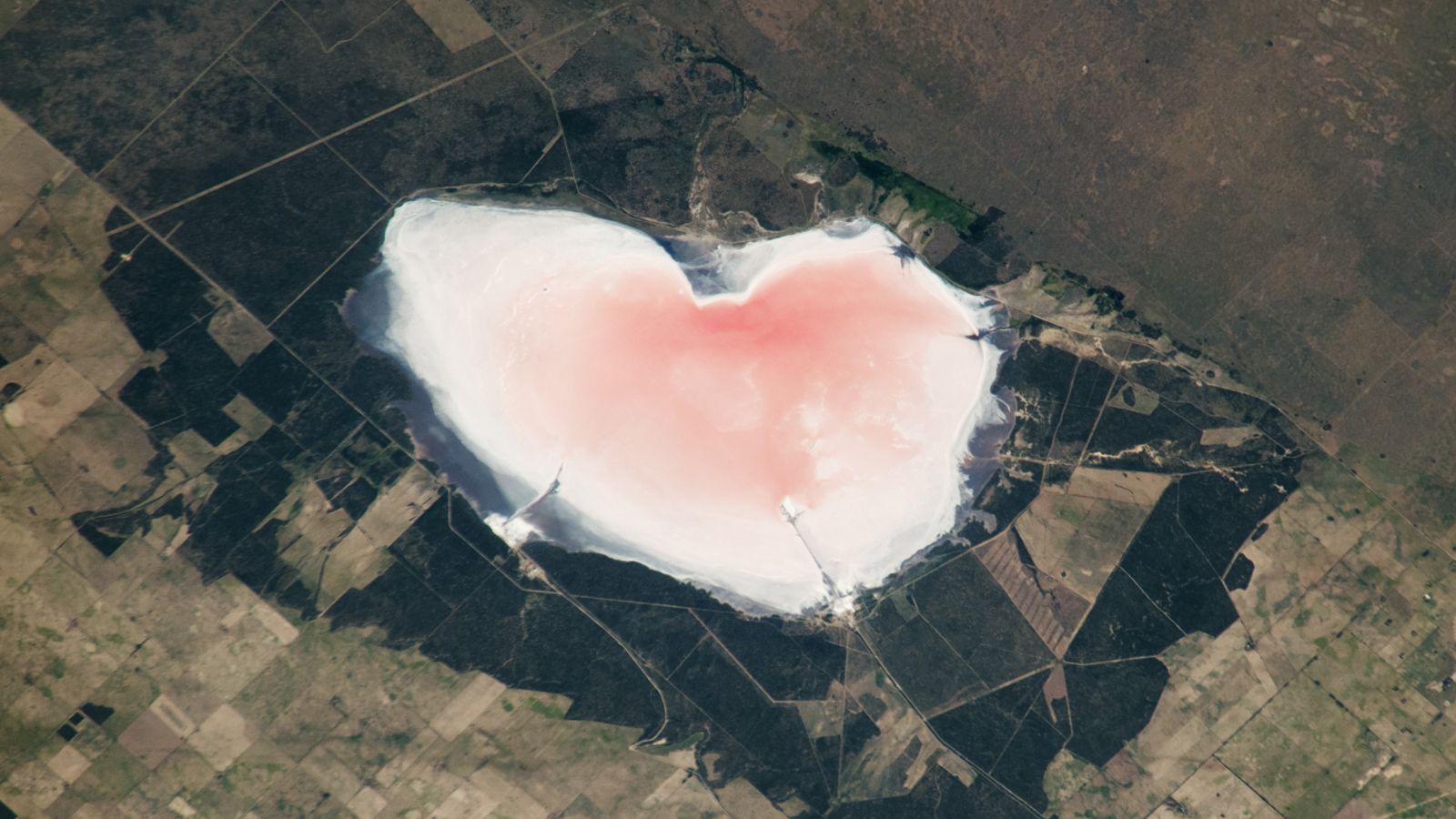
Where is it? salinas las barrancas, argentina [-38.75293078, -62.95083234]

What is in the photo? pink salt lake in the shape of a heart

Who took the photo? An unknown astronaut aboard the International Space Station (ISS)

When was it taken? January 16, 2024

This photo of the amorous astronaut was first published by NASA on Valentine’s Day 2025, highlighting a pink heart-shaped salt lake in Argentina.

Salinas Las Barrancas, also known as Laguna de Salinas Chicas, is a shallow salt lake in the lowland plains of Argentina’s Buenos Aires province, approximately 53 km (33 miles) west of the port city of Bahia Blanca.

The lake bed is approximately 10 km in diameter at its widest point and regularly fills with water after heavy rains. But NASA’s Earth Observatory says the region’s strong sunlight quickly evaporates this liquid, exposing salt flats rich in crystals mined by locals.

you may like

In this photo, the lake appears almost empty due to its bright pink color, but a 2022 Smithsonian Magazine article about similarly colored salt lakes says this is likely the result of an imbalance between Dunaliella salina, a type of dark red algae that grows in most salt lakes on Earth, and other microorganisms in the water.

“We have a rainy season and the salinity levels drop. [because there’s more water in the ponds]. When the salinity is low, Dunaliella survives and the ponds appear reddish-brown,” Lilium Casillas Martínez, a microbiologist at the University of Puerto Rico Humacao, told Smithsonian, explaining the color of similar salt ponds in Puerto Rico. “During the dry season, it gets really salty. The Dunaliella dies and the archaea and bacteria take over. Then it goes pink, pink, pink.”
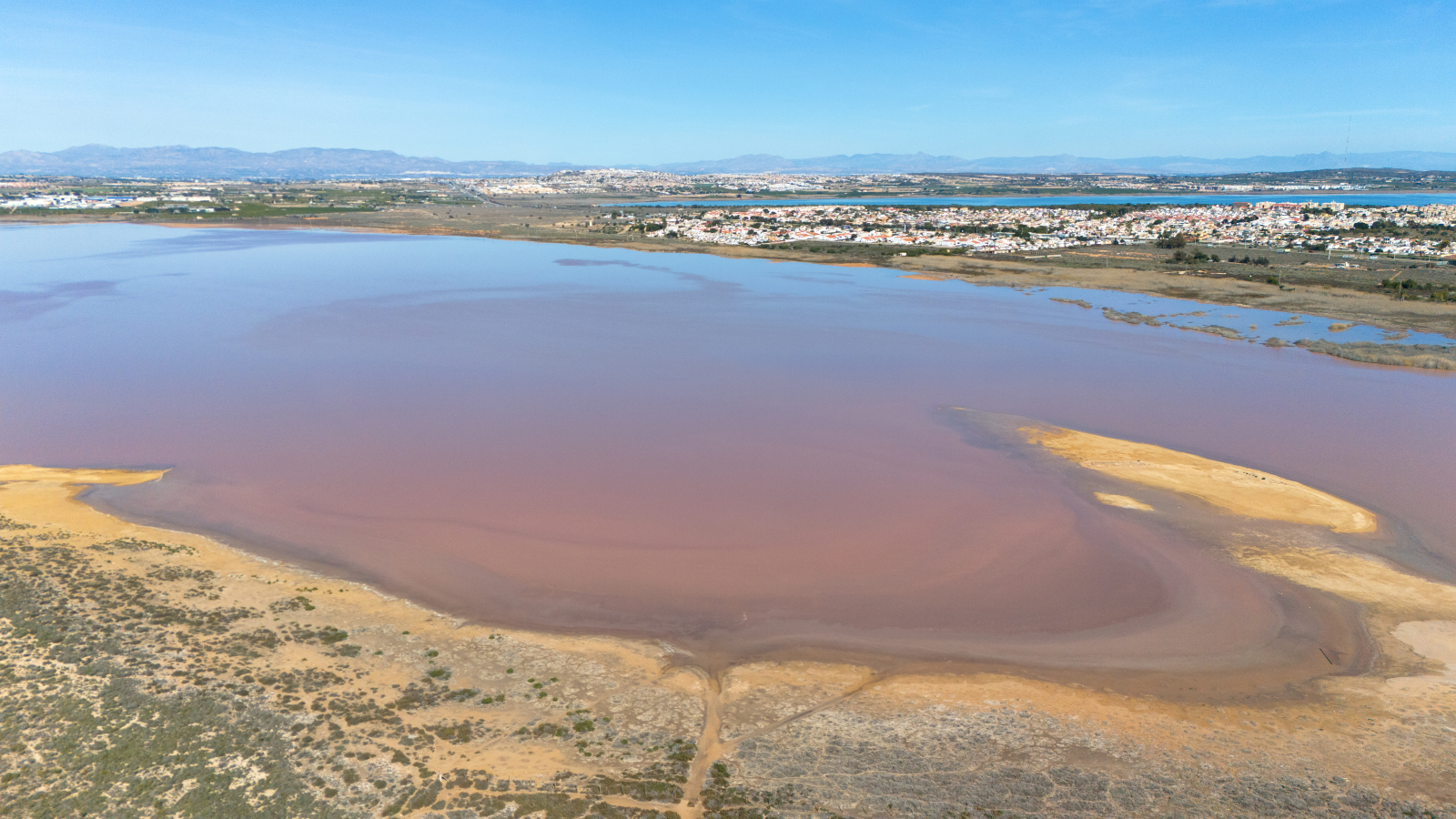
Photo of a pink salt lake in Spain

The pink color of most salt lakes, such as Lake Torrevieja in southern Spain (pictured), is related to an algae called Dunaliella salina. (Image credit: Ayegül Kurt/Anadolu via Getty Images)

Local residents mine up to 330,000 tons (300,000 metric tons) of salt from the flatlands of Salinas Las Barrancas twice a year, during the region’s rainy season, according to a 2019 feature on the lake by Argentine news site La Nación. Most of this salt will be replenished by the next heavy rain, and experts predict that mining there will last for at least 5,000 years.

Mining is primarily done using traditional processes, such as scraping salt from the surface of the plain using hand tools. Workers must take precautions to protect their eyes and skin from the strong sunlight reflecting off the pure white crystals. “Salt becomes part of your life,” Chepo, a local worker, told La Nacion (translated from Spanish). “For others it’s a hellish place, but for me the salt flats are home. You get used to being blind.”

Get the world’s most fascinating discoveries delivered straight to your inbox.

Due to the high salinity of Salinas Las Barrancas, very few people can survive there. However, the Earth Observatory says some salt-tolerant plants grow around the edges of the lake.
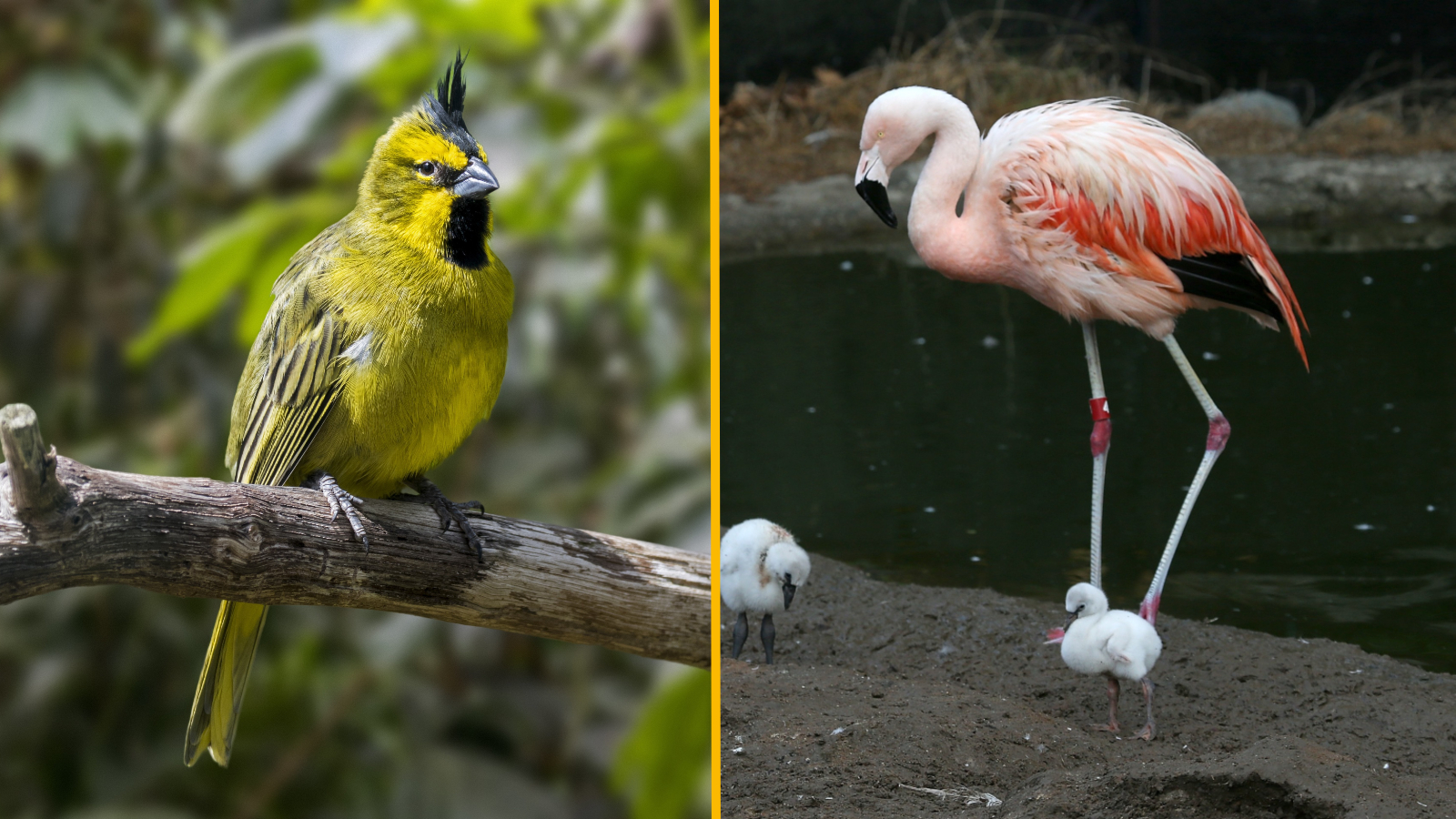
Photo of Cardinal Yellow and Chilean flamingo side by side

Yellow cardinals (left) and Chilean flamingos (right) both owe their striking colors to carotenoids produced by D. salina. Without these pigments, it would look very different, as you can see from the juvenile flamingo in the second image. (Image credits: Left: Philippe Clement/Arterra/Universal Images Group via Getty Images; Right: Justin Sullivan/Getty Images)

It’s also home to brightly colored birds, including the bright yellow cardinal (Gubernatrix cristata) and the bright pink Chilean flamingo (Phoenicopterus chilensis). These birds feed on small crustaceans that are rich in carotenoids (organic pigments synthesized by plants, algae, and bacteria).

These particular carotenoids are derived from the Dunaliella algae that small crustaceans feed on and naturally produce both red and yellow pigments. If these pigments were not included in the diet from birth, both bird species would have different colors. Yellow cardinals are born red, and flamingos are born grayish-white.
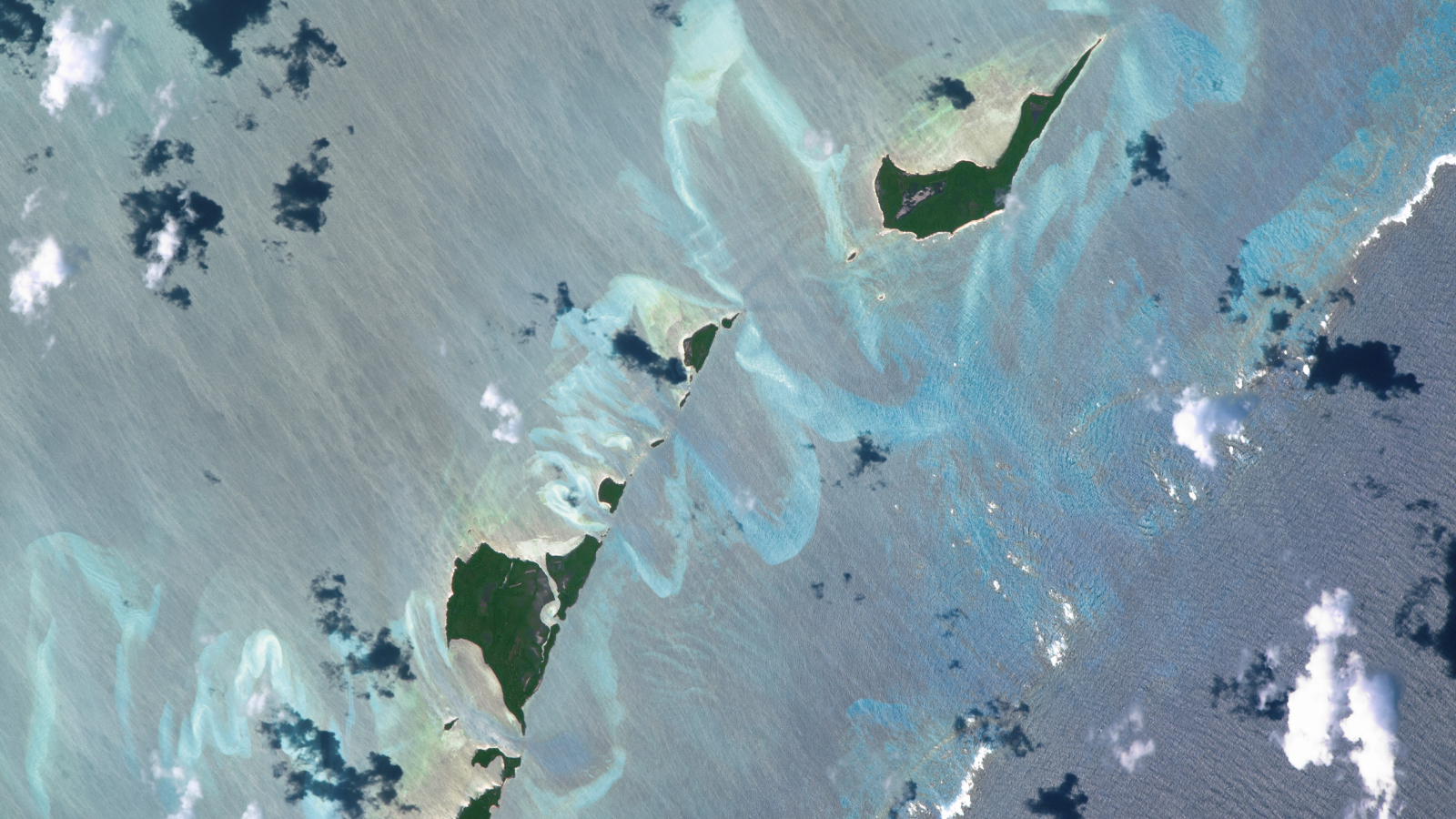
Astronaut photo of two Bahamian islands surrounded by twisted ribbons of sparkling blue sand
The sandbar shines like the aurora borealis

Astronaut photos taken in the Bahamas in 2016 show a series of shimmering, rippling sandbars partially carved out by coral reefs. The image also reveals subtle differences in sea level caused by hidden steep ocean drops.
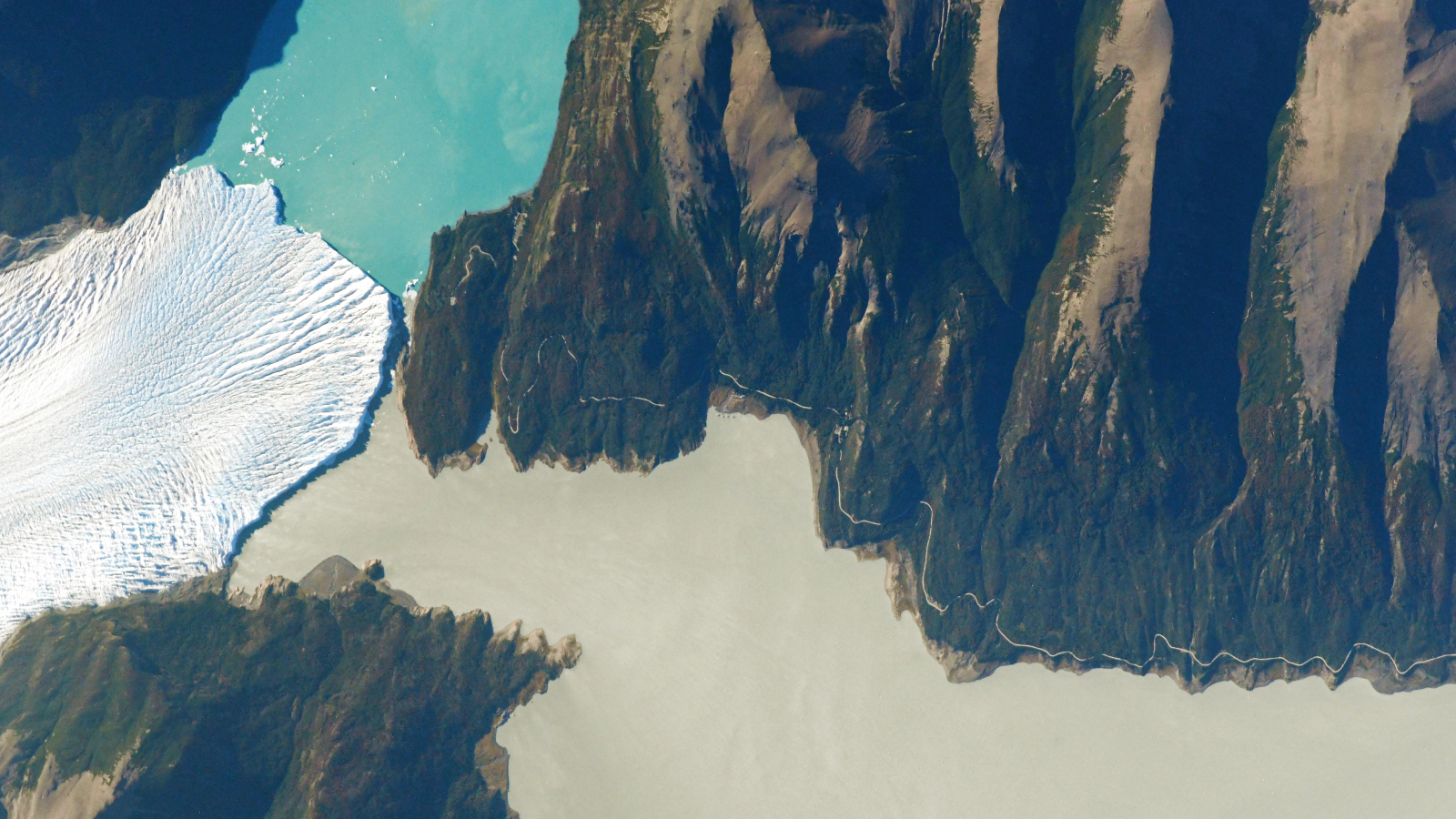
Astronaut photo of the intersection of glaciers, green rivers, and blue lakes in the Patagonian valley system
Glaciers, lakes and rivers “contact”

A 2021 astronaut photo shows a triple valley system in Argentina’s Los Glaciares National Park, home to giant climate-resilient glaciers, pristine turquoise lakes, and murky green “rivers.”
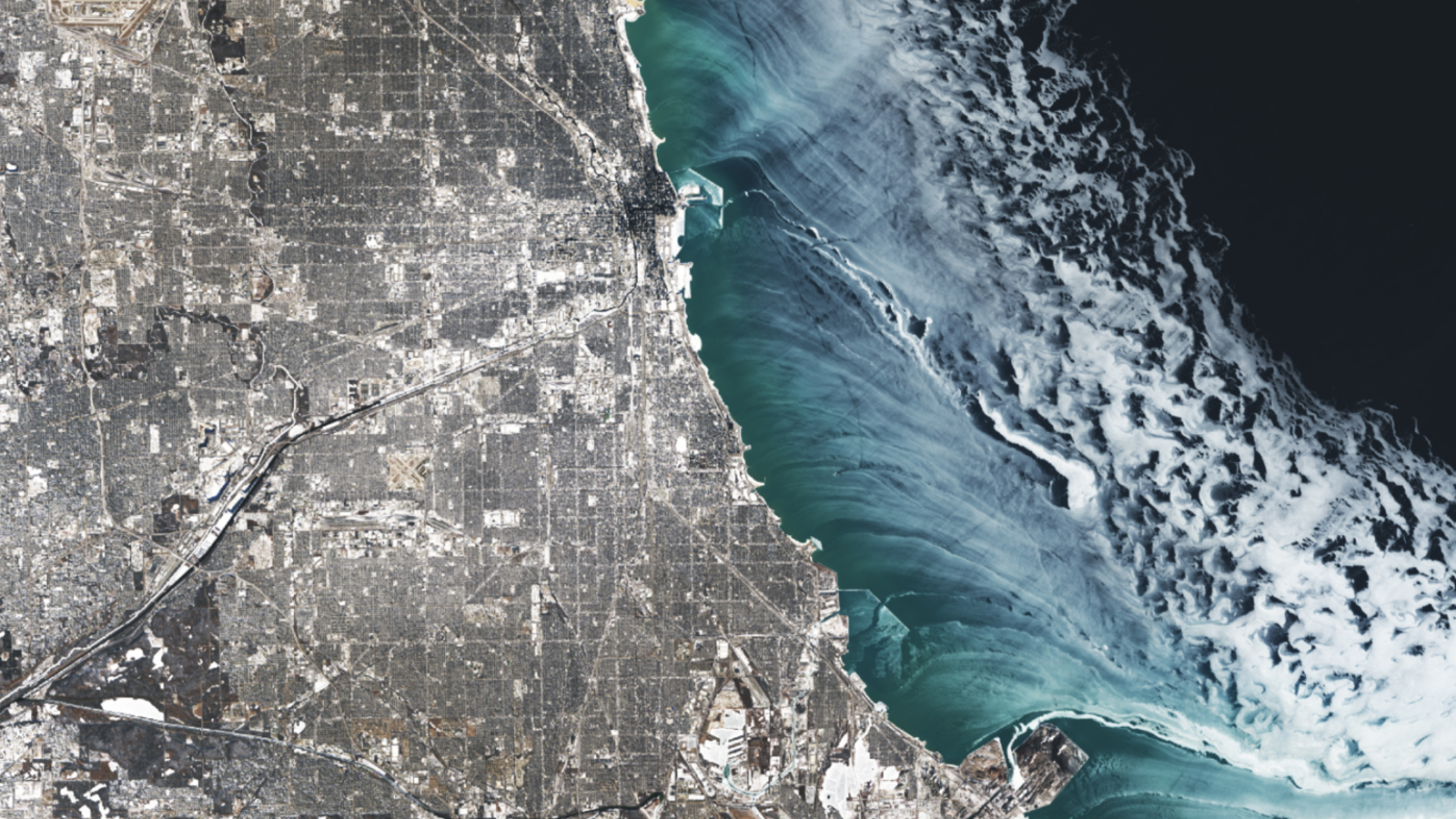
Satellite photo showing magical ice swirling along Chicago's winter coastline
Ice swirls along Chicago

Satellite images from 2025 show a series of ghostly ice swirls formed on the surface of Lake Michigan by strong winds during the extreme cold that blanketed Chicago in snow.


Source link

#Biotechnology #ClimateScience #Health #Science #ScientificAdvances #ScientificResearch
Follow on Google News Follow on Flipboard
Share. Facebook Twitter Pinterest LinkedIn Tumblr Email Copy Link
Previous ArticleThe first signs of burnout are coming from those who embrace AI the most
Next Article Dutch authorities confirm Ivanti zero-day exploit exposed employee contact data
user
  • Website

Related Posts

Earth’s core contains up to 45 times more hydrogen than the ocean, and research shows it was present early in planetary formation

February 10, 2026

A Viking-era mass grave contains a mysterious mix of dismembered human remains and complete skeletons, including a ‘giant’ who underwent brain surgery.

February 9, 2026

New ‘sunlit’ comet could become visible to the naked eye during daylight hours if the sun doesn’t destroy it

February 9, 2026
Add A Comment
Leave A Reply Cancel Reply

Latest Posts

APT36 and SideCopy launch cross-platform RAT campaign against Indian companies

Rethinking plastic packaging with innovative biomaterials and AI

Public training opens the door to crypto mining in Fortune 500 cloud environments

A green digital economy can improve health and sustainability

Trending Posts

Subscribe to News

Subscribe to our newsletter and never miss our latest news

Please enable JavaScript in your browser to complete this form.
Loading

Welcome to Fyself News, your go-to platform for the latest in tech, startups, inventions, sustainability, and fintech! We are a passionate team of enthusiasts committed to bringing you timely, insightful, and accurate information on the most pressing developments across these industries. Whether you’re an entrepreneur, investor, or just someone curious about the future of technology and innovation, Fyself News has something for you.

Castilla-La Mancha Ignites Innovation: fiveclmsummit Redefines Tech Future

Local Power, Health Innovation: Alcolea de Calatrava Boosts FiveCLM PoC with Community Engagement

The Future of Digital Twins in Healthcare: From Virtual Replicas to Personalized Medical Models

Human Digital Twins: The Next Tech Frontier Set to Transform Healthcare and Beyond

Facebook X (Twitter) Instagram Pinterest YouTube
  • Home
  • About Us
  • Advertise with Us
  • Contact Us
  • DMCA
  • Privacy Policy
  • Terms & Conditions
  • User-Submitted Posts
© 2026 news.fyself. Designed by by fyself.

Type above and press Enter to search. Press Esc to cancel.