


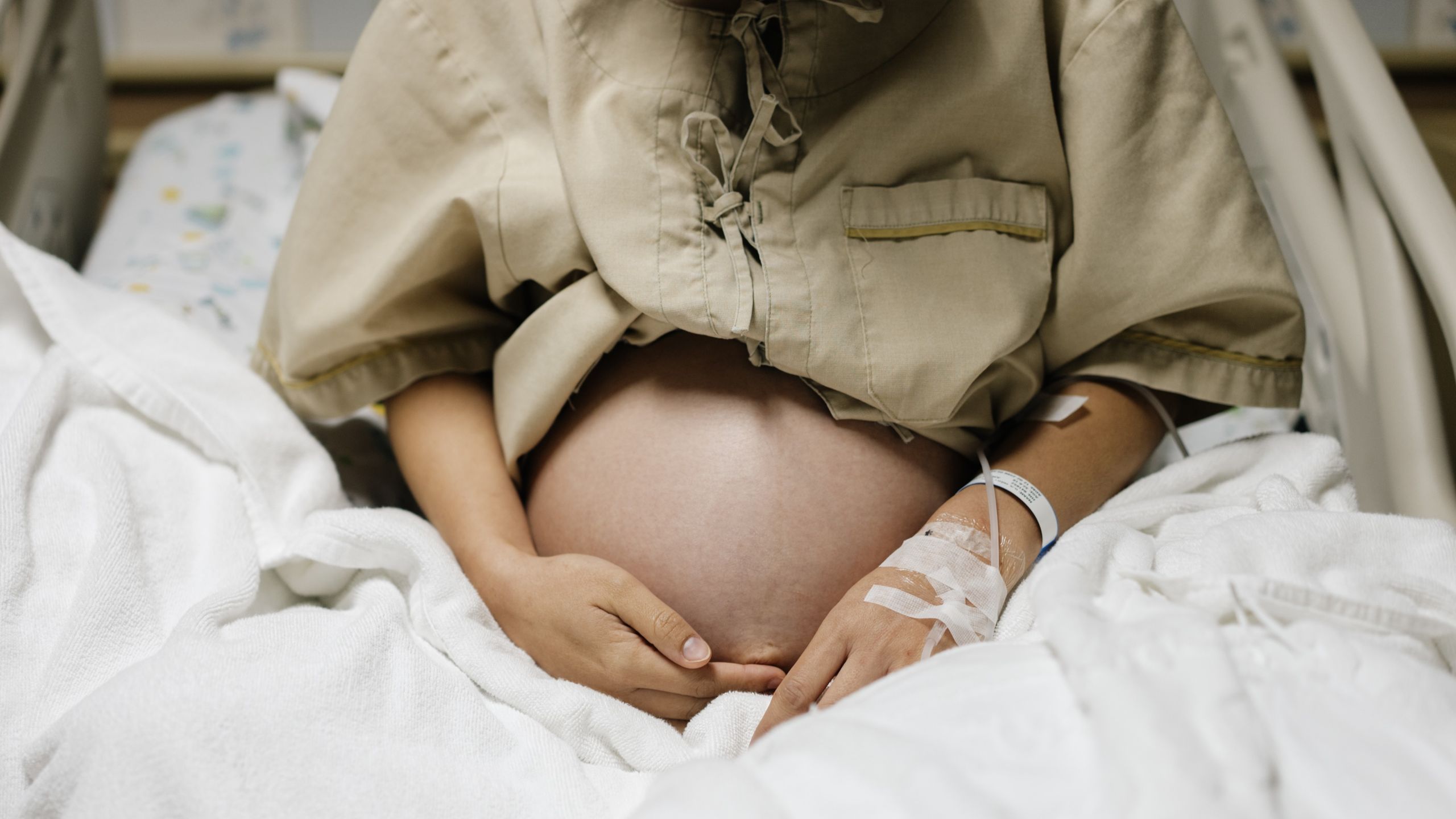
Figures often cited to compare the risks of pregnancy and abortion in the United States may significantly underestimate the risk of death from pregnancy, according to a new analysis.
The study, published Jan. 21 in the journal JAMA Network Open, suggests that the risk of pregnancy-related death may be at least 44 times higher than the risk of abortion-related death. Previously, the risk of death from pregnancy was estimated to be about 14 times higher, but the new estimate is more than three times higher.
you may like
The study authors hope this latest number could help steer the debate over abortion access in the United States.
“What we show in our paper is very simple: when you take away the option to terminate a pregnancy, you put people at greater risk of death,” she said.
Statistics based on data from 20 years ago
Steenland and colleagues traced the original risk estimate back to its source and found that the statistic was now based on a single 2012 study using data from nearly 20 years ago.
The study examined records of deaths occurring within the first year of life in the Centers for Disease Control and Prevention’s (CDC) Pregnancy Death Surveillance System. This data covers approximately 32.35 million births in the United States from 1998 to 2005. These data were compared to records of abortion-related deaths collected by the CDC in the same year, totaling 65. That’s out of about 10 million total abortions, according to the Guttmacher Institute, a research nonprofit that monitors abortion surveillance data in the United States and around the world.
“If you don’t know much about maternal health in the United States, you don’t have to wonder, ‘Maybe the statistics have changed since then,'” Steenland said. She added that after some simple “background calculations”, the researchers suggested that this ratio may now be definitively outdated.
To establish the most up-to-date risk ratios, the study authors looked at national databases and pooled statistics collected between 2018 and 2021. The database included the CDC’s National Vital Statistics System, which provides total births and pregnancy-related deaths in the United States up to 1 year after birth. The CDC’s Pregnancy Mortality Surveillance System records annual abortion-related deaths, and the annual total number of abortions was obtained from the Guttmacher Institute.
The study authors included both live births and stillbirths in the total number of births, which was not done in the 2012 study. This allowed researchers to roughly estimate the total number of pregnancies in the United States that are currently not tracked.
you may like
Although this metric is the best next to the number of pregnancies, Steenland noted that some numbers, such as ectopic pregnancies and miscarriages, are still missed. Because they could not count these early stages of pregnancy with confidence, the researchers also excluded deaths that occurred during those stages from the overall count, she said. If data were missing, it would not have been possible to generate accurate risk ratios.
According to the study, from 2018 to 2021, there was an annual average of 32.3 maternal deaths per 100,000 live births in the United States. This includes at least 3,662 pregnancy-related deaths over a four-year period, out of approximately 15 million live births. For comparison, this is at least twice the pregnancy-related mortality rate reported in a 2012 study, which ranged from 8.8 to 14.5 per 100,000 live births.
The study authors suggested that this increase in rates may be due to improved tracking of pregnancy-related deaths. Notably, the 2003 revision of the U.S. death certificate, which went into full effect in 2018, introduced a “pregnancy” checkbox.
The risk of abortion-related deaths remains very low, new study reports, with 17 abortion-related deaths recorded between 2018 and 2021 out of more than 3.5 million abortions recorded in the United States. This results in an abortion-related death rate of approximately 0.46 deaths per 100,000 abortions, slightly lower than the rate of 0.60 deaths per abortion. A 2012 paper reported 100,000 abortions.
Increase in pregnancy-related deaths
Taken together, the 2026 analysis suggests that the risk of death associated with pregnancy is at least approximately 44 times higher than the risk of death associated with abortion. This number exceeds commonly reported statistics that suggest a pregnancy is 14 times more likely to result in death than an abortion.
But of course, the new numbers only tell part of the story, Stephen Burgess, a statistician at the University of Cambridge who was not involved in the study, told Live Science.
She noted that the risk of death from pregnancy is known to vary depending on the pregnant person’s age, socio-economic status and access to health care. These factors can make a big difference in how well your pregnancy goes and whether it develops complications that can be fatal. The risk ratio itself is also “heavily dependent” on the data set used to understand the overall U.S. abortion rate, he noted.
Notably, the Guttmacher Institute does not report the number of abortions in the United States in 2021. In the new study, the study authors replicated 2020 statistics on the number of abortions in the United States in 2021 and assumed they were about the same.
Mr Burgess welcomed the new research, saying it could more accurately measure the risk of death associated with pregnancy, including postnatal care. But he questioned whether the figures would “help mothers and policymakers make good decisions.”
But for Steenland, the overall message is clear.
“I think people should know what they’re up against and policy makers should be required to strive to ensure that everyone has access to the highest quality maternity care and the best possible outcomes,” she said.
Maternal care in the United States has steadily declined in recent decades, and maternal deaths have consistently increased since the 2000s, according to the Commonwealth Fund’s 2024 report. The report states that most of these deaths are likely to be preventable.
The U.S. Supreme Court’s 2022 Dobbs v. Jackson Women’s Health Authority decision, which overturned Roe v. Wade, also opened the door for states to ban or severely restrict abortion. The impact of this decision is already being felt and is expected to hinder improvements in maternal mortality in the near future. This disparity is felt most acutely among certain populations, with black mothers 3.3 times more likely to die than white mothers in states that restrict access to abortion.
Recent studies also suggest that infant deaths have increased since the abortion ban went into effect.
Steenland noted that it may be difficult to track pregnancy-related deaths in the future, as it is “very unlikely that the CDC will continue to release abortion-related death statistics” after the CDC’s Reproductive Health Division staffing was significantly reduced in 2025.
He said: “This restriction, along with other reductions and the public information available to measure these outcomes, will certainly limit what we can know about how the ratio has changed or will change.”
This article is for informational purposes only and does not provide medical advice.
Steenland MW, Markon K, Brown BP, Thoma ME. Pregnancy and abortion-related mortality rates in the United States, 2018-2021. JAMA net open. 2026;9(1):e2554793. doi:10.1001/jamanetworkopen.2025.54793