
Unleash cow efficiency to improve climate-friendly productivity
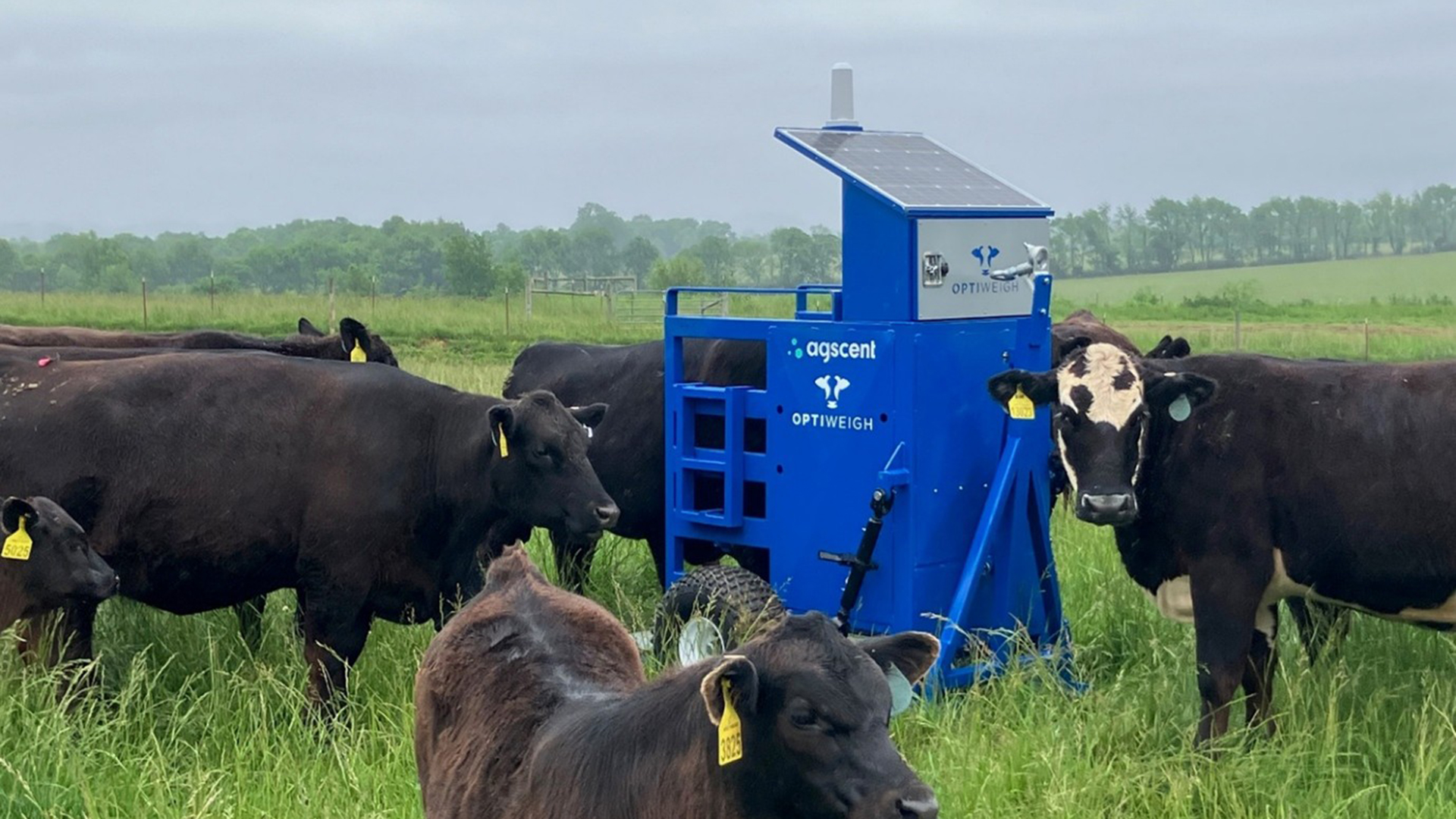
How Agcent’s CH4 and CO2 measurement technology and genomic tools are transforming beef production by identifying more efficient and profitable cows that increase productivity and naturally reduce methane production.
Advanced measurement tools are leading a fundamental change in how the livestock industry approaches sustainability. Technologies such as Agcent Air GHG and genetics make it clear that efficiency gains can often be aligned with economic and environmental goals, rather than viewing environmental goals as constraints on production.
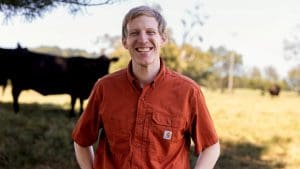
Dr. Troy Rowan, a geneticist at the University of Tennessee, conducts research using genomics and advanced measurement techniques to understand cow efficiency, particularly in forage-based systems. His goal is to develop practical tools that enable producers to breed cattle more profitably, more sustainably, and adapted to specific environments.
“At the end of the day, it’s all about making the most of our natural resources,” says Rowan. “It lives in harmony with the environment, putting these large ruminants where they belong and turning grass into high-quality protein.”
For generations, beef producers have relied on visual assessment and basic measurements to select breeding stock. However, within animals, it has been impossible to assess significant differences in metabolism and animal efficiency without sophisticated measurement tools. These differences can add thousands of dollars to feed costs and make a huge difference in environmental impact.
Challenges to efficiency
Feed costs are the largest variable cost in pasture-based cattle breeding operations. However, until recently, breeders and producers have had limited tools to assess cattle efficiency beyond body size.
“For producers in this part of the world, the biggest determinant of success is how efficiently cows can convert forage into milk and weaned calf weight,” Rowan said. “Our best indicator right now is how big the cow is. Larger cows tend to be less efficient and smaller cows tend to be more efficient.”
But size alone tells an incomplete story. Research has shown that even when cows of similar size are managed in the same way, there is considerable variation in efficiency.
“More than 30% variation can exist between individual animals of the same breed fed the same diet,” said Dr. Sarah Place, based on research on sustainable livestock management at Colorado State University.
This change represents huge untapped potential. The question is how to identify and measure it.
Methane as a window into metabolism
Although methane emissions have recently received attention for environmental reasons, Rowan places more emphasis on methane emissions as an indicator of animal metabolism and feed efficiency, both of which have direct benefits not only for the climate but also for livestock producers.
Methane and CO2 are the best indicators of metabolism and feed efficiency in grazing animals. Studies have shown that cows with low residual feed intake (RFI) produce 15-25% less methane than less efficient cows. “Even though it’s an imperfect indicator of metabolism, that’s something we don’t really understand about animals in large populations,” Rowan says.
Making measurements practical: Agcent solutions
Until recently, accurately measuring livestock metabolism and efficiency required expensive breathing chambers and specialized technicians. Rowan and his team have been using Agcent x Optiweigh to overcome these barriers and collect cow methane and CO2 data at the University of Tennessee Farm in Spring Hill. This mobile and easy-to-use system monitors emissions and live weight and is designed for use throughout commercial production and grazing systems.
“We were really impressed with its capabilities,” says Rowan. “The great thing about it is that it is very plug-and-play, unlike other devices. This is a big reason why we decided to rely on Agcent X Optiweigh for our project rather than other measurement technologies.”
This system allows researchers to collect methane and CO2 data easily and at scale. For Rowan, this practicality is essential for scaling monitoring to build the large datasets needed for genetic assessments.
“You’re never going to put every cow in a breathing room,” Rowan said. “But if you can put a cow’s head against something three or four times a week for four weeks, you can get a pretty good idea of what the average output of that cow is.”
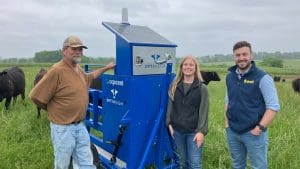
Tennessee(Provided)
Colorado State University’s Dr. Place agreed: “We need to collect a large number of phenotypes, thousands of animals.”
From research to reality
Agcent’s practical, scalable monitoring systems move measurements from research stations to the field where they are used. “This is the first time I think we have a practical tool, especially when it comes to this aspect of enteric methane.” [Agscent X Optiweigh] For cattle producers, especially beef cattle producers, if we start doing this in a routine way, it will work,” Rowan said.
Dr. Rowan’s farm team agrees. “It’s accurate, it’s easy to move, it’s easy to use, and it’s easy for the cows to use,” said Claire Hankler, who runs the research project on a daily basis.
Spring Hill Ranch Manager Wes Gilliam added, “We like equipment that we can just put in the pasture and not change too much how we run the farm or how we capture data.”
The potential applications are wide-ranging. These include validating feed additives, evaluating pasture management decisions, and most importantly, identifying superior genetics within existing herds.
Using Agcent measurement technology, producers can identify previously invisible information about which animals have the most valuable efficiency traits. Measuring methane emissions as an indicator of feed efficiency allows producers to make better breeding decisions, reduce feed costs, improve growth rates and increase herd profitability. The result is a more profitable operation that produces high-quality beef while reducing environmental impact.
Future Direction: Stacking Solutions
Rowan believes his work contributes to broader efforts to make beef production more sustainable while maintaining or increasing profitability. Rowan is optimistic about the future of the industry.
“I’m very bullish about the future of the beef industry,” Rowan said. “There’s still a lot of meat left in the bones to figure out from a genetics perspective. There’s probably a whole set of traits that we haven’t been able to measure or touch before. We’re starting to have the tools to get there.”
Rowan’s approach is consistent with that of Global Methane Hub CEO Marcelo Mena. “What we want to do in this decade is to improve productivity while developing new technologies that can reduce emissions in absolute terms.” With the availability of practical measurement tools like Agcent Air and advances in genetic evaluation methods, the future of beef production is becoming increasingly promising, allowing for more profitable operations while reducing environmental impact.
About research
Dr. Troy Rowan leads beef cattle genetics research at the University of Tennessee, focusing on genomic approaches to improve cattle efficiency, local adaptation, and sustainability of feed-based production systems. The aim of his research is to develop practical selection tools to help producers breed more profitable and environmentally efficient cattle adapted to their specific environments.
About Agcent System
Agcent Air provides practical on-farm methane and CO2 monitoring solutions.
Agcent X Optiweigh – A portable system that combines methane measurement and live weight monitoring, designed for easy integration into existing farm infrastructure and grazing systems. Agcent Air GHG2100 – Robust real-time greenhouse gas monitoring of methane and carbon dioxide with flexibility for a variety of farm environments.
Contact Agcent to learn more about validation studies, measurement programs, and how to start measuring your herd efficiency.
References
Basarab, JA, Beauchemin, KA, et al. (2013). “Reducing GHG Emissions through Genetic Improvement for Feed Efficiency” Animals, 7(Supplement 2):303-15. Nkrumah, J. D., Okine, E. K. et al. (2006). “Selecting cows with low residual feed intake reduces daily methane production.” Journal of Animal Science, 84(6):1489-96. Hegarty, R.S., Goopy, J.P., Hurd, R.M., & McCorkell, B. (2007). “Selecting cows with lower residual feed intake reduces daily methane production.” Journal of Animal Science, 85(6):1479-1486
Please note: This is a commercial profile
Please note that this article will also be published in the Animal Health Special Focus publication.
Source link

