
Protecting innovative renewable technologies for a green EU
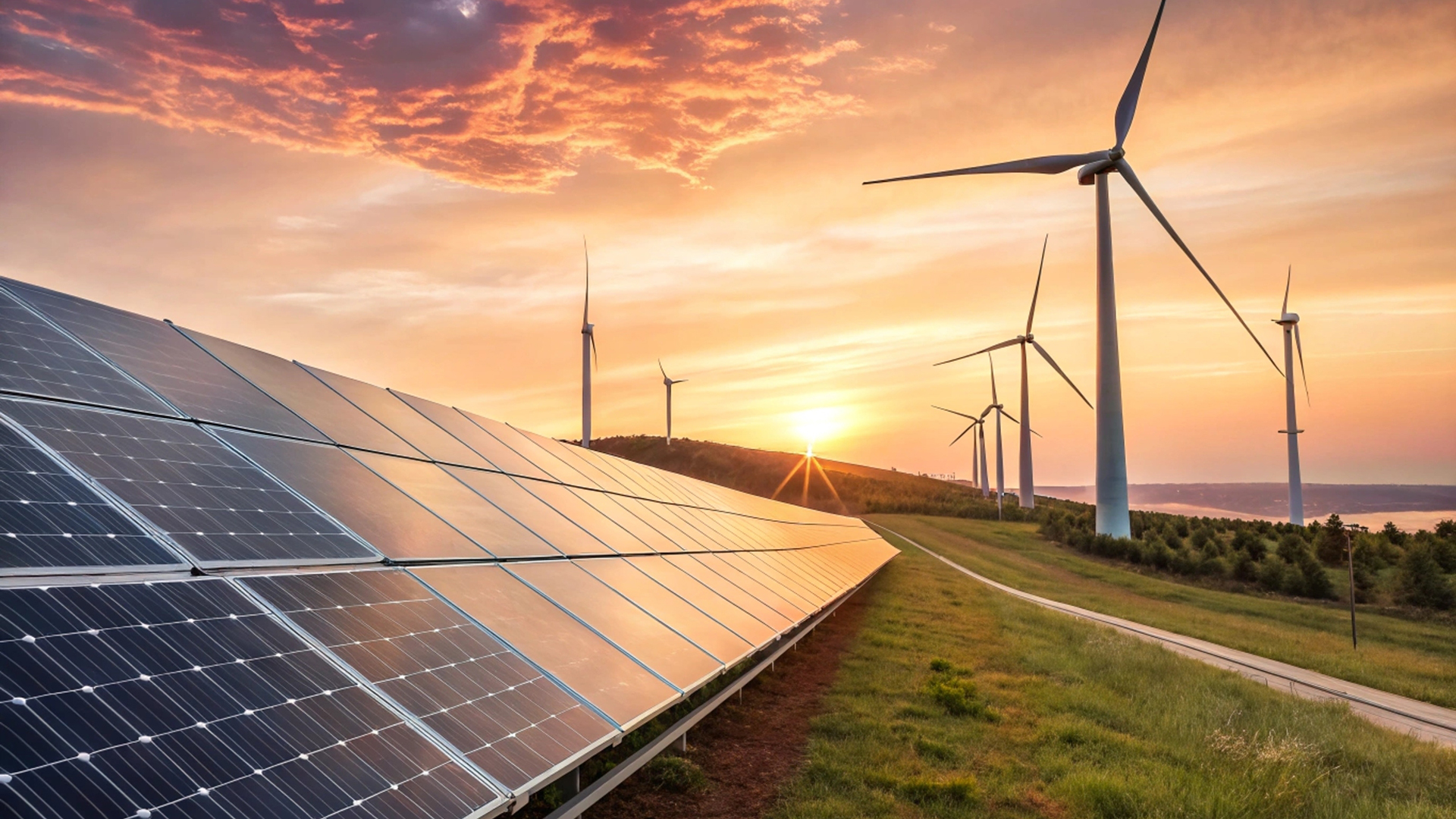
EUREC Executive Director Greg Arrowsmith highlights why innovative renewable technologies are key to delivering a more sustainable and secure energy system within Europe.
This is a pivotal year for Europe’s climate goals and strategies. The upcoming review of EU governance rules provides a unique opportunity to strengthen the EU’s energy and climate governance, but it could also be the year in which energy and climate law unravels under the guise of ‘simplification’.
There has been some flirtation with the idea of removing secondary objectives from relevant EU legislation in public consultations on governance rules. One of the goals that must be maintained concerns “Innovative Renewable Energy Technologies” (IRET). Today’s innovative technologies could become tomorrow’s widespread technologies, so providing special support to IRET has the potential to lower the costs of renewable energy and, when such technologies are made in Europe, help European manufacturers remain competitive with their international peers. The revised Renewable Energy Directive (RED III), adopted in late 2023, set an indicative target for 5% of all newly installed renewable energy capacity to come from innovative technologies by 2030. As we have shown in two reports, this goal is not only achievable, but necessary. However, as acknowledged by the European Commission, Member States have not sufficiently addressed IRET within their National Energy and Climate Change Plans (NECPs). Only 11 companies mention them, and only 5 of them set adoption targets of 5% or more in accordance with the law.
Innovation is essential to Europe’s energy future
No matter how “simplified” EU energy and climate policy becomes, the goals of IRET need to be maintained. EU technology producers are seeking protection from imports from China (e.g. appeals from parts of the solar power sector to the European Content Regulation) and will need to pay attention to innovation if they are not to lose ground against foreign competitors. The European Commission refers to it frequently, most recently in the 2025 Grid Package. Efforts to ensure that Member States use it to inform their industrial policies must be redoubled, not abandoned. Protecting your IRET investment will ensure medium-term energy supply stability and security, long-term industrial strength and competitiveness, while increasing system flexibility and reducing overall costs.
The definition of “innovative” technology could be improved
The push for simplification may have one benefit. That said, if applied to a broader range of renewable energy and net-zero technologies, it could eliminate contradictions in the definition of “innovative.” There are currently two definitions in the Net Zero Industry Act (NZIA), which are not fully consistent with each other, nor with the RED III definition. One definition that spans both texts would be to define the relevant innovative technology in each case as “a completely new technology or a completely uncommercialized technology that improves on an equivalent state-of-the-art technology.”
A diagram of eligible IRETs should be provided based on the initial list and expert opinion in the July Guidance on Innovative Technologies and Renewable Energy Deployment Modes. Conveniently, these experts already exist in the European Innovation Platform, which has existed for many years to advise on European energy innovation policy and operates in an open and transparent manner. The list is updated regularly to reflect technological advances across the EU. A single, clear definition and list of pre-approved technologies across EU legislation will help Member States better understand how to meet the law, which is an important objective of simplification.
How to achieve your goals
Member states will need to intervene in the market to achieve the many GW implied by the 5% target. The implied volume is too large to be covered by R&I’s budget. We propose two intervention methods. One is well known and the other is new.
Market creation through the Net Zero Industry Act (NZIA)
2026 will be the first year in which member states must plan to support renewable energy sources (RES) through public auctions under Article 26 of the NZIA. The article requires that some auctions use criteria other than price. The criterion most likely to be selected is ‘resilience’, requiring member states to diversify their supply chains. There may also be moves to require some net-zero technologies, or their subcomponents, to be manufactured in Europe under the impending Industrial Acceleration Act. In addition to these, “innovation” can also be used as a criterion other than price. This means that Member States can choose to specifically target innovative technologies for auction. Member States should be encouraged to use this standard wherever possible, as companies have the chance to remain competitive by innovating. The goal is for innovation and environmental profile criteria to someday take precedence over more overtly protectionist criteria.
Member States must “take into account” the Net Zero Industry Act (NZIA) when developing their NECPs, particularly with regard to the “research, innovation and competitiveness” aspects. We will advocate for this to happen further in our submission to the public consultation.
New mission of the Renewable Energy Finance Facility
The Renewable Energy Finance Facility (REFF) is a derivative of the Governance Regulations. This presents new opportunities to support innovative renewable energy. This is a mechanism to ensure that sufficient renewable energy capacity is built across the EU to meet the 2030 RES target of 42.5%, and is binding on the EU, but not on member states for individual contributions. The commission’s 2025 NECP analysis found that while most member states have achieved the binding target of 42.5% renewable energy, “a limited ambition gap of 1.5 percentage points remains”. REFF is likely to be asked to close that 1.5% gap, but it will also need to close the expected gap in meeting IRET’s 5% target by requiring the missing capacity to be “innovative” as well.
Achieving a more sustainable Europe
In the face of the shift to simplified processes and potential fatigue around sub-targets, we must remain focused on long-term goals and future energy system needs. The European energy system of the future must be stable, secure, flexible, competitive and sustainable, and innovative renewable energy technologies are an absolutely necessary element of this future system. By maintaining and increasing the ambition of IRET, including the 5% target set by RED, and by enacting practical support measures to support implementation efforts, we are one step closer to achieving Europe’s future sustainable energy system.
This article will also be published in the quarterly magazine issue 25.
Source link

