


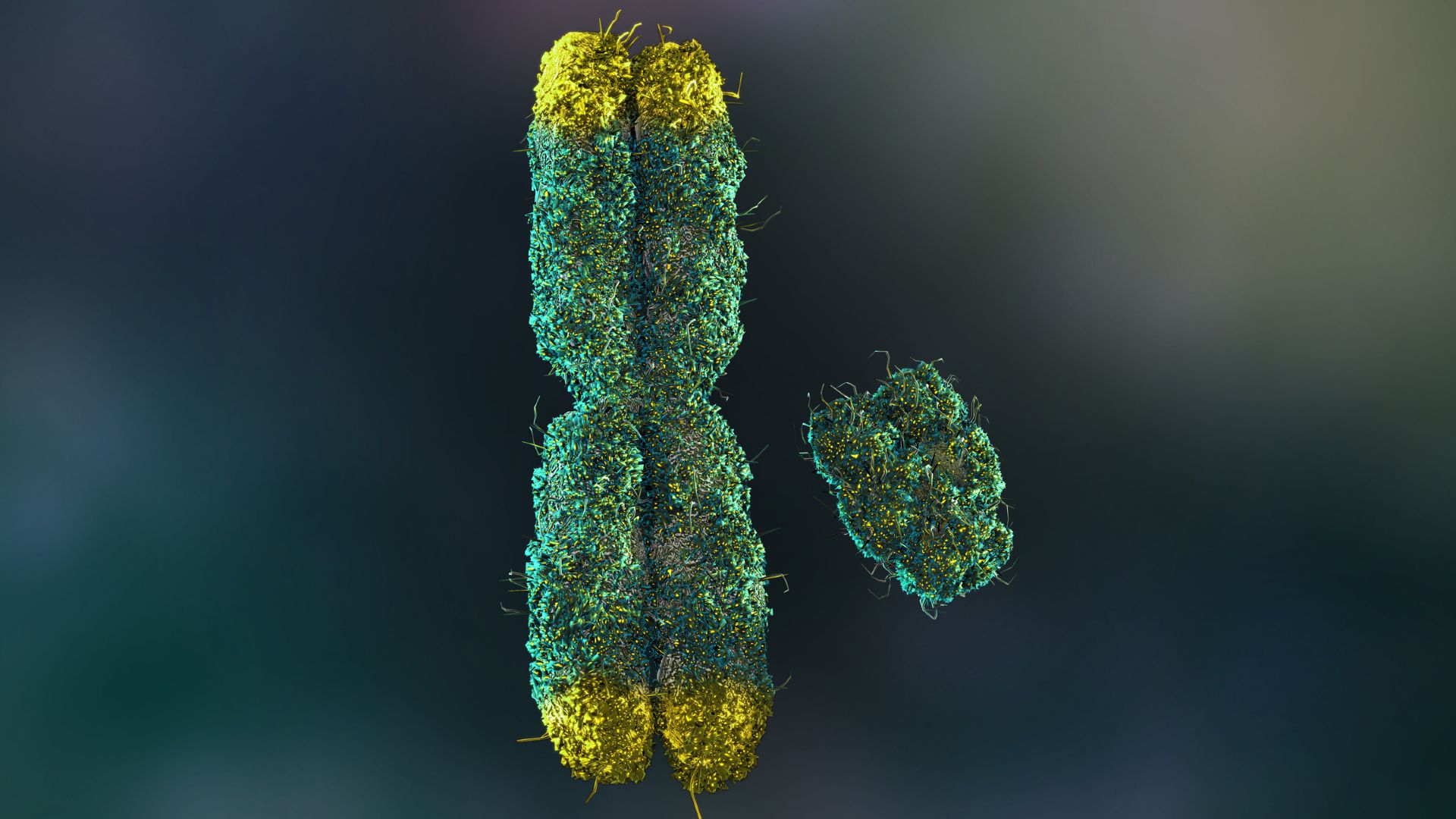
Men tend to lose the Y chromosome from their cells as they age. However, this loss was thought to have no health consequences because Y has few genes other than male determination.
However, in recent years there has been growing evidence that when people with the Y chromosome lose it, its loss is associated with severe disease throughout the body and shortens lifespan.
Loss of Y in older men
New techniques to detect Y-chromosome genes have shown that the Y chromosome is frequently lost in the tissues of older men. It clearly increases with age, with 40% of 60-year-old men showing loss of Y, compared to 57% of 90-year-old men. Environmental factors such as smoking and exposure to carcinogens also play a role.
you may like
Loss of Y occurs only in some cells, and their descendants never regain Y. This creates a mosaic of cells with and without Y in the body. Cells lacking Y grow faster than normal cells in culture, suggesting that Y-deficient cells may have an advantage in the body and in tumors.
The Y chromosome is particularly prone to mistakes during cell division, where it can become trapped inside a small membrane sac and be lost. Therefore, tissues containing rapidly dividing cells would be expected to be more affected by Y loss.
Why is the loss of genetically scarce Y important?
Human Y is a strangely small chromosome, with only 51 protein-coding genes (not counting multiple copies), compared to thousands on other chromosomes. It plays an important role in sex determination and sperm function, but its other roles have been poorly thought of.
When cells are grown in the lab, the Y chromosome is often lost. It is the only chromosome that can be lost without killing the cell. This suggests that the specific functions encoded by the Y gene are not required for cell growth and function.
In fact, some male marsupials abandon their Y chromosome early in development, and appear to be losing it rapidly during evolution. In mammals, Y has been degraded for 150 million years and has already been lost and replaced in some rodents.
Therefore, the loss of Y in body tissues later in life should be no drama.
The link between loss of Y and health problems
Despite Y being clearly useless to most cells in the body, evidence is accumulating that loss of Y is associated with serious health conditions such as cardiovascular disease, neurodegenerative diseases, and cancer.
you may like
Loss of Y frequency in kidney cells is associated with kidney disease.
Several studies have now shown a link between loss of Y and heart disease. For example, a very large German study found that men over the age of 60, who have a high frequency of Y defects, had an increased risk of heart attack.
Loss of Y is also associated with COVID-19 mortality, which may explain gender differences in mortality rates. Y is found to be lost 10 times more frequently in Alzheimer’s disease patients.
Several studies have documented an association between loss of Y and various cancers in men. It is also associated with poor prognosis for people actually suffering from cancer. Y deletions are among the most common chromosomal abnormalities found in cancer cells themselves.
Does loss of Y cause illness and death in older men?
The cause of the association between loss of Y and health problems is difficult to elucidate. These can occur due to loss of Y due to health problems, but perhaps a third factor can cause both.
Even if there is a strong association, it cannot prove causation. The association with kidney and heart disease may be due to rapid cell division during organ repair, for example.
The association with cancer may reflect a genetic predisposition to genomic instability. Indeed, genome-wide association studies have shown that loss of Y frequency is approximately one-third genetic, involving 150 identified genes primarily involved in cell cycle control and cancer susceptibility.
However, one mouse study points to a direct effect. Researchers transplanted Y-deficient blood cells into irradiated mice and showed an increased frequency of age-related conditions, including decreased heart function and subsequent heart failure.
Similarly, loss of Y from cancer cells may have a direct effect on cell proliferation and malignancy, leading to ocular melanoma, which occurs more frequently in men.
The role of Y in the cells of the body
The clinical impact of Y loss suggests that the Y chromosome has important functions in somatic cells. But how, given that there are so few host genes?
The male-determining SRY gene found in Y is widely expressed in the body. However, the only effect of its activity in the brain is that it plays a role in the development of Parkinson’s disease. The four genes essential for making sperm are active only in the testes.
However, among the other 46 genes on Y, several genes are widely expressed and have important functions in gene activity and regulation. Some are known cancer suppressors.
All of these genes have copies on the X chromosome, so both men and women have two copies. The absence of a second copy in cells lacking Y may cause some type of dysregulation.
As well as these protein-coding genes, Y contains many non-coding genes. These are transcribed into RNA molecules but not translated into proteins. At least some of these noncoding genes appear to control the function of other genes.
This may explain why the Y chromosome influences the activity of genes on many other chromosomes. Loss of Y not only affects the expression of some genes in the cells that make blood cells, but also affects other genes that regulate immune function. It may also indirectly affect the differentiation of blood cell types and cardiac function.
Human Y DNA was only fully sequenced a few years ago, so we may soon be able to trace how specific genes cause these negative health effects.
This edited article is republished from The Conversation under a Creative Commons license. Read the original article.