
University of Manchester model reduces risk of satellite collisions
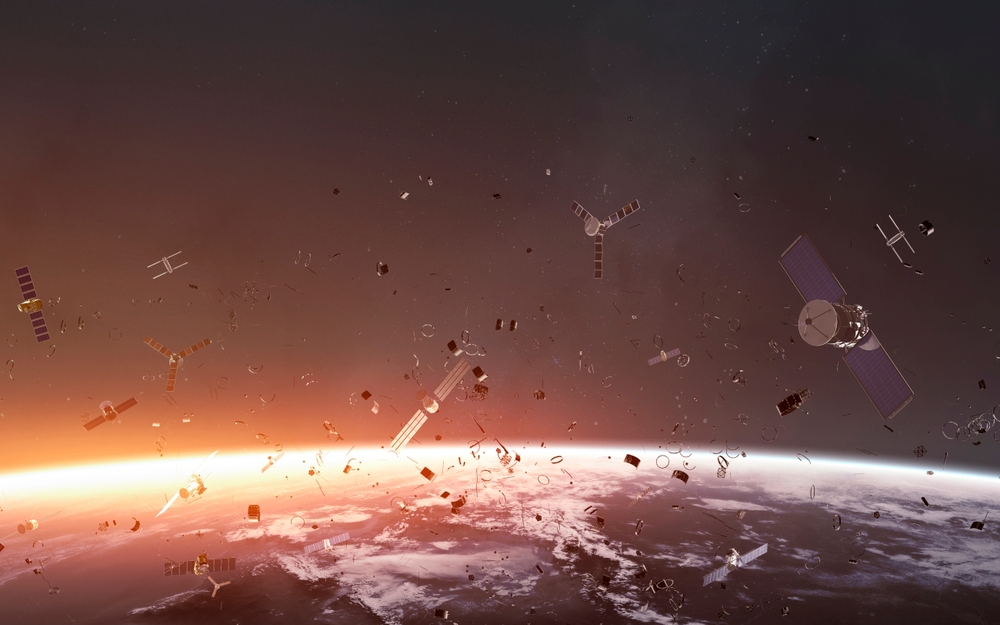
As the number of spacecraft orbiting the Earth increases at an unprecedented rate, concerns about satellite collisions are moving from theory to immediate reality.
Researchers at the University of Manchester have announced a new modeling approach that will reshape the way Earth observation missions are planned and help protect crowded orbits while delivering the data the world depends on.
Their study introduces a framework that incorporates satellite collision risk directly into the early stages of mission design.
John Mackintosh, lead author of the study and a postdoctoral fellow at the University of Manchester, said: “Our research addresses what we call the ‘space sustainability paradox’ – the risk that using satellites to solve environmental and social challenges on Earth may ultimately undermine the long-term sustainability of space itself.”
“By incorporating collision risk into early mission design, we can plan Earth observation missions more responsibly, balancing data quality with the need to protect the orbital environment.”
Crowded orbit under pressure
Earth’s orbital environment is becoming increasingly crowded. There are currently approximately 11,800 active satellites in space, and it is predicted that number could exceed 100,000 by the end of the decade.
As hardware increases, the risk of satellite collisions increases, potentially creating clouds of space junk that linger for decades.
Each impact generates thousands of pieces of debris that can threaten operational spacecraft, astronauts, and critical orbital corridors. The danger is great. If debris accumulates in a particular area, it could cause a series of collisions that could make the trajectory unsafe to use.
At the same time, demand for space-based data is accelerating.
The essential role of earth observation
Earth observation satellites play a central role in monitoring climate change, tracking land use, supporting food production and strengthening supply chains.
They are also key to disaster response and environmental protection, supporting efforts in line with the United Nations Sustainable Development Goals.
However, there is a growing tension between expanding satellite networks to meet global needs and maintaining a sustainable orbital environment. Using space to solve Earth’s problems, if unmanaged, could undermine the long-term viability of space itself.
The Manchester team began tackling this dilemma head-on.
Review the mission design from scratch
Traditionally, satellite performance requirements and collision risk assessment were handled separately, with risk considerations often introduced late in the development process. The new framework completely changes that order.
Rather than treating collision risk as a consequential, the model relates mission objectives such as image resolution and geographic coverage to factors that influence the likelihood of a satellite collision.
These include the size and mass of the spacecraft, the number of satellites in a constellation, orbital altitude, and the concentration of debris in certain areas of low Earth orbit.
Integrating these elements at the concept stage allows mission planners to evaluate trade-offs early on. Designers can explore how changing altitude or adjusting image resolution affects both data quality and debris exposure.
Surprising insights into collision risk
One of the study’s key findings challenges common assumptions about satellite collisions. The hazard does not simply peak where debris density is highest.
For example, when modeling a satellite that can capture images at a resolution of 0.5 meters, the researchers found that the probability of collision is greatest between 850 and 950 kilometers above the Earth’s surface. The zone is located approximately 50 kilometers higher than the area with the highest concentration of debris.
Why does a mismatch occur? The size of the satellite plays an important role. Larger spacecraft present larger targets and carry more energy in the event of a collision, increasing both the likelihood and consequences of a collision.
The study also highlights the trade-off between altitude and squadron size. Satellites operating at higher altitudes can cover larger areas, so fewer satellites are needed. However, these spacecraft must be larger and heavier to achieve high-resolution imaging, increasing the risk of individual collisions.
In contrast, lower orbits require more satellites to maintain coverage, but each unit is smaller and less dangerous to itself.
Protecting space while contributing to the earth
The Manchester model provides a practical way to manage satellite collisions without compromising performance objectives by incorporating collision analysis into the mission design. This will give engineers a clearer picture of how their technological choices impact long-term space sustainability.
The researchers believe this framework can be adapted to a variety of Earth observation systems and refined to capture broader environmental impacts.
Future iterations may also take into account how long debris pieces remain in orbit, the probability of hitting other spacecraft, and even the environmental impact of a satellite re-entry.
If widely adopted, this approach could help ensure that efforts to monitor climate change, protect food systems, and strengthen global resilience do not unintentionally increase orbital congestion that threatens them.
Source link

