
Building capacity to scale up biomanufacturing in Nova Scotia
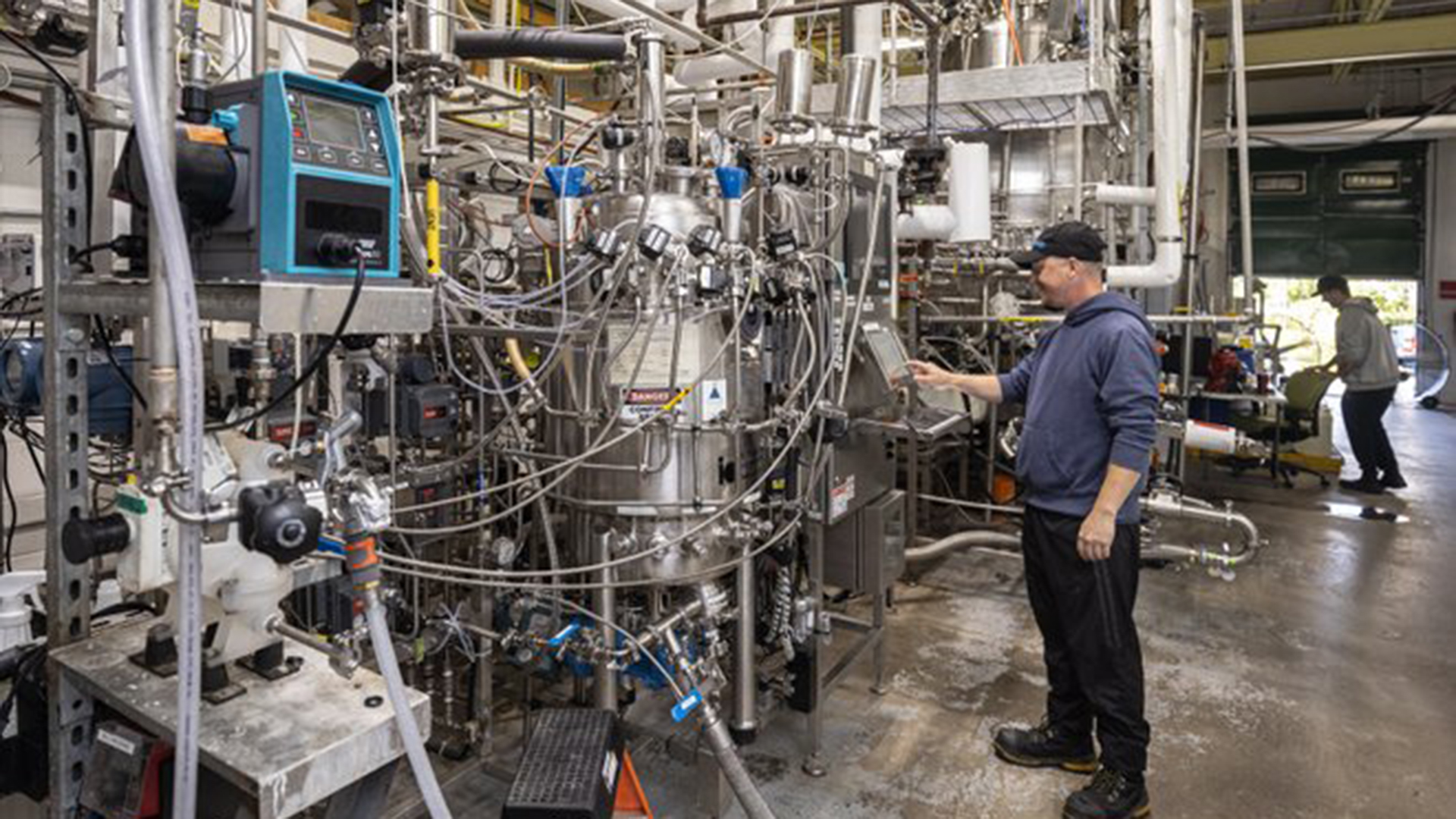
The Verschuren Center fills a critical scale-up gap for biobased manufacturing companies critical to solving global challenges.
Biomanufacturing is a broad term that encompasses a wide range of green technologies, including precision fermentation, and is a critical technology for addressing important global challenges related to human and environmental health. Many reports estimate the future impact of biotechnology to replace 60% of the world’s material inputs and reduce 45% of the global disease burden over the next 20 years. This represents trillions of dollars of market value for companies looking to create sustainable solutions for the future.
Biomanufacturing has great potential to influence this country’s future path to net-zero manufacturing, as it leverages rapid advances in genetic engineering to create nearly all intermediate products typically obtained from petrochemicals. Often referred to as the Internet of the future, the potential products are endless and will impact nearly every aspect of our daily lives.
bridge to success
Accelerating the deployment of intermediaries and green supply chains for functional materials requires major capital-intensive assets and infrastructure to support the needs of these technologies in order to sufficiently de-risk entry into manufacturing and commercial production. This intermediate capacity is temporary until you reach CMO.
Manufacturing is clearly lacking in many countries around the world, making this a self-limiting step.
Therefore, Verschuren Center and its partners adopted a shared asset use business model to overcome this gap. This allows one major investment to benefit many companies, increasing capital efficiency and accelerating time to market within a supportive ecosystem. Companies typically require not only upstream precision fermentation equipment, but also size-tailored separation and purification technology.
In partnership with national and local governments and private capital (Ascend Bio), we built a pilot to demonstration scale and partnered with a full CMO production scale in Nova Scotia (Neptune BioInnovation Centre) to provide this end-to-end capability to companies. These assets serve more than 50 companies across North America and can attract future partnerships from Europe and Asia, validating global needs and possibilities.
wide range of influence
The combined impact of genetic engineering and precision fermentation production platforms will pave the way for a vast array of functional materials, green chemicals, functional foods, therapeutics, polymers, and plastics. They can be key raw materials or high-value intermediates in the food, agriculture, manufacturing, automotive, construction and defense sectors, improving the competitiveness of manufacturing while improving carbon emissions and reducing environmental impact. The possibilities are immense, but the capacity is limited.
To further increase the propensity to scale these innovative products, collaborative shared investment partnerships are needed to reduce the cost burden of scale-up and enable more capacity development. Verschuren Center is expanding these important partnerships to further its mission of positively impacting the health of the planet and humanity by deploying sustainable everyday products.
natural ecosystem
To grow quickly and efficiently, companies need a supportive ecosystem of partners and assets. Nova Scotia has been committed to working with partners across Canada to build this. This is from innovation at top universities, through first-class accelerator programs and private investment, to industrial collaboration partnerships to rapidly deploy advances with industry relevance.
Industry partners are de-risked recipients of technology and help drive the direction of consumer-related advancements. A new partnership between Neptune BioInnovation and Nova Scotia in 2025 will ensure Canada’s contract manufacturing capacity expands to meet growing market demand as companies build markets and factories. Canada has the advantage of a vast supply of natural raw materials to feed this unique growth sector, while benefiting from advances in intermediate supply chains in many areas of the economy.
Biomanufacturing is a natural fit with our resource and manufacturing base, and we must ensure we grow and deploy technologies that benefit Canada and Europe’s manufacturing sectors, which have the greatest positive impact on human and planetary health.
Please note: This is a commercial profile
This article will also be published in the quarterly magazine issue 25.
Source link

