


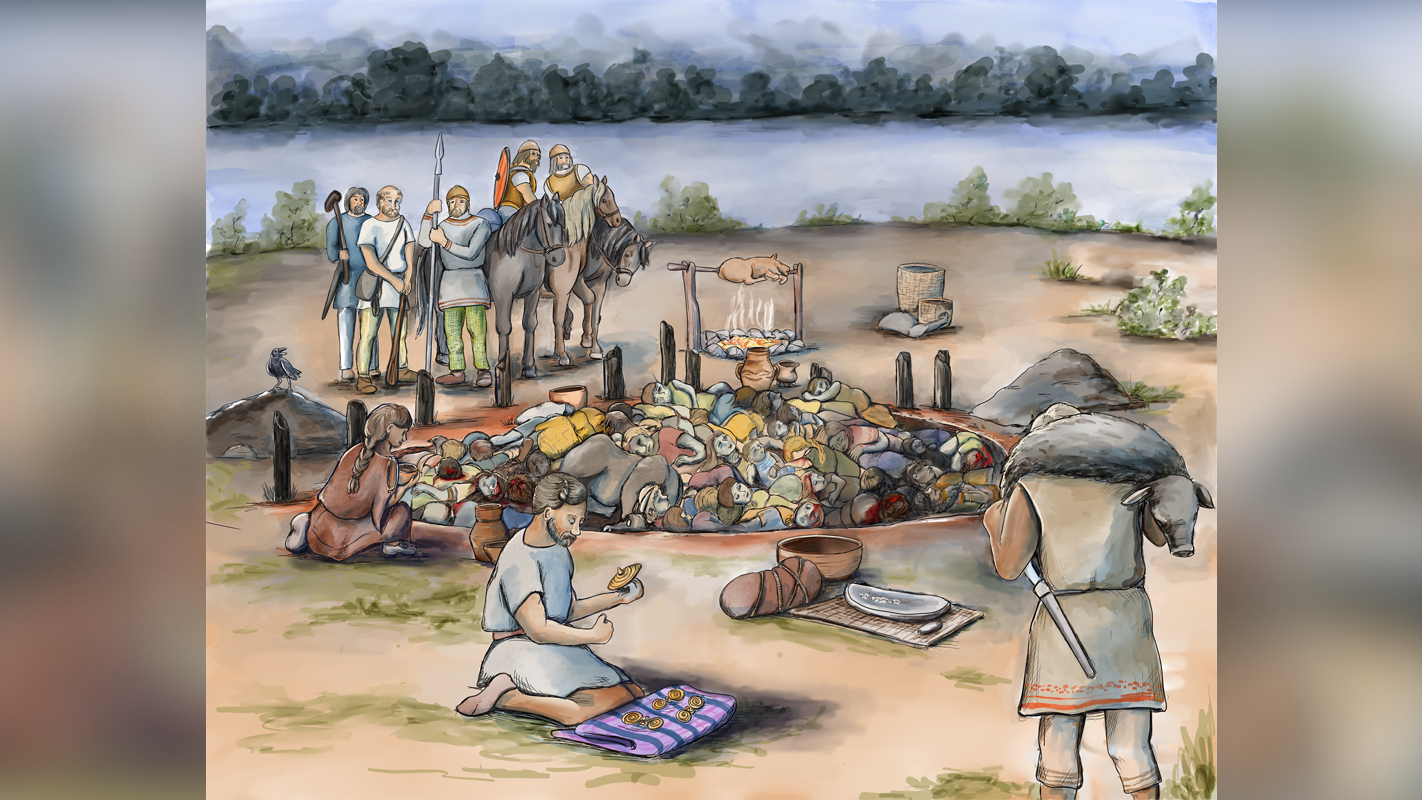
Archaeologists have analyzed a mass grave in southeastern Europe that contained the bodies of women and children who were violently murdered 2,800 years ago. This tomb may hold the key to understanding the evolution of strategic group violence during the Early Iron Age, researchers report in a new study.
The tomb was excavated at the ruins of Gomorava, near the modern town of Hrtkovci in northern Serbia. Originally founded as a settlement along the Sava River in the 6th millennium BC, both sedentary and nomadic cultural groups used Gomolava repeatedly over the centuries. By the 9th century BC, semi-sedentary populations in the Carpathian Basin had consolidated around places like Gomorava, creating tensions over land use and ownership.
Gomoraba was “at a physical, political and conceptual flashpoint” — and the consequences of these new interactions were deadly, the researchers said in a study published Monday (February 23) in the journal Nature Human Behavior.
you may like
The researchers focused their analysis on a small mass grave at Gomoraba, which is only 9.5 feet (2.9 meters) in diameter and 1.6 feet (0.5 meters) deep. Archaeologists found postholes around the burial pit, suggesting that some kind of monument had been placed in the tomb. The pit also contained ceramic vessels and small bronze ornaments, as well as the bones of nearly 100 animals, including the complete skeleton of a young cow at the bottom of the tomb.
But when researchers began studying the 77 human bones in the hole, they found that more than 70% were women and 69% were children.
“The preponderance of women and young people in the Gomolava mass grave is an anomaly in European prehistory,” the researchers wrote.
In addition, the archaeologists wrote that they found extensive evidence of intentional, violent, and fatal trauma to the victims’ heads, involving “close contact and particularly blunt force, likely with a number of tools and weapons.” Considering the injuries, the researchers say the attackers may have been significantly taller than the victims or may have been riding horses.
“The overall pattern reveals severe violence that is brutal, deliberate, and efficient,” the researchers wrote.
To learn more about the victims, researchers studied their DNA. The analysis revealed that only a handful of the 77 people were closely biologically related, suggesting that the killing was not an attack on an extended family home. Studies of skeletal strontium isotope ratios (chemical variations found in tooth enamel that are influenced by geographic origin) also showed that more than a third of the population grew up outside the Gomoraba region.
“It’s clear that this is a heterogeneous collection of individuals,” study lead author Linda Fibiger, a bioarchaeologist at the University of Edinburgh, told Live Science via email. Gomoraba “was a burial place for people, mainly women and children, who were brutally murdered at that time,” she said.
you may like
However, the reasons for mass violence remain unclear.
During the 9th century BC, countless cultural groups migrated and settled across the Carpathian Basin. This population influx, combined with tensions between nomadic and sedentary lifestyles, may have created “the potential for an explosion of conflicting ideologies regarding land use and ownership,” the researchers wrote. These tensions may have led to the forced displacement and displacement of certain people, the capture and killing of certain groups, and the exchange of women and children through marriage and adoption.
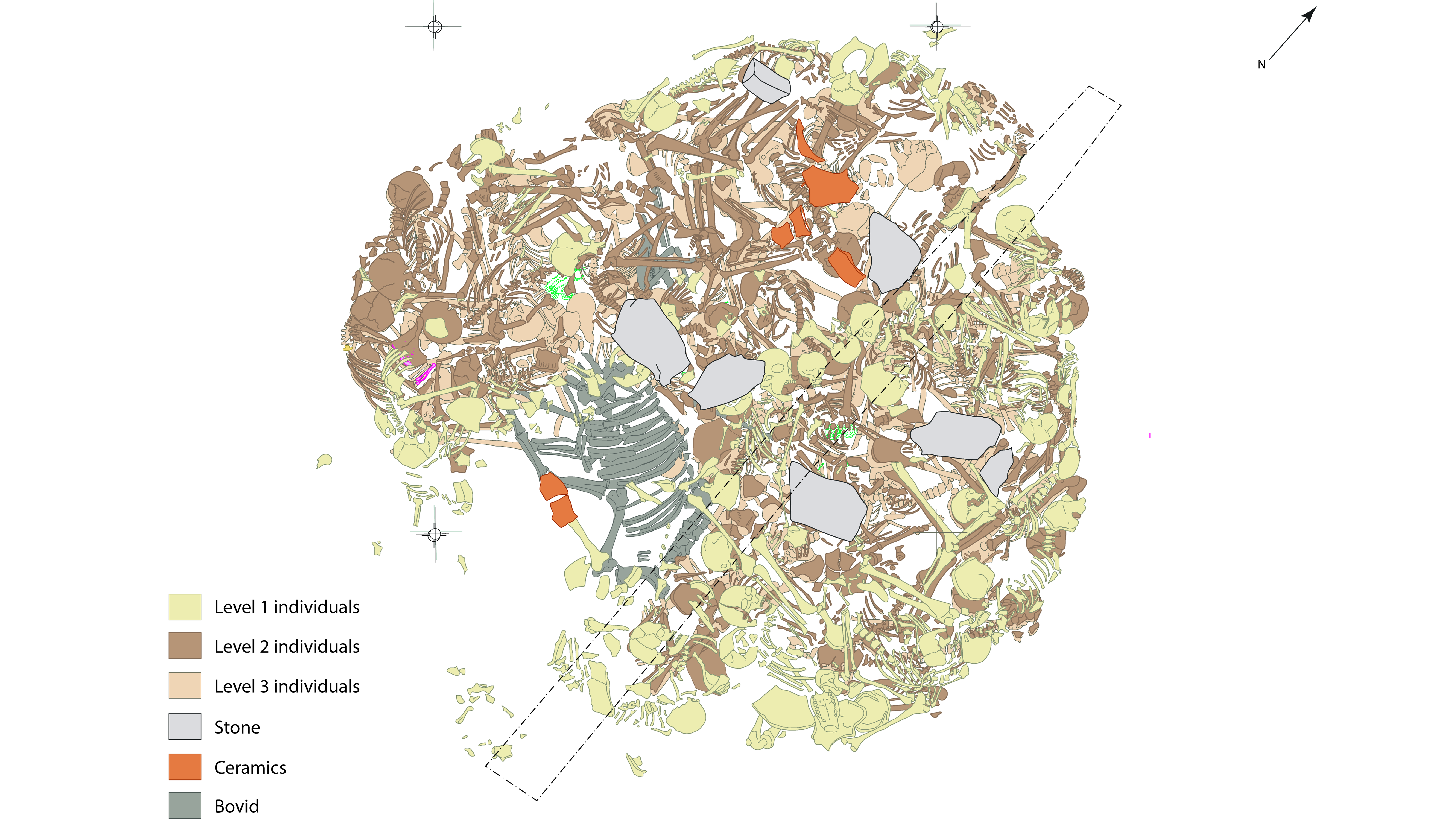
“There is nothing osteologically or archaeologically to indicate that these people were captured and held for any length of time,” Fibiger said. “We’re looking at changing settlement structures, land use, and perhaps the power structures that come with it.”
A second mass grave was also discovered in Gomolava in 1954. The pits housed skeletons, mostly women, in addition to animal bones, metal objects, and pottery from the same era.
Both mass graves may have been intended as storage for valuable objects and people, the researchers wrote. Women and children are essential to the survival of these communities, and researchers concluded that the killings of these people were aimed at genealogical destruction.
“The murders, the morgues, and the resulting monuments represent a series of actions intended to forcibly resolve or eradicate intra- or inter-communal conflicts and restore the balance of power,” the researchers say, resulting in “massive violence and assertion of power in prehistoric Europe.”
Fibiger, L., M. Iraeta-Orbegozo, J. Koledin, et al. (2026). Massive early Iron Age mass graves demonstrate selective violence against women and children in the Carpathian Basin. natural human behavior. https://www.nature.com/articles/s41562-025-02399-9