

Close Menu
  • Home
  • Identity
  • Inventions
  • Future
  • Science
  • Startups
  • Spanish
What's Hot

Nvidia posts another record quarter amid record capital spending

The White House wants AI companies to cover interest rate hikes. Most people have already said they would.

US cybersecurity agency CISA is reportedly in dire straits due to President Trump’s cuts and layoffs.

Facebook X (Twitter) Instagram
  • Home
  • About Us
  • Advertise with Us
  • Contact Us
  • DMCA
  • Privacy Policy
  • Terms & Conditions
  • User-Submitted Posts
Facebook X (Twitter) Instagram
Fyself News
  • Home
  • Identity
  • Inventions
  • Future
  • Science
  • Startups
  • Spanish
Fyself News
Home » Scientists discover genetic ‘switch’ in mice that turns caring fathers into violent beasts
Science

Scientists discover genetic ‘switch’ in mice that turns caring fathers into violent beasts

userBy userFebruary 24, 2026No Comments4 Mins Read
Share Facebook Twitter Pinterest Telegram LinkedIn Tumblr Email Copy Link
Follow Us
Google News Flipboard
Share
Facebook Twitter LinkedIn Pinterest Email Copy Link

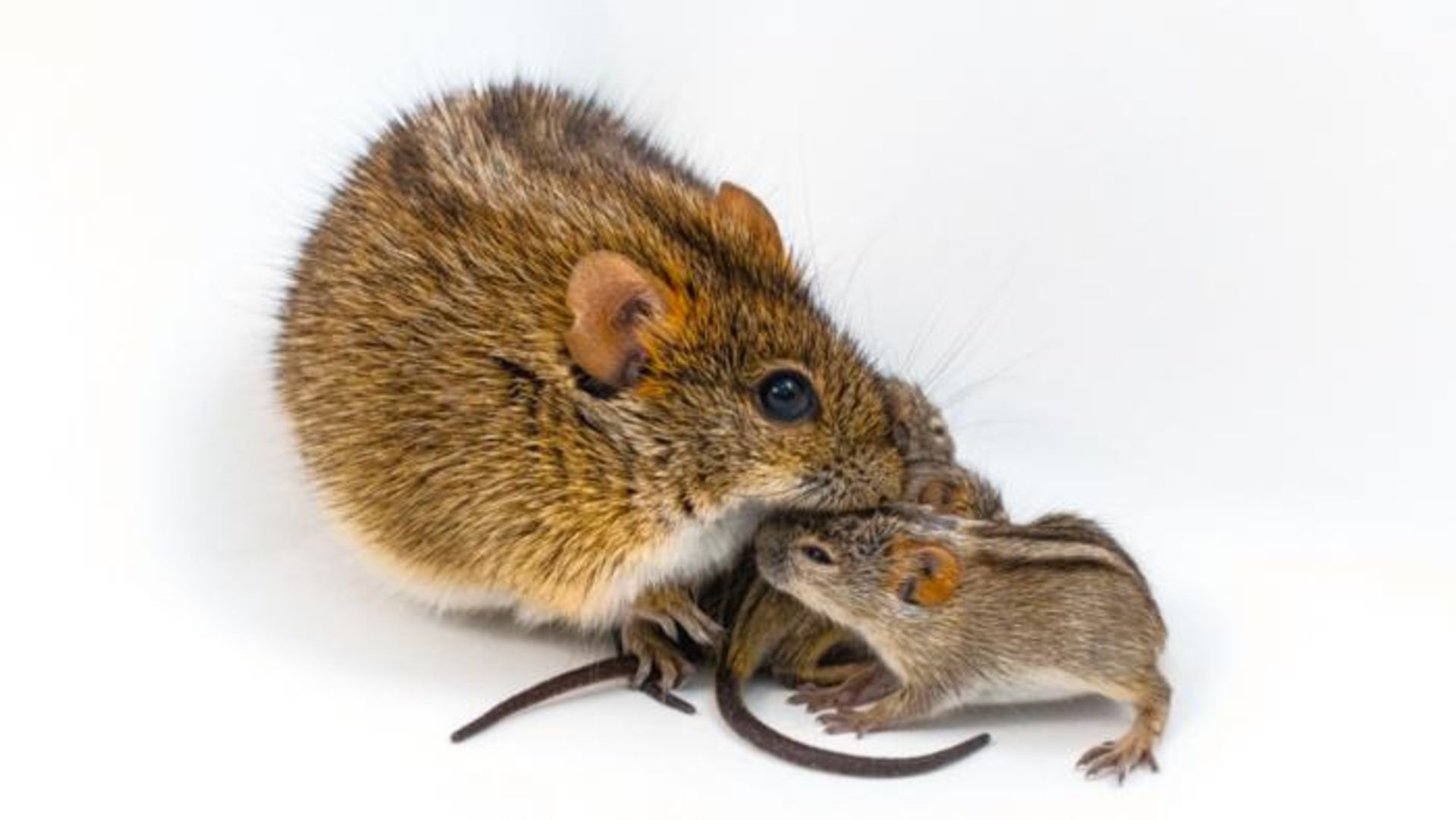
At least in African striped rats, flipping a single gene switch can cause doting fathers to attack their offspring, a new study suggests. But genes themselves aren’t the only thing responsible for this switch from careful paternal behavior to aggressive paternity. Social conditions also influenced the behavior of male mice.

The discovery could shed more light on the genetic mechanisms by which some mammals act as caring fathers while others abandon their young. Active paternity is rare among mammals, with only 5% of the 6,000 species of mammals having fathers. For this reason, scientists know far less about how paternal care works in mammals than they do about maternal care in mammals. African striped rats (Rhabdomys pumilio) are useful for studying mammalian paternal care, as males display a wide range of behaviors toward their pups, including huddled together to keep warm and actively ignoring their offspring.

In a study published February 18 in the journal Nature, researchers placed male African striped mice in cages alone with a group of pups or in group cages with other fathers and their pups. They found that males kept in groups were more likely to ignore or attempt to kill pups.

you may like

To identify the brain regions that mediate this behavior, the researchers exposed male mice to pups and monitored their brain activity. They found that attentive fathers had more activity in one area of ​​the brain called the medial preoptic area (MPOA).

“Decades of research has shown that the MPOA functions as a hub for maternal care across mammals,” lead author and postdoctoral researcher Forrest Rogers, Ph.D., a researcher at the Princeton Neuroscience Institute, told Live Science via email.

The team then dissected the mouse brains and measured gene activity in cells in the MPOA. The researchers found that a gene called agouti was more active in males that attacked puppies than in males that cared for them.

“Aguti is well known for its role in skin pigmentation and metabolism, so it was exciting to discover a previously unknown role in the brain in parenting behavior,” Rogers said in a statement.

Get the world’s most fascinating discoveries delivered straight to your inbox.

To confirm that agouti expression is involved in the transition between alert and aggressive behavior, the researchers first exposed mice to pups and then injected them with a virus that enhances agouti gene expression in MPOA. When the males were exposed to the pups again, their behavior changed.

“We found that as agouti increases, these males become more aggressive toward their pups,” Rogers told Live Science in an email, suggesting that the gene acts as a kind of “switch” that toggles between aggressive and considerate behavior in the father mice.

The agouti gene found within MPOA may be strongly associated with changes in paternal care, but Rogers cautioned that this molecular switch is not the whole story.

you may like

“Indeed, for some striped mice, increased agouti expression appears to be sufficient to induce infanticide,” he said. “However, we also found that there are other factors that may also moderate this effect, for example current social housing.”

When the researchers moved the males from group housing to single cages, agouti levels decreased and there were more caregivers, suggesting the gene is influenced by social context rather than food availability.

The study may have uncovered the possibility of a genetic switch for fatherhood, but it also had important limitations. Of note, only male African striped mice were studied. And although fathering behavior differed within the species, the researchers cautioned against extrapolating their findings to other species.

“While we do not exclude the possibility that agouti functions similarly in other species (such as humans), there is currently no evidence to suggest this specific function in humans (or other mammals),” Rogers said in an email to LiveScience.

Rogers, F. D., Kim, S., Merebee, S. A., Kasper, A. M., Callanan, AB, Marrino, R., and Peña, C. J. (2026). Agouti integrates environmental cues to control paternal behavior. Nature. https://doi.org/10.1038/s41586-026-10123-4


Source link

#Biotechnology #ClimateScience #Health #Science #ScientificAdvances #ScientificResearch
Follow on Google News Follow on Flipboard
Share. Facebook Twitter Pinterest LinkedIn Tumblr Email Copy Link
Previous ArticleTreasury sanctions Russian zero-day broker for allegedly buying exploits stolen from US defense contractor
Next Article More startups than ever are reaching $10M ARR in 3 months
user
  • Website

Related Posts

Diagnostic dilemma: Woman’s lung infection, organ damage and forgetfulness caused by a parasite never before seen in humans

February 25, 2026

‘One of the strangest things in the solar system’: James Webb telescope discovers widespread auroras stretching through Uranus’ atmosphere

February 24, 2026

14,000-year-old ivory tools discovered in Alaska suggest how Clovis’ ancestors first arrived in the New World

February 24, 2026
Add A Comment
Leave A Reply Cancel Reply

Latest Posts

Nvidia posts another record quarter amid record capital spending

The White House wants AI companies to cover interest rate hikes. Most people have already said they would.

US cybersecurity agency CISA is reportedly in dire straits due to President Trump’s cuts and layoffs.

Alphabet’s robotics software company Intrinsic joins Google

Trending Posts

Subscribe to News

Subscribe to our newsletter and never miss our latest news

Please enable JavaScript in your browser to complete this form.
Loading

Welcome to Fyself News, your go-to platform for the latest in tech, startups, inventions, sustainability, and fintech! We are a passionate team of enthusiasts committed to bringing you timely, insightful, and accurate information on the most pressing developments across these industries. Whether you’re an entrepreneur, investor, or just someone curious about the future of technology and innovation, Fyself News has something for you.

Castilla-La Mancha Ignites Innovation: fiveclmsummit Redefines Tech Future

Local Power, Health Innovation: Alcolea de Calatrava Boosts FiveCLM PoC with Community Engagement

The Future of Digital Twins in Healthcare: From Virtual Replicas to Personalized Medical Models

Human Digital Twins: The Next Tech Frontier Set to Transform Healthcare and Beyond

Facebook X (Twitter) Instagram Pinterest YouTube
  • Home
  • About Us
  • Advertise with Us
  • Contact Us
  • DMCA
  • Privacy Policy
  • Terms & Conditions
  • User-Submitted Posts
© 2026 news.fyself. Designed by by fyself.

Type above and press Enter to search. Press Esc to cancel.