
ESCAPADE mission reveals how space weather affects Mars
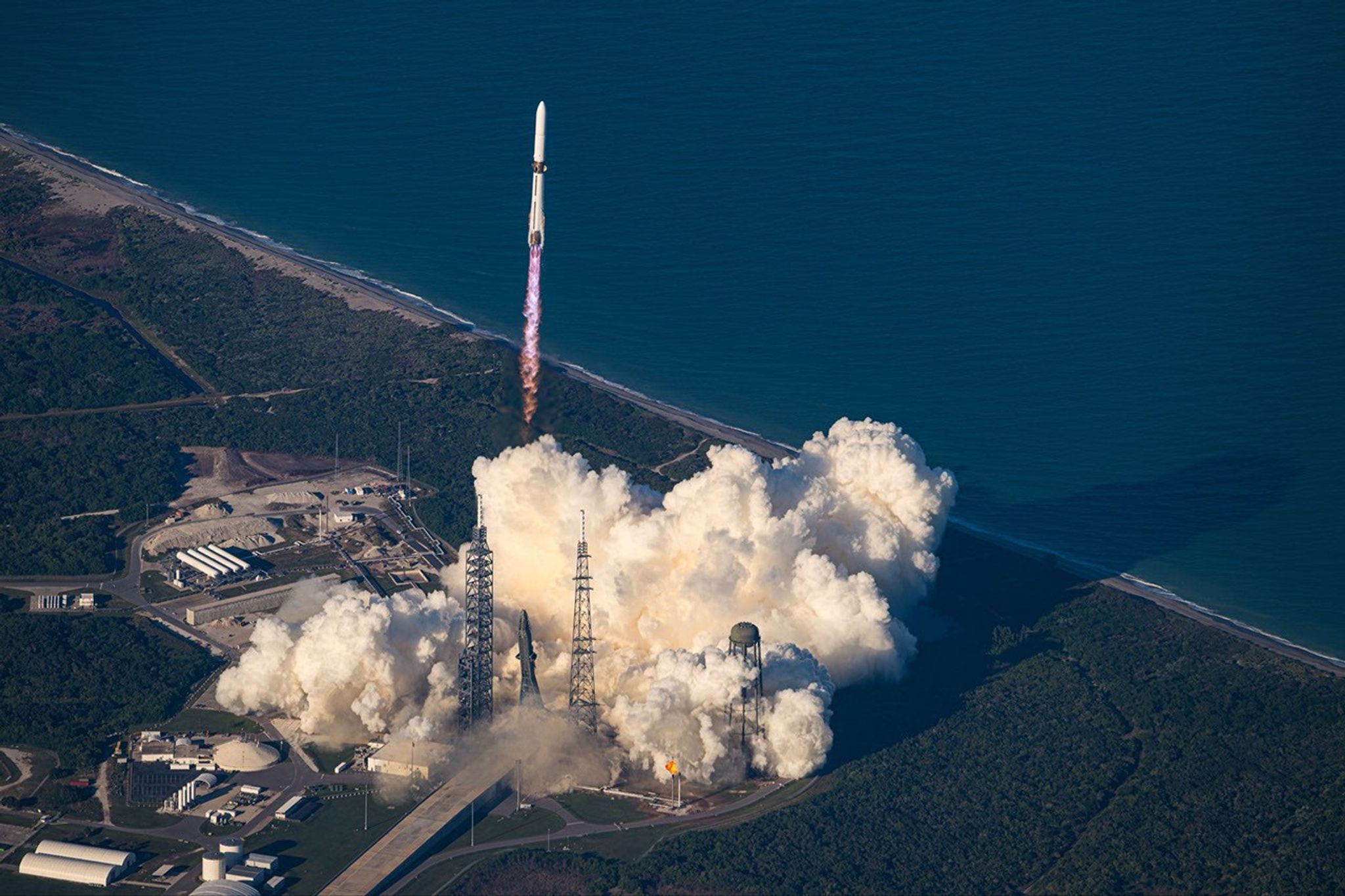
NASA’s ESCAPADE mission will be the first to coordinate two spacecraft in orbit around a planet other than Earth.
The mission, which launched in November 2025, is currently operating scientific instruments to study the effects of space weather emanating from the sun on Mars.
The mission will also study space weather near Earth and on the way to Mars in new ways, helping NASA protect future explorers from Mars’ harsh conditions.
Joe Westlake, director of the Solar Physics Division at NASA Headquarters in Washington, explained: “The pioneering ESCAPADE duo will not only investigate the role of the sun in turning Mars into an uninhabitable planet, but will also help develop space weather protocols for solar events directed to Mars during future human missions to Mars.”
“By joining the fleet of heliophysics missions across the solar system, ESCAPADE will become another weather observatory that will make humans and technology safer and more successful in space.”
Why is the environment on Mars so harsh?
Once warm, watery, and covered by a thick atmosphere, Mars is now cold, dry, and surrounded by a thin veil of atmosphere.
The main culprit is a relentless stream of particles from the sun known as the solar wind. Over billions of years, the solar wind stripped away much of Mars’ atmosphere, lowering the planet’s temperature and causing surface water to evaporate.
How space weather interacts with Mars’ magnetic field
ESCAPADE is the first science mission to carry twin spacecraft and coordinate two orbiting satellites around Mars, gaining an unprecedented perspective.
Together, the ESCAPADE twins will measure short-term changes in the magnetized environment around Mars, called the magnetosphere, and uncover the real-time processes driving Mars’ atmospheric escape.
“Having two spacecraft will help us understand the cause and effect of how the solar wind interacts with the magnetic field in the case of Mars,” said Michele Cash, ESCAPADE program scientist at NASA Headquarters.
Once ESCAPADE arrives at Mars, its twin spacecraft will follow the same trajectory and pass over the same region at different times to determine when and where changes are occurring.
After six months, the two spacecraft will move into different orbits, one moving away from Mars and the other moving closer to Mars.
This second formation, scheduled to last five months, aims to simultaneously study space weather and Mars’ magnetosphere, allowing scientists to investigate how Mars responds to the solar wind in real time.
“Previous probes may have been riding upstream in the solar wind or near the planet, measuring its magnetosphere,” said lead researcher Rob Lillis of the University of California, Berkeley.
“ESCAPADE allows you to be in two places at the same time and measure cause and effect simultaneously.”
Preparation for manned exploration
The Earth can withstand the constant onslaught of solar winds because it has a strong magnetic field that protects us from the sun’s energetic particles.
However, Mars’ once strong magnetic field has weakened over time. Currently, it is a patchwork of local magnetism within Mars’ crust, with an ever-changing magnetic field generated by the interaction of charged particles in Mars’ upper atmosphere with the solar wind.

This “hybrid” magnetosphere offers little protection against the atmosphere-stripping forces of the solar wind.
This, combined with Mars’ thin atmosphere, means that the sun’s energetic particles can easily reach the planet’s surface, endangering future human explorers there.
“Before we send humans to Mars, we need to understand what kind of environment astronauts will encounter,” Cash said.
unique journey
Previous Mars missions have been launched when Earth and Mars align in orbit, which only happens every 26 months.
But ESCAPADE was launched early, ushering in a new strategy that could launch Mars-bound spacecraft at almost any time.
Rather than heading directly to Mars, the ESCAPADE spacecraft will first be orbiting a location called Lagrange Point 2 in space, about 1 million miles from Earth.
In November 2026, when Earth and Mars will align, the ESCAPADE spacecraft will return to Earth and use Earth’s gravity to fly toward Mars, arriving in September 2027.
Then, during a 10-month voyage to Mars, ESCAPADE’s two spacecraft will study the space weather and interplanetary magnetic environment that Mars-bound astronauts will also pass through, preparing for future trips to Mars.
Source link

