



We now know why a single genetic mutation can protect against Alzheimer’s disease in people destined to develop it at a very young age.
The genetic mutation affects a protein called Reelin, which tells brain cells to shred toxic amyloid plaques and tau tangles that may be responsible for the disease. This mutation makes Reelin more efficient, a new study shows.
Article continues below
you may like
A tale of two genes
Uncovering how protective mutations work began with a population facing the opposite problem: highly deleterious mutations that promote Alzheimer’s disease.
People living in a lush valley near Medellin, Colombia, have been facing early memory loss for decades.
Neurologist Dr. Francisco Lopera grew up in the area. When he was still a medical student, he encountered his first case, a 47-year-old man with memory symptoms typically seen in elderly people with dementia. Lopera decided to travel around the region and map the places where people are facing early memory loss. He ultimately identified thousands of people with a rare inherited form of Alzheimer’s disease. The condition is autosomal dominant, meaning that people who carry at least one copy of the mutated presenilin 1 (PSEN1) gene lose their memory in their mid-40s like clockwork.
Lopera’s work mapping out those affected was invaluable to dementia research, but his most important contribution came just a year before his death in 2024. Lopera co-authored a paper in the journal Nature Medicine detailing cases of patients he encountered while traveling throughout Colombia. This patient had a mutation in the PSEN1 gene, but lived into his 60s before developing Alzheimer’s disease. This was the neurological equivalent of a house that stands for decades despite cracks in the foundation that should be broken.
Lopera discovered that the man’s resilient brain was enhanced by another mutation. The mutation was named “COLBOS” after the Columbia and Boston research centers that characterized the man.
Increased efficiency
The new study, published in December 2025 in the Journal of the American Chemical Society, pinpointed how the COLBOS mutation has protected patients’ brains for decades.
What to read next
When the COLBOS variant was first identified in 2023, scientists noted that the mutation altered the function of a cell signaling protein called Reelin. This protein promotes the formation of new connections between brain cells, prevents the activation of toxic tau proteins, and prevents amyloid plaques from building up in the brain.
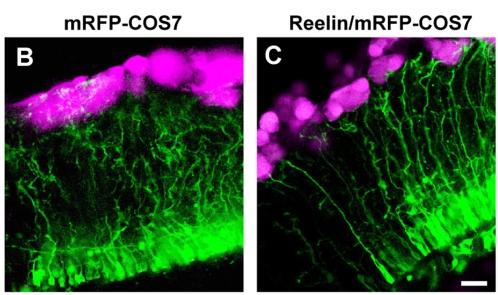
COLBOS changed the way Reelin binds to another signaling molecule called heparan sulfate, a sugar present on the cell surface of virtually every cell type in humans, including neurons. However, how Reelin’s binding ability affects the progression of Alzheimer’s disease remained unclear. In a new paper, molecular biologist Chunyu Wang of New York’s Rensselaer Polytechnic Institute and colleagues map this process.
Wang’s research relies on a technique called surface plasmon resonance, it turns out. How strongly a free-floating molecule (in this case, Reelin) binds to a molecule (in this case, heparan sulfate) immobilized on the sensor surface. Wang’s team found that the COLBOS mutation acts like a molecular glue, strengthening the bond between the two molecules, suggesting that it may cause Reelin to accumulate on the surface of neurons in the brain.
This change explained why COLBOS was able to prevent Alzheimer’s disease. When Reelin binds to heparan sulfate, the protein localizes to the surface of brain cells, where anti-Alzheimer’s signaling is most effective. Here, Reelin could more easily prevent cognitive decline by slowing down key Alzheimer’s disease processes, such as phosphorylation of the tau protein, Wang said. Phosphorylation destabilizes tau’s normally ordered structure, allowing toxic tangles to accumulate within neurons.
Hertz mapped out much of the Reelin pathway in a series of papers 20 years ago. Dr. Hertz’s research was in mice, and his team predicted that the Reelin mutation might be neuroprotective, but it was only through Dr. Lopera’s tireless clinical work that that theory was proven.
uphill battle
Unfortunately, as Lopera pointed out, the COLBOS mutation can only delay rather than prevent the onset of disease in people with rare Alzheimer’s disease mutations. Herz’s theory is that patients with PSEN1 mutations exhibit dysfunction in an organelle called the endolysosomal compartment. These are like cell shredders that shred pesky proteins like tau and amyloid. He added that the COLBOS mutation has made the process of feeding these proteins into the shredder more efficient.
But as the brain ages, despite Reelin’s influence, shredder defects become harder to overcome, leading to Alzheimer’s disease, Hertz said.
The findings could have useful implications for future Alzheimer’s disease treatments that slow or prevent disease in the majority of patients, including those without high-risk PSEN1 mutations. Wang pointed to recent research showing that Reelin-producing neurons are some of the first neurons to die in Alzheimer’s disease. Without these neurons, Reelin production is reduced, toxic waste products accumulate, and Alzheimer’s disease accelerates.
Dr. Wang hypothesized that if Reelin could be made to act more efficiently on the surface of brain cells, even if less Reelin is present, such people could be protected from further symptoms. Wang is currently discussing with colleagues at Rensselaer the development of gene therapies to enhance Reelin signaling based on these findings.
Dr. Wang pointed out that even if researchers were able to delay Alzheimer’s disease by a fraction of the 20 years that the COLBOS mutation gave Colombian patients, it would still be the largest improvement in Alzheimer’s disease ever achieved. Currently available drugs to treat the condition could extend independent living by two to three years, he said, adding: “Twenty years is amazing.”
Pan, L., Song, X., Su, G., Gandy, L.A., Fang, B., Buttaci, M., Gibson, J., Xia, K., Zhang, F., Liu, J., Wang, L., Temple, S., and Wang, C. (2025). N-sulfated heparan sulfate promotes Reelin signaling as a co-receptor. Journal of the American Chemical Society, 147(51), 46773–46779. https://doi.org/10.1021/jacs.5c15573