


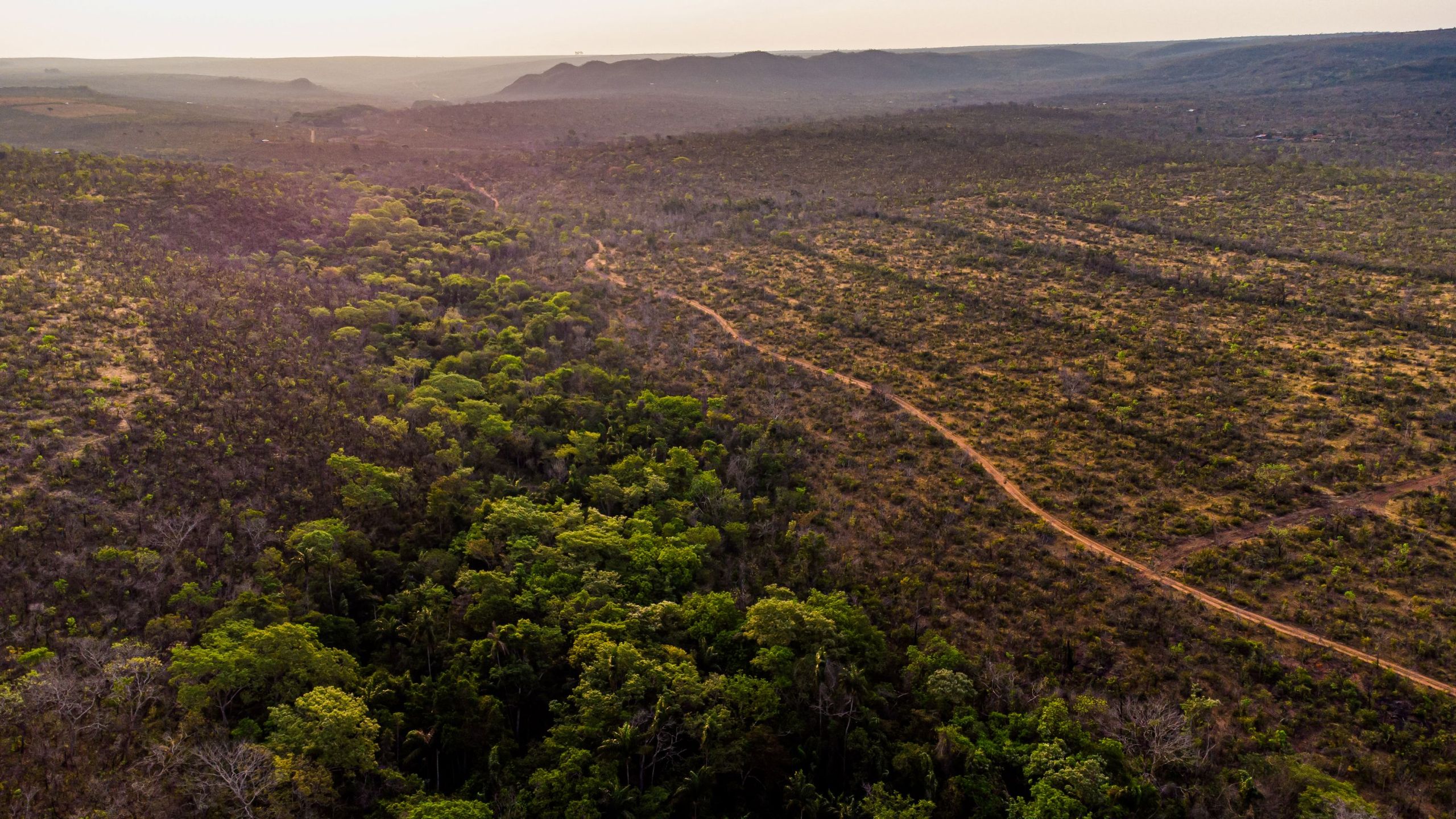
The Cerrado savanna covers approximately 26% of Brazil and is home to more than 12,000 plant species and a diverse range of animals. It is also dotted with wetlands that provide groundwater that is the source of two-thirds of Brazil’s major waterways, including the Amazon River, making it not only a biodiversity hotspot but also an important ecosystem for protecting the region’s water security.
This savannah wetland has another superpower. It’s about storing carbon in waterlogged soil. A new paper published today in the journal New Phytologist shows that Cerrado wetlands store carbon at about six times the density of vegetation in the Amazon rainforest.
Article continues below
you may like
The researchers’ findings highlight the need to protect these vital ecosystems, especially as land-use change, agriculture and climate change threaten to degrade dark, wet soils and release their carbon into the atmosphere.
dig for carbon
Previous studies in the Cerrado showed that its soil contains large amounts of carbon. But researchers typically didn’t dig deeper than about 1 meter. [three feet] Alternatively, expand sampling beyond several highland areas within the region. Amy Zanne, an ecologist at the Cary Ecosystem Institute and co-author of the new study, said the carbon storage potential of savannas has been overlooked because groundwater-fed wetlands are difficult to find above ground.
Rafael Oliveira, an ecologist at Brazil’s University of Campinas and co-author of the new paper, said ecosystems have been so neglected that their carbon storage potential is not even included in Brazil’s national carbon accounting. Without detailed scientific information, “we have no idea what the emissions will be” when these wetlands are degraded. “What are we losing in terms of carbon?” he asked.
To answer that question, Verona and a team of researchers extracted meters-long soil cores from seven locations in the Cerrado and tested the layers of those soil cores to see how much carbon was stored in each one. Julie Loisel, a peatland ecologist at the University of Nevada, Reno, who was not involved in the new study, said the study’s rich data make an important contribution. “This is filling a really big data gap,” she said. “In terms of the importance of tropical wetlands in understanding the modern carbon cycle, most of our information comes from satellite-derived products. There is very little information from field science.”
“It’s really gratifying to see research that is more advanced than ever before in terms of measurements.”
The researchers found that each layer of the soil core stores carbon, on average, at a carbon density of 1,200 tonnes per hectare. Loisel said this was a surprisingly high number for the type of soil tested. Academic explanations vary, but one classic definition of peat (the type of carbon-rich soil typically considered in carbon calculations) requires soil to be composed of approximately 30% organic matter. On average, the soils studied by the research team contained about 16%. Still, because the Cerrado soil was so dense, the amount of carbon stored in the Cerrado soil was much higher than in some peatlands, Loisel said.
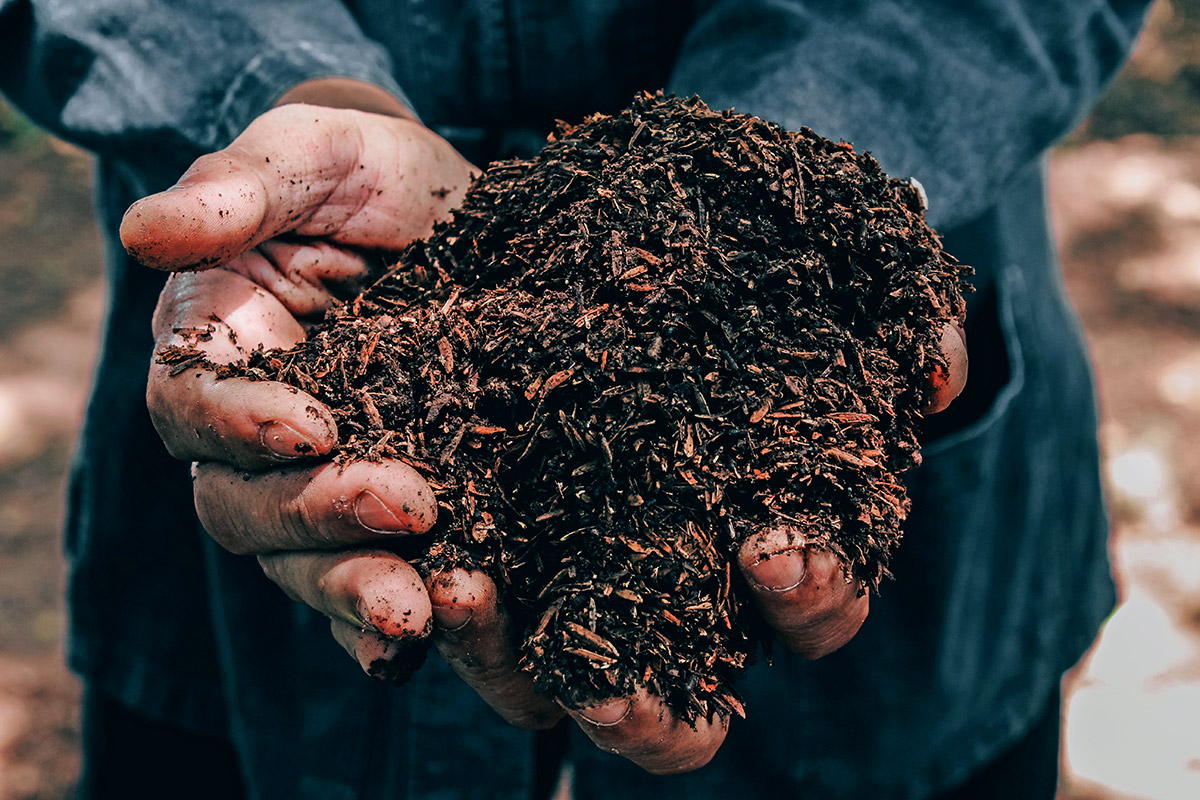
“These are substantial carbon sinks,” he said, adding that research like the new study “opens up interesting research questions for understanding carbon dynamics in the continuum between mineral, wetland and peat soils.”
What to read next
However, such dense, carbon-rich soils are not present throughout the Cerrado, so Verona and the research team set out to estimate the wetland’s entire geographic extent using remote sensing data on land cover, land use information from landowners, and a machine learning approach. They estimated that these ecosystems cover 16.7 million hectares, about 8% of the total area of the Cerrado.
Next, the team measured greenhouse gas emissions from the Cerrado’s soil during the wet, dry, and transition seasons. They found that about 70% of emissions from wetlands occurred during the dry season. This could become a problem as the climate changes and wetlands dry out. Droughts can rapidly release large amounts of carbon, as a steady flow of water maintains an environment that stores large amounts of carbon in the soil.
protection of tropical wetlands
Further analysis of the soil using radiocarbon dating revealed that the carbon deposits in the Cerrado are on average more than 11,000 years old, with the oldest being 20,000 years old. The age of accumulated carbon shows how important ecosystem protection is. “Once you lose the carbon that has accumulated over thousands of years in the Cerrado, you can’t easily get it back,” Zanne says.
Although Brazilian law legally protects wetland areas, this law does not necessarily protect the water sources that nourish wetlands and are important carbon storage systems. “We need to maintain hydraulics,” Verona said. “If we only protect the wetlands themselves and not the water within the landscape…we will lose our hydropower systems.”
Additionally, Verona refers to the Cerrado as a “sacrificial biome.” That’s because the Cerrado absorbs some of the water-intensive land-use needs that can’t occur in the better-protected Amazon rainforest. For Verona, that’s counterintuitive. “If you sacrifice the Cerrado for agriculture to protect the Amazon, you are removing some of the water that flows into the Amazon. [was] Protect Amazon. ”
However, keeping Cerrado wetlands functional may be important to achieving global climate goals. Stronger protections, such as laws that recognize the connection between groundwater and wetlands and improved water use practices, could preserve the Cerrado’s carbon storage capacity.
“We are losing many of these wetlands silently and unseen,” Oliveira said. “They remain invisible in Brazilian policy and even in the global scientific community. They truly deserve urgent and strong protection and recognition at the global level.”
This article was originally published on Eos.org. Read the original article.