
EU nuclear energy plan to spend €330 million on fusion and reactor research
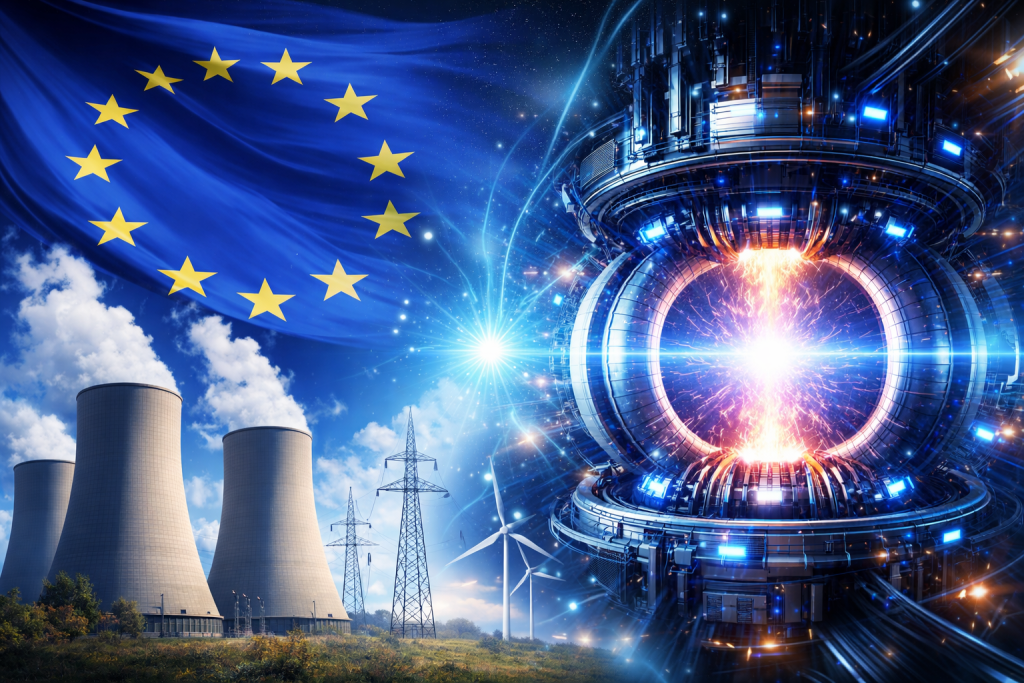
The European Commission has approved a new two-year research agenda to improve the EU’s nuclear energy capabilities, with a focus on fusion energy, reactor safety and technological independence.
The Euratom Research and Training Work Program 2026-2027 outlines more than €330 million in funding to support nuclear innovation as Europe prepares for rising electricity demand and long-term decarbonization goals.
The initiative forms part of a broader policy framework related to the EU’s 2050 climate neutrality target and is consistent with recent industrial and energy strategies, including efforts to scale up clean technologies and reduce dependence on external energy sources.
Ekaterina Zaharieva, Commissioner for Start-ups, Research and Innovation, explained: “The EU wants to lead the world in innovative nuclear technology, which is key to ensuring our country’s energy independence, competitiveness and decarbonisation.
“That’s why we are working closely with researchers, industry, startups and regulators to make small modular reactors (SMRs) safe and accelerate fusion energy, with the goal of being the first to bring fusion from the laboratory to the power grid.
“To do that, we need to ensure that our good science translates seamlessly into innovation and industrial deployment.”
Focus on fusion energy development
A central pillar of this program is the acceleration of fusion energy, which is widely seen as a potential long-term solution for clean and reliable power generation. The European Commission has allocated €222 million to bring fusion research closer to commercial deployment.
The plan includes the creation of a European Public-Private Partnership (PPP) aimed at bridging the gap between experimental research and industrial applications. This structure aims to strengthen supply chains and reduce fragmentation between member states.
In parallel, early-stage companies working on fusion energy will gain access to funding through existing innovation vehicles. The goal is to help startups expand technology that remains largely confined to laboratory settings and attract private capital to areas that are still considered high-risk.
Skills and infrastructure
Beyond funding, the program prioritizes talent development and access to research infrastructure. The initiative will focus on developing experts in fusion-related fields, while expanding cooperation across the network of European nuclear research facilities.
Strengthening nuclear power systems
While fusion is a future-oriented investment, the program also addresses pressing needs within existing nuclear power systems. Approximately 108 million euros are earmarked for nuclear fission research.
Key areas include the long-term safety of operating nuclear power plants and the development of next-generation nuclear reactors such as SMRs and advanced designs. Research will also focus on improving radioactive waste management and radiation protection.
These priorities reflect the expectation that nuclear power will continue to play an important role in Europe’s energy mix, especially as electricity demand is predicted to increase significantly by mid-century.
Materials and fuel innovation
The program also supports innovation in nuclear materials and fuels, an area considered critical to improving reactor efficiency and extending operating life. This includes research into new fuel cycles and enhancing the resilience of materials under extreme conditions.
Expanding applications in nuclear medicine
In addition to power generation, the work plan also includes provisions for nuclear technology in medicine. The funding will go towards securing supplies of medical isotopes used in diagnostics and therapy, an area where Europe has faced supply constraints in recent years.
Advances in isotope production capacity are expected to strengthen the EU’s autonomy in nuclear medicine and support the development of new therapeutic applications.
Human resource development and international cooperation
The lack of skilled professionals remains a structural challenge in the nuclear sector. The program tackles this issue through targeted training initiatives and research grants, including those based on the established EU mobility regime.
It will expand access to more than 230 nuclear research facilities across Europe and strengthen collaboration between scientists and engineers. The plan also includes measures to integrate researchers from partner countries, including Ukraine, into the European research ecosystem.
Strategic background for EU nuclear energy
The 2026-2027 program reflects a dual-track strategy to maintain and upgrade existing EU nuclear infrastructure while investing in emerging nuclear technologies such as fusion energy.
Nuclear energy (both fission and fusion) is positioned as a key element of the transition as Europe seeks to balance energy security, industrial competitiveness and tackling climate change.
The success of this program could influence how quickly these technologies move from research to deployment in the coming decades.
Source link

