
AI can accurately deliver flood warnings to data-poor areas
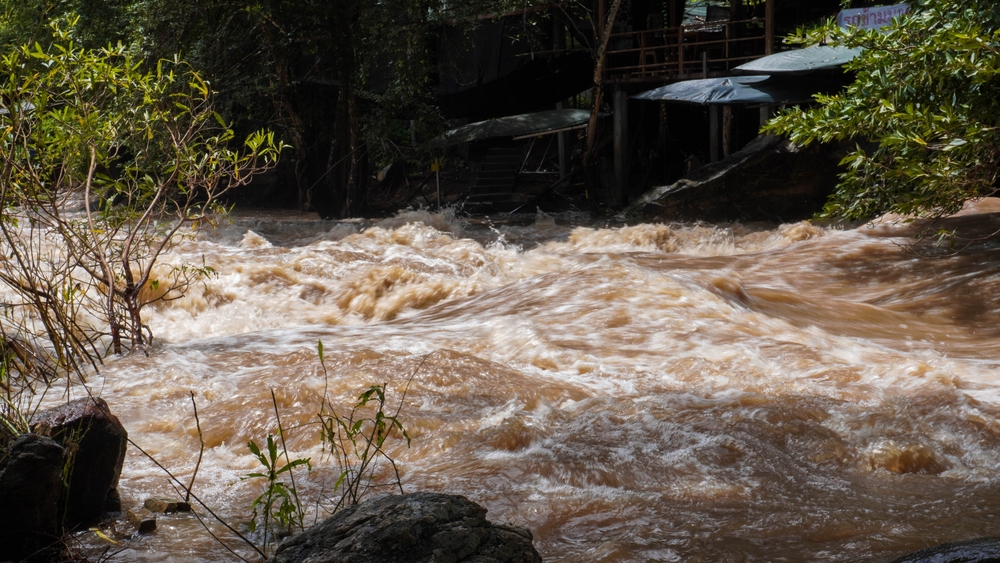
A new study reveals that “basic models” trained on vast amounts of common time-series data have the potential to accurately predict river flows, even in areas where there is little or no local hydrological record.
This approach could improve flood warnings, drought planning, and water resource management in parts of the world where monitoring data is limited.
The study, published in Machine Learning: Earth, was conducted by researchers at the University of Texas at Austin and Hydrotify LLC.
Dr. Alexander Sun of the University of Texas at Austin and Hydrotify LLC explained, “Reliable water information is essential for every community, but many regions still lack the long-term records needed to support traditional forecasting methods.”
Failure to issue flood warnings causes chain of disaster
In many parts of the world, river gauges are sparse, records are incomplete, and monitoring networks are difficult to maintain.
Without long-term, reliable datasets, communities often have little warning before flooding, limited insight into drought risk, and fewer tools to guide water allocation and infrastructure planning.
When flood warnings are not issued, the impacts range from manageable to catastrophic. Without lead time, communities find themselves in a “temporary” situation with no window to move valuables, fortify housing, or evacuate.
This lack of preparedness leads to infrastructure and personal property destruction without any attempt at mitigation, leading to increased mortality rates and astronomical economic losses.
As climate change pressures increase, the ability to generate useful flood warnings without relying on extensive local records becomes increasingly important.
Efficient flood warning system increases protection
Flood warning systems are essential for several reasons, including:
It provides valuable time needed to reach heights and greatly reduces the risk of drowning. Even an hour’s notice could allow residents to move vehicles or install flood gates, potentially mitigating thousands in damages. Systematic alerts allow first responders to proactively deploy resources and secure evacuation routes before they become impassable.
Overall, early warning transforms a chaotic survival situation into a coordinated response and serves as the main shield between natural phenomena and man-made disasters.
AI models show superior performance in river flow monitoring
The research team evaluated several advanced AI models known as Time Series Foundation Models (TSFM).
These TSFMs were originally trained on time series data from fields such as energy, transportation, and climate, but were tested on a large U.S. river dataset consisting of more than 500 watersheds. One model in particular, called Sundial, performed nearly as well as a long short-term memory (LSTM) model trained entirely on decades of river flow records.
The AI model performed best in basins dominated by strong seasonal patterns, such as snowmelt-driven flows.
“Such approaches demonstrate how new AI tools can help fill that gap by making data-driven flood warning predictions accessible in more locations,” Sun commented.
“While there is still room for progress, especially in more complex river systems, this study points to a future where improved flood predictions can be made even in areas that have been underserved for decades.”
Increasing the value of real-world water forecasting
The researchers noted that the capacity of TSFM varies depending on the size of the training data.
As future generations of TSFM incorporate more geoscience data, including hydrological and climate records, its value in real-world water forecasting will continue to increase.
Source link

