
Possibility of halving the impact of aviation global warming by adjusting flight routes
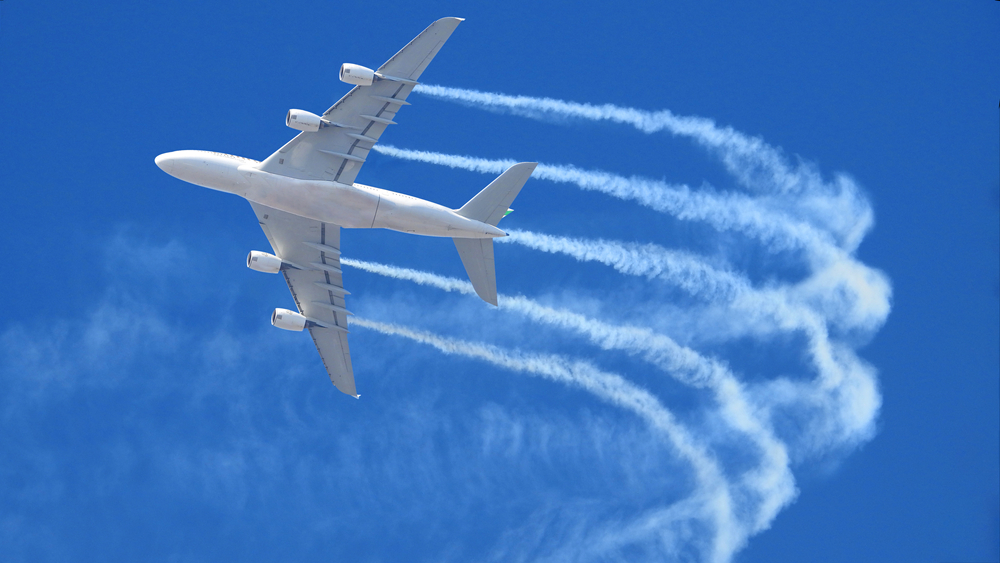
The study shows that changing cruising altitude by relatively small margins can prevent the formation of contrails, a major but often overlooked contributor to atmospheric warming.
The findings suggest that avoiding contrail-forming conditions could cut the total climate impact of aviation by nearly half, providing a short-term mitigation option that does not rely on new aircraft technologies or alternative fuels.
Why contrails are more important than they seem
Contrails (thin white stripes visible behind an aircraft at high altitude) are formed when hot engine exhaust mixes with cold, moist air. Under certain atmospheric conditions, this interaction can generate ice crystals that can develop into long-lived cloud formations.
Although visually subtle, these clouds play a measurable role in climate change. They trap heat that escapes into the Earth’s atmosphere, amplifying warming beyond the direct effects of carbon dioxide emissions.
Aviation accounts for approximately 2-3% of global CO₂ emissions, but when these non-CO₂ impacts are included, aviation’s overall climate impact is even greater.
Low-tech interventions that make a big difference
This study focuses on contrail avoidance, an operational strategy that adjusts an aircraft’s altitude to avoid regions of the atmosphere where contrails are expected to occur. This often means ascending or descending thousands of feet.
Unlike long-term solutions such as sustainable aviation fuels or new propulsion systems, this approach can be implemented using existing aircraft and infrastructure.
According to the study, the main focus is on integrating atmospheric data into flight planning and air traffic control decisions.
Aircraft already regularly change routes to avoid turbulence and bad weather. The authors argue that similar systems can be adapted to identify and avoid contrail-prone zones.
Modeling the benefits of climate change
The researchers used a large-scale climate simulation framework to assess how widespread adoption of contrail avoidance strategies would affect global temperatures. Their model included 10,000 scenarios to evaluate different timelines and implementation levels.
The results show that introducing contrail avoidance between 2035 and 2045 could preserve around 9% of the remaining global temperature budget associated with the Paris Agreement’s 2°C target.
However, timing emerged as a key factor. Starting 10 years earlier, in 2035 instead of 2045, would significantly increase the benefits from climate change.
By mid-century, early deployment had achieved temperature reductions equivalent to an approximately 78% increase in effectiveness compared to delayed implementation.
Conversely, if no action is taken, contrails alone could contribute an estimated 0.054°C of warming by 2050, significantly more than would be expected from aviation CO₂ emissions over the same period.
Trade-offs and operational challenges
Adjusting flight paths involves trade-offs. Small deviations in altitude or route can increase fuel consumption and carbon dioxide emissions. However, the study found that the reduction in warming from fewer contrails more than compensated for this additional carbon dioxide emissions.
The bigger challenge lies in operational coordination. Effective contrail avoidance requires real-time coordination between pilots, air traffic controllers, and weather services.
Accurately predicting atmospheric conditions, especially humidity and temperature at cruising altitude, is essential.
Some aviation experts have expressed concerns about the increased workload on air traffic management systems. The researchers acknowledge these limitations but suggest that the scale of adjustments needed are modest and compatible with existing practices.
Even imperfect solutions can be profitable
One of the most notable conclusions from this study is that contrail avoidance doesn’t have to be perfect to be effective. Even partial implementation would significantly reduce climate impacts, for example by successfully avoiding contrails in 25% of relevant cases.
This finding supports a phased approach in which airlines begin to integrate contrail avoidance into their operations while continuing to improve their predictive tools and adjustment mechanisms.
The window for early action is narrow
This study highlights the importance of acting quickly. Unlike many climate change measures that have benefits over decades, contrail reduction can have relatively rapid temperature effects.
For policymakers and industry players, the implications are clear. Delaying implementation significantly reduces potential benefits. Early implementation, even with imperfect systems, provides disproportionately greater benefits than waiting for more sophisticated solutions.
Researchers say further testing is needed to validate contrail avoidance strategies under real-world conditions before large-scale deployment. Demonstration projects can play an important role in determining feasibility and refining operational protocols.
If proven at scale, adjusting flight paths to reduce contrails could become one of the most immediate and cost-effective tools available to the aviation industry to limit climate impacts.
Source link

