
CERN achieves controlled movement of antiprotons for the first time
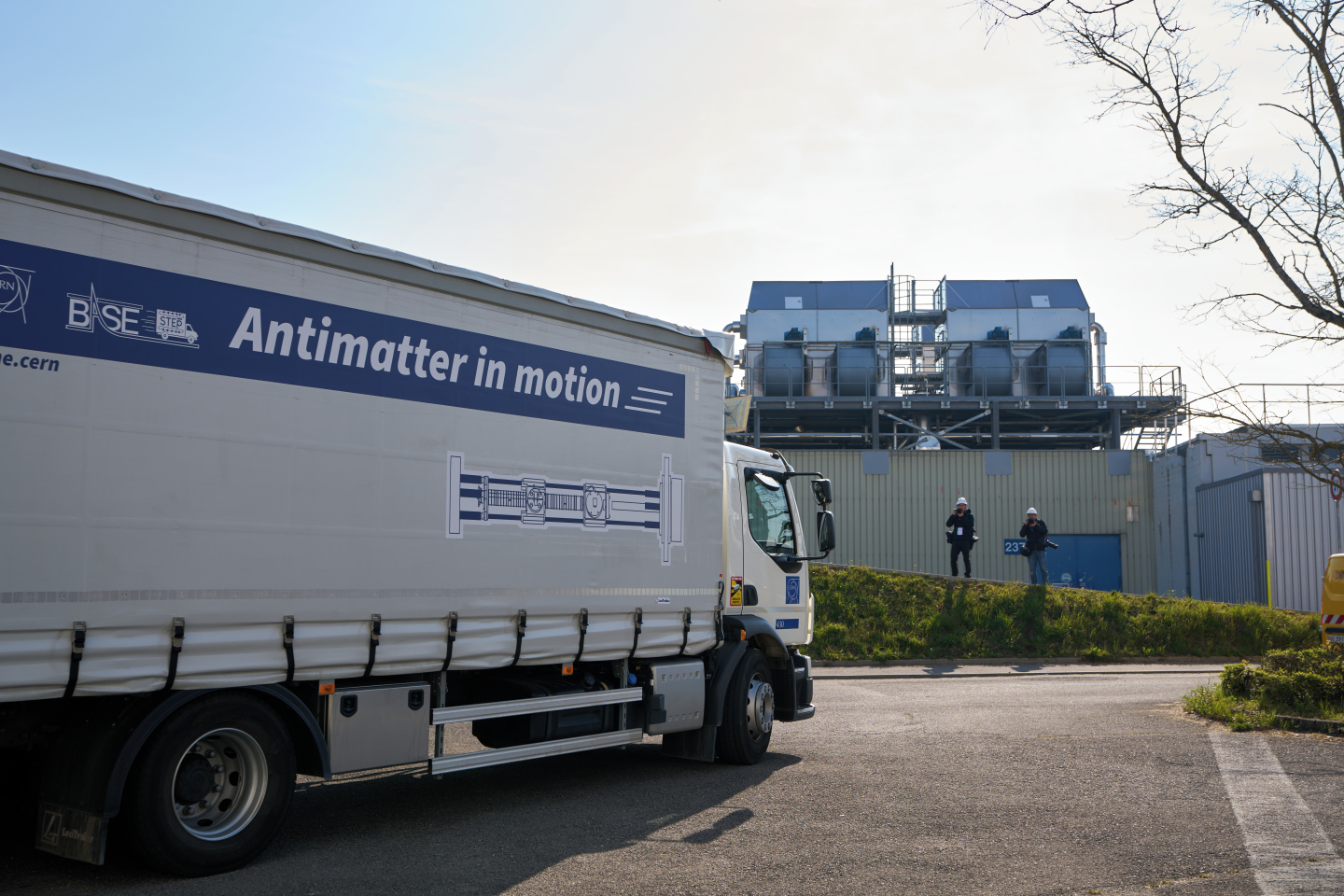
The major advances made by the BASE experiment may enable high-precision antimatter research beyond CERN.
A team of physicists working on the BASE experiment at CERN has successfully demonstrated the transport of antimatter in a controlled environment for the first time.
The group was able to move a container containing antiprotons around CERN’s main campus while maintaining the stability of the particles. This is an important technological milestone in experimental physics.
The test involved repositioning a compact trap system carrying 92 antiprotons. The researchers disconnected the device from its host facility, transported it by truck, and resumed operations without losing any particles.
Given that antimatter instantly annihilates when it comes into contact with normal matter, maintaining confinement during motion represents a significant engineering and scientific advance.
Why antimatter transport could revolutionize science
Antimatter remains one of the most puzzling subjects in modern physics. Although its properties mirror those of ordinary matter, with opposite charge and magnetic properties, the observable universe is overwhelmingly composed of matter.
This imbalance contradicts the predictions of models of the early universe, which suggest that equal amounts of both should have formed during the Big Bang.
Efforts to resolve this contradiction depend on ultra-precise measurements of antimatter particles. The BASE experiment focuses on antiprotons and directly compares their properties to those of protons to detect subtle asymmetries. Even small differences can point to new physics beyond current theoretical frameworks.
However, there are limitations to making such measurements within CERN’s dedicated antimatter production environment. According to BASE spokesperson Stefan Ulmer, the facility’s infrastructure causes very small fluctuations in the magnetic field.
Although negligible in most situations, these disturbances impede the level of accuracy required for next-generation measurements.
Therefore, moving antimatter samples to quieter laboratory environments is considered essential to advancing the field.
Design a mobile antimatter system
To address this limitation, researchers developed a portable device known as BASE-STEP. The system is built around a cryogenic Penning trap that uses a combination of magnetic and electric fields to trap charged particles in a near-perfect vacuum.
The device weighs approximately 1 ton, but is compact enough for standard transport logistics. It incorporates superconducting magnets, a liquid helium cooling system, a built-in power reserve, and a vibration-resistant housing designed to withstand movement.
This latest test confirmed that the system can maintain the extreme conditions necessary to preserve antimatter during transport. The trap remained active throughout the journey, ensuring that the antiprotons remained trapped and stable.
From on-site testing to cross-border transportation
Long-term goals go far beyond CERN’s internal infrastructure. Scientists aim to distribute the antiprotons to external research centers across Europe, including facilities such as the Heinrich-Heine University of Düsseldorf, where more controlled environments could support higher-precision experiments.
BASE-STEP project leader Christian Smolla said the recent demonstration builds on previous work using ordinary protons. Successfully applying this method to antimatter would be a more complex and meaningful step toward routine transport.
Significant technical challenges remain. Maintaining superconducting magnets at temperatures below 8.2 Kelvin for long journeys that can last more than 8 hours requires reliable on-board cooling and power systems. Researchers are considering integrating mobile cryogenic coolers and generators to meet these demands.
Another important phase occurs at the destination. Loss-free transfer of antiprotons from a transport trap to a stationary experimental setup requires extreme precision and coordination.
Expanding access to antimatter research
CERN currently operates the only facility in the world capable of producing and slowing down antiprotons for experiments. The antiproton moderator and ELENA ring provide low-energy particles for a small number of experiments, including BASE.
By transporting antimatter beyond this centralized infrastructure, scientists can expand access to rare antiproton samples and decentralize high-precision research. This will enable specialized laboratories to contribute more directly to fundamental physics research.
Gautier Hamel de Montcheneau, Director of Research and Computing at CERN, said the results were an early but important step in a long-term scientific endeavor. “Transporting antimatter is a pioneering and ambitious project, and we congratulate the BASE collaboration on achieving this impressive milestone.”
“We are at the beginning of an exciting scientific journey that can further deepen our understanding of antimatter.”
A step towards deeper understanding
Although this demonstration will not immediately resolve fundamental questions surrounding antimatter, it will completely change the experimental landscape.
By separating antimatter research from a single facility, researchers will have the flexibility to design experiments with reduced environmental interference.
The next stage of the BASE experiment will focus on improving transport conditions and extending the process over long distances.
If successful, antimatter transport could become a standard tool in precision physics, bringing scientists closer to understanding why the universe exists in its current form.
Source link

