


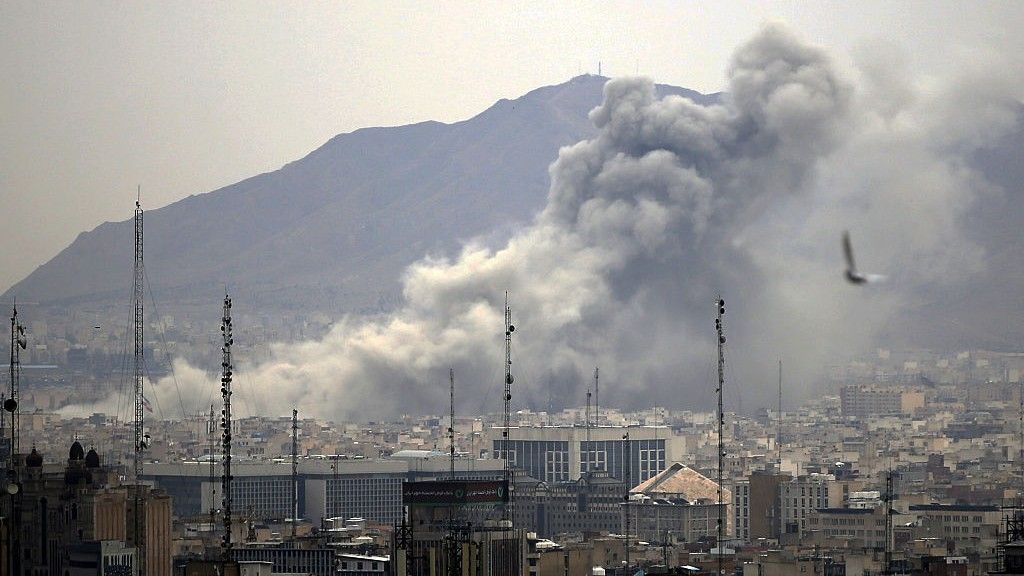
In the first two weeks of the war between the US, Israel and Iran, current and future greenhouse gas emissions have increased so much that they have exhausted the world’s carbon budget faster than 84 countries combined, a new analysis has found.
According to the researchers, between February 28 and March 14, 2026, parties to the conflict released approximately 5.6 million tonnes (5.1 million tonnes) of carbon dioxide (CO2) and other greenhouse gases by firing carbon-intensive weapons, powering fighter jets and ships, and bombing infrastructure such as oil storage facilities and civilian buildings.
Article continues below
you may like
“Every missile attack is another down payment on a hotter, more unstable planet, and no one will become safer,” Patrick Biggar, co-author of the analysis and director of research at the Institute for Climate and Communities, a climate and economics think tank, told the Guardian.
The analysis and accompanying opinion piece written by the researchers was published March 21 by the Climate Community Research Institute.
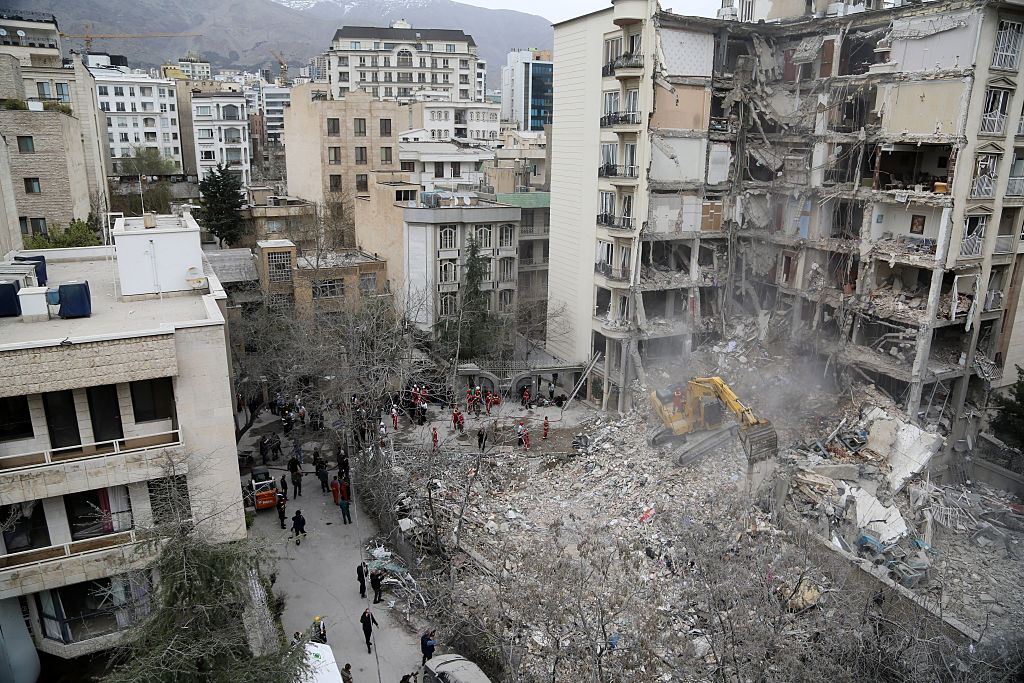
According to the analysis, the biggest source of CO2 from the first two weeks of the Iranian conflict was the destruction of homes, schools and other buildings, which will need to be cleared and infrastructure rebuilt once the war ends. By Biggar et al.’s calculations, these indirect emissions are equivalent to approximately 2.7 million tonnes (2.4 million tonnes) of CO2, equivalent to the annual emissions of the Maldives. Based on data from the Iranian Red Crescent Society, a humanitarian organization, the destroyed infrastructure includes 16,191 residential buildings, 3,384 commercial buildings, 77 medical centers, and 69 schools, the researchers said in their study.
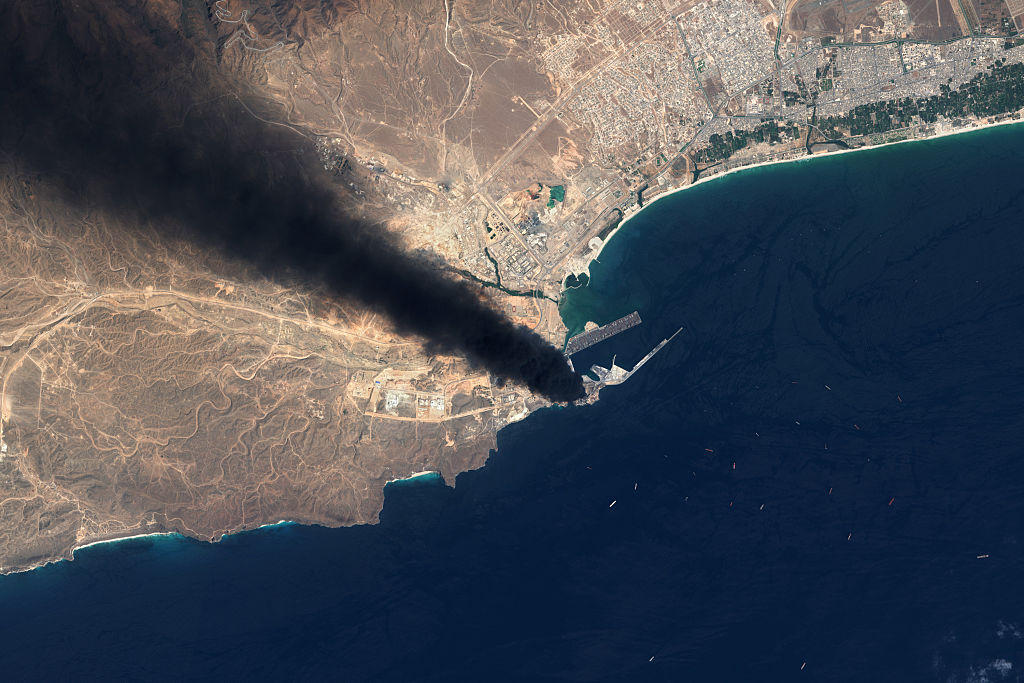
The second-highest amount of CO2 emissions in the first 14 days of the war came from shelling by the United States, Israel, and Iran of oil storage facilities, refineries, and oil tankers across the Gulf region. The researchers found that between 2.5 million and 5.9 million barrels of oil were blasted during the analysis period, releasing 2.1 million tonnes (1.9 million tonnes) of CO2 and other greenhouse gases into the atmosphere. This is roughly equivalent to Malta’s annual emissions.
Fuel used in combat and support operations during the first two weeks of the war was the third largest source of CO2, totaling approximately 583,000 metric tons (529,000 metric tons) of greenhouse gases, equivalent to the annual emissions of Greenland. According to the analysis, the US and Israel used fighter jets and bombers to attack more than 6,000 targets inside Iran between February 28 and March 14. The researchers estimate that this amounted to about 2,500 flights of three hours each, which, along with troop transport and other support operations, likely consumed between 150 and 270 million liters (40 and 71 million gallons) of fuel.
In the first two weeks of the war, the United States lost three F-15 fighters and one KC-135 tanker. During the same period, Iran reportedly lost 28 aircraft, 21 ships, and approximately 300 missile launchers. This equipment is likely to be replaced during manufacturing, making it the fourth largest source of CO2, totaling 190,000 tons (172,000 tons) of greenhouse gases, according to the analysis. This is about the same as Tonga’s annual emissions.
Finally, the researchers estimated that the United States and Israel fired 9,000 missiles during the first 14 days of the war. Meanwhile, Iran is believed to have launched 1,000 missiles and approximately 2,000 unmanned aerial vehicles during the same period. As well as aircraft, ships and missile launchers, the belligerent parties are likely to replenish this arsenal, including interceptor missiles. Analysis shows that volumetric CO2 emissions amount to approximately 61,000 tons (55,000 tons), equivalent to the annual emissions of a small cement factory.
What to read next
The war is now in its fourth week, meaning far more CO2 has been emitted directly and indirectly as a result of the conflict than the analysis suggests.
“As the conflict progresses, emissions are expected to increase rapidly, primarily due to the speed of the conflict.” [at] “Which oil facilities are being targeted at an alarming rate,” Fred Otu Larbi, a co-author of the analysis and a researcher at Lancaster University in the UK and the Ghana University of Energy and Natural Resources, told the Guardian. “No one really knows how much it will cost, which is why studies like this are so important.”
Emissions could rise significantly if more countries go to war, the researchers said in their analysis. But already, “burning up Iceland’s annual emissions in two weeks is something we really can’t afford,” Oturarvi said.
The aftershocks of the war are expected to have an even bigger impact on the climate than the fighting itself, as countries seek to cushion the fuel and fertilizer shock caused by Iran’s blockade of the Strait of Hormuz. Specifically, the researchers said fossil fuel drilling could increase as countries seek to ensure as much energy security as possible.
“Historically, each U.S.-led energy shock has been followed by a surge of new drilling and new LNG production. [liquified natural gas] “We need terminals and new fossil fuel infrastructure,” Biggar said. “This war risks locking in carbon dependence for two generations.”