
Proton ceramic cell for large-scale high temperature electrolysis
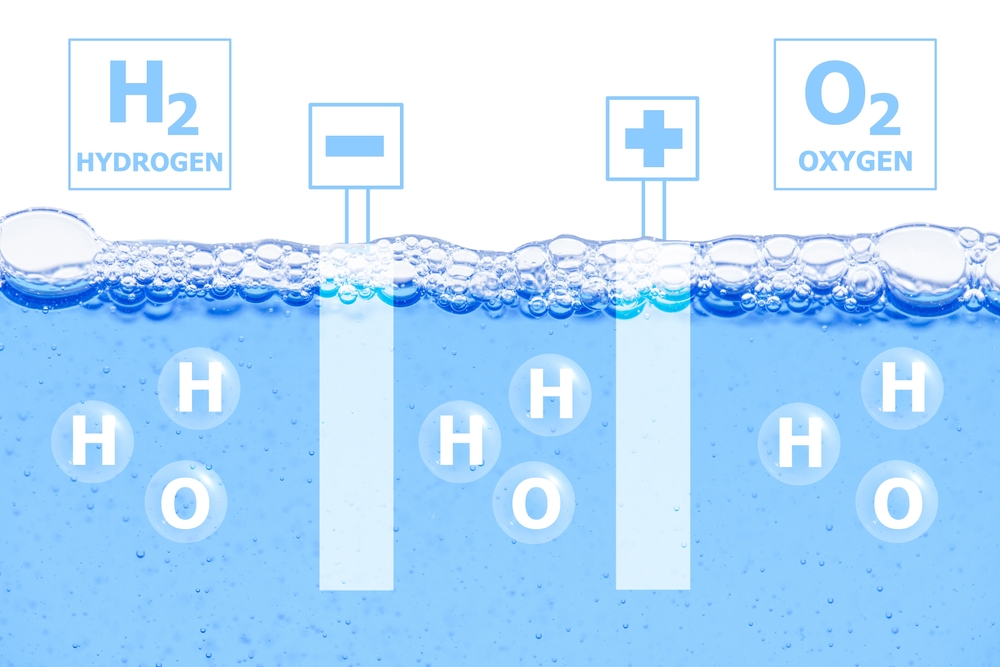
The PEPPER project is paving the way for the scale-up of next-generation steam electrolysis technology.
Although the water splitting reaction seems simple, producing green hydrogen by electrolysis remains an electricity-intensive process. In this context, high-temperature steam electrolysis techniques appear to be the most promising, as most of the energy required for the splitting of water molecules is supplied in the form of heat rather than electricity. This makes high-temperature steam electrolysis particularly advantageous when low-cost heat can be used to generate steam, such as recovering waste heat from an industrial process.
Advantages of solid oxide battery technology
Currently, the field of high-temperature technology is dominated by solid oxide electrolysis techniques, which rely on the ability of certain oxides (often zirconia-based) to conduct oxygen ions, typically at temperatures above 700 °C. These transport properties of zirconia-based materials have been known for a long time. At the end of the 19th century, Walther Nernst exploited this property to use zirconia as the incandescent rod in early incandescent lamps. Almost 130 years later, this property, combined with other important properties such as good mechanical properties and high chemical stability, has made zirconia one of the most utilized industrial ceramics worldwide, with applications across strategic sectors such as healthcare, energy, automotive, aerospace, and defense.
This wide range of applications has enabled the establishment of an industrial supply chain for zirconia materials and has definitely contributed to improving the development of solid oxide battery (SOC) technology. Inside the SOC, steam is mixed with hydrogen. The steam electrolysis (SOEL) process consists of pumping oxygen from water molecules in the form of ions through an electrolyte by supplying heat and electricity. This produces a stream of hydrogen diluted by unreacted vapor on one side and a stream of oxygen on the other side. Due to the high temperatures, this takes place with unprecedented efficiency compared to liquid water electrolysis. However, such high operating temperatures come with many challenges in terms of material selection, durability, balance of plant components, and cost at the electrolysis plant scale.
Possibilities of proton ceramic cells
A breakthrough occurred in 1981¹ with the discovery of high-temperature proton conduction in certain ceramic materials and its application to steam electrolysis. The identified proton-conducting ceramics (mainly perovskite-type oxides combining zirconium with alkaline earth elements such as barium and strontium) are characterized by significant levels of proton conductivity in humid hydrogen atmospheres, typically at temperatures between 300°C and 600°C. This makes proton ceramic cell (PCC) technology particularly attractive.
Steam electrolysis using PCC (PCCEL) consists of pumping two hydrogen atoms out of a water molecule. The result is a stream of undiluted hydrogen on one side, but the resulting oxygen remains mixed with unreacted vapor. Compared to SOEL, PCCEL’s lower operating temperature may slightly impact efficiency, but promises cheaper materials, fewer degradation issues, and lower overall system costs. However, typical proton-conducting ceramics are characterized by strong refractory properties and strong alkaline properties, which make them more difficult to form and less versatile than the zirconia materials used in SOC. As a result, due to the technical challenges of forming and sintering PCC, this technology remains limited and is mainly studied at laboratory scale. Scaling up to industrially relevant sizes is at an early stage, with prototype reactors based on tubular cells reaching power outputs of only a few kW. However, more than 40 years of laboratory-scale research and development on PCCs has shown the unique potential for applications enabled by proton conduction, particularly in the electrosynthesis of high value-added molecules such as ethylene and ammonia.
Currently, the development of planar technology is considered an important milestone for further scale-up and technology introduction into industrialization.
High-performance and efficient planar proton-conducting electrolytic reactor: PEPPER project
The PEPPER project takes on the challenge of taking PCC technology out of the laboratory and developing a new generation of steam electrolysis PCCELs at a suitable scale to enable adoption of the technology and further scale-up at industrial level. The consortium brings together major research and industrial partners from across Europe, including DLR (Germany), AVL (Austria), CEA (France), CNRS (France), DTU (Denmark), EIFER (Germany), ELCOGEN (Estonia) and Grant Garant (Czech Republic). This collaboration ensures a holistic approach to research and innovation, emphasizing real-world applicability.

Its novelty lies in the combination of lessons learned and best-in-class know-how from the development of planar SOC cells and stacks with deep knowledge of the properties of protic ceramics. The overall objective is to advance PCC technology by establishing two robust cermet-supported and metal-supported planar cermet supports for high-performance electrolytic applications and high efficiency at temperatures of 600°C, allowing scale-up in size comparable to state-of-the-art SOCs.
PEPPER’s goal is to demonstrate both cermet- and metal-supported planar proton ceramic cells. Each cell measures approximately 100 cm² and is integrated into a 5-level short stack designed for steam electrolysis operation. Cell sizes of approximately 100 cm² are compatible with the smallest marketable products for industrial applications.
Using these first planar electrolytic reactors, we aim to gain insight into the capabilities of PCC technology at this scale, understand performance limitations, guide further development, and address technical challenges. Through a comparative study with SOEL based on a comprehensive life cycle and techno-economic evaluation, PEPPER aims to establish a technology roadmap that will enable the production of tens of kW modules with a lead time of 10-15 years and set a path to commercialization. The project will start in January 2025 and run for three years, so the roadmap is expected to be published by early 2028.
By increasing technology readiness from TRL 2, which develops the concept, to TRL 4, which validates the technology in a laboratory environment, PEPPER prepares for the next generation of steam electrolysis. The technology, expected to be ready around 2035-2040, could find applications beyond green hydrogen production, particularly in the field of electrosynthesis of high-value-added molecules, contributing to Europe’s energy security and decarbonization goals.
References
Iwahara, H., Escha, T., Uchida, H., and Maeda, N. (1981). Proton conduction in sintered oxides and its application to steam electrolysis for hydrogen production, Solid State Ionics, 3/4, pp. 359–433
Disclaimer

The PEPPER project is co-funded by the European Union (ID 101192341). However, the views and opinions expressed are those of the authors alone and do not necessarily reflect the views and opinions of the European Union or the Clean Hydrogen Partnership. Neither the European Union nor the licensing authorities can be held responsible for them.
Please note: This is a commercial profile
This article will also be published in the quarterly magazine issue 26.
Source link

