
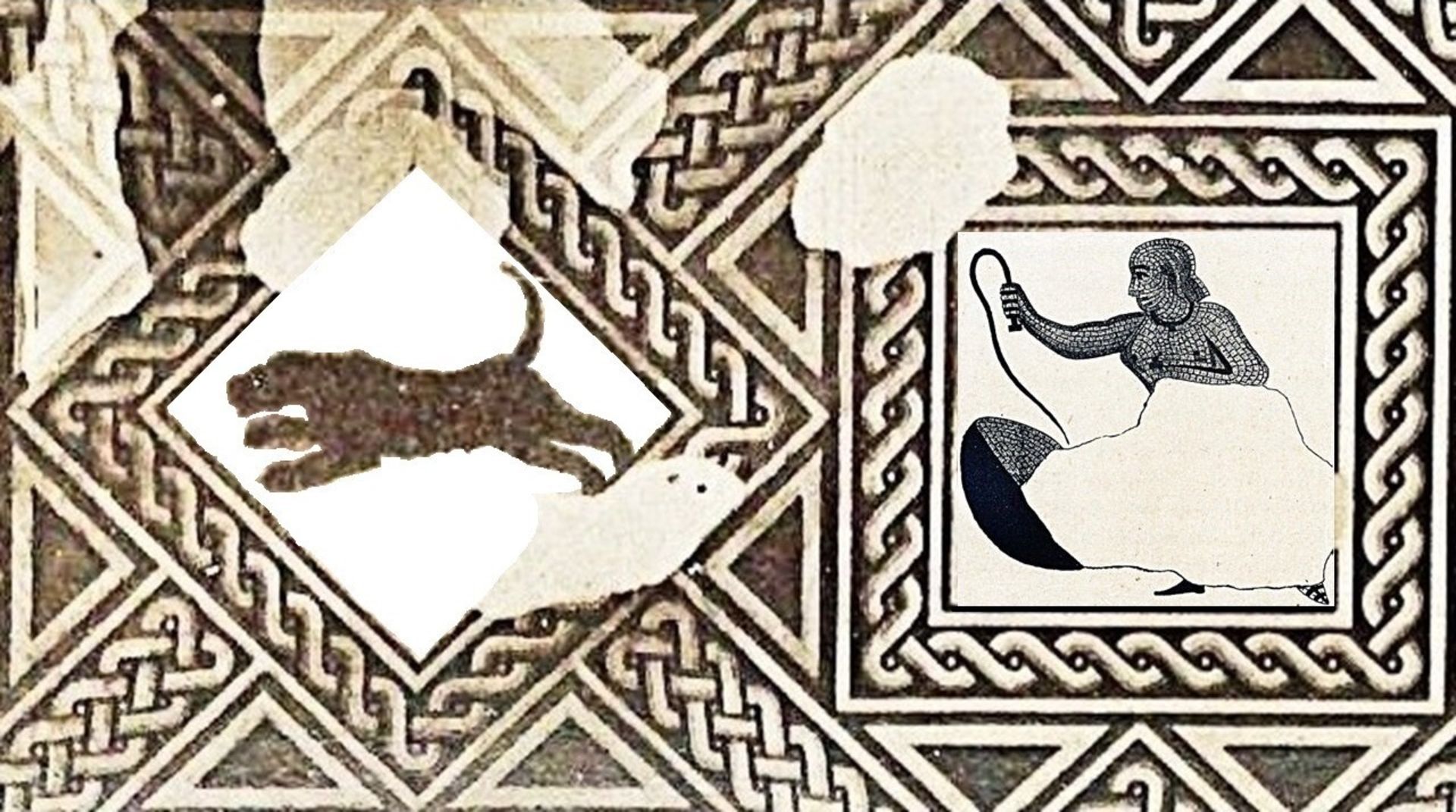
For the first time, a Roman woman is seen fighting beasts in an arena.
Ancient texts say some women fought beasts in the arenas of the Roman Empire, but a new study published March 22 in the International Journal of Sports History provides the first visual evidence that this actually happened. Women who fought beasts were known as venatrices or hunters.
Article continues below
you may like
This mosaic was discovered in Reims, France in 1860. Much of it was destroyed by bombing during World War I, but paintings by archaeologist Jean-Charles Loriquet, who discovered the mosaic, survive. Loriquette published the painting in his 1862 book, but it has received little academic attention, Alfonso Mañas, a sports researcher at the University of California, Berkeley, said in a new study.
The mosaic includes a mixture of beasts, beast hunters, and gladiators, each surrounded by diamond or square decorations that archaeologists call “medallions.” It dates back to the 3rd century AD and was discovered in a house believed to belong to a wealthy individual who sponsored animal fighting shows held at the stadium, Mañas told Live Science in an email.
Mañas said the mosaic was probably placed on the floor of the banquet hall “so that the host’s guests could admire it during the banquet.”
At first, researchers were unsure whether the person was female, so they identified the person as “an instigator, a role in a non-existent arena, or a Paenialius, a kind of clown with a whip,” Mañas said in the study. But there are some clues that the person is a woman and a hunter, Mañas said. An instigator is someone who is said to have used a whip to encourage beasts to fight, but there is no solid evidence that this position existed. Paegniarius fought with whips and clubs and wore arm guards. The fact that the woman does not have a cane or armrest indicates that she is not a Pegniarius.
Although women regularly participated in arena events, I believe they are underrepresented in the surviving written and visual evidence.
Alison Futrell, Professor of History, University of Arizona
Mañas said there was no doubt that the painting depicts a woman, noting that it shows the person has large breasts.
Mañas believes his role was as a hunter of animals rather than a prisoner sentenced to death. Prisoners sentenced to death were not given weapons and were often tied up. This woman has a whip, but does not appear to be restrained.
Are the drawings accurate?
Because much of the mosaic was destroyed in World War I, it is impossible to verify whether Loriquette’s drawings are accurate, Thomas Scanlon, professor emeritus of classics at the University of California, Riverside, who was not involved in the study, told Live Science in an email.
What to read next
Mr Scanlon praised the magazine’s article but was not satisfied with the identification. “While this article is well documented, my concern is that the actual mosaic does not survive and was destroyed in World War I, so the image is old. [drawing] The details may not be reliable,” Scanlon said.
In his article, Mañas attempted to address this issue by comparing the mosaic painting with a small piece of the mosaic that survived the bombing and is now in the Musée Saint-Rémy. Mañas wrote that the surviving fragments appear to match the drawings closely.
Alison Futrell, a history professor at the University of Arizona, found the article compelling. “I agree with the authors,” she told Live Science in an email, adding, “While I believe women regularly participated in arena events, I believe they are underrepresented in the documentary and visual evidence.”
topless beast hunter
We don’t know this hunter’s name or any details about her. Mañas wrote in the article that she may have volunteered to hunt wild animals, or that she may have been convicted of a crime that did not merit execution and was instead sentenced to train and work as a wild hunter.
This is the only surviving statue of a Roman hunter, but there are at least two known surviving sculptures of female gladiators. These images also depict women topless and without helmets to indicate their female identity.
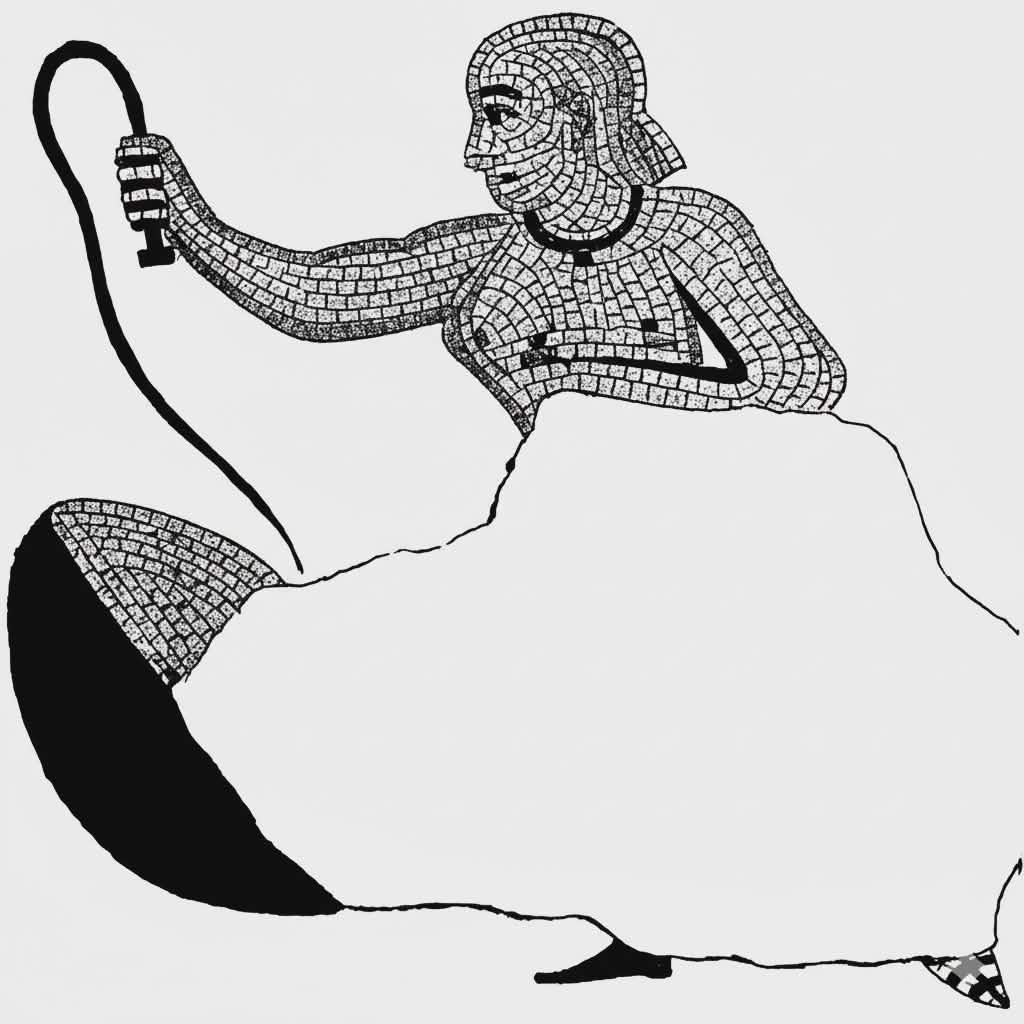
Like female gladiators, female beast hunters “seem to always fight topless and bare-chested. [otherwise] Spectators from the stands would have had a hard time realizing that they were actually women. [to] “Having an erotic effect on the audience and arousing them sexually was one of the objectives sought by their performances,” Mañas wrote in the article. The women would have had to be of a lower social status, Mañas said, because it would be unacceptable for women of higher status to appear topless in the arena.
The lower body of the female beast hunter is not shown. It is possible that the mosaic had already been destroyed by the time Mr. Loriquet discovered it in 1860. Therefore, Mañas pointed out, it is unclear whether Lorique competed completely naked or wearing something like a loincloth.
This mosaic dates from the 3rd century, and historical records indicate that female gladiators were banned throughout the Roman Empire in 200 AD. This suggests that the ban did not affect women’s game hunting, Mañas said.
While female gladiators tended to be controversial in the Roman world because many believed fighting against others should be limited to men, the idea of women hunting beasts was less controversial, Mañas said. The Roman goddess Diana was a hunter, which made it easier for Romans to accept the idea of women hunting beasts, he added.
