
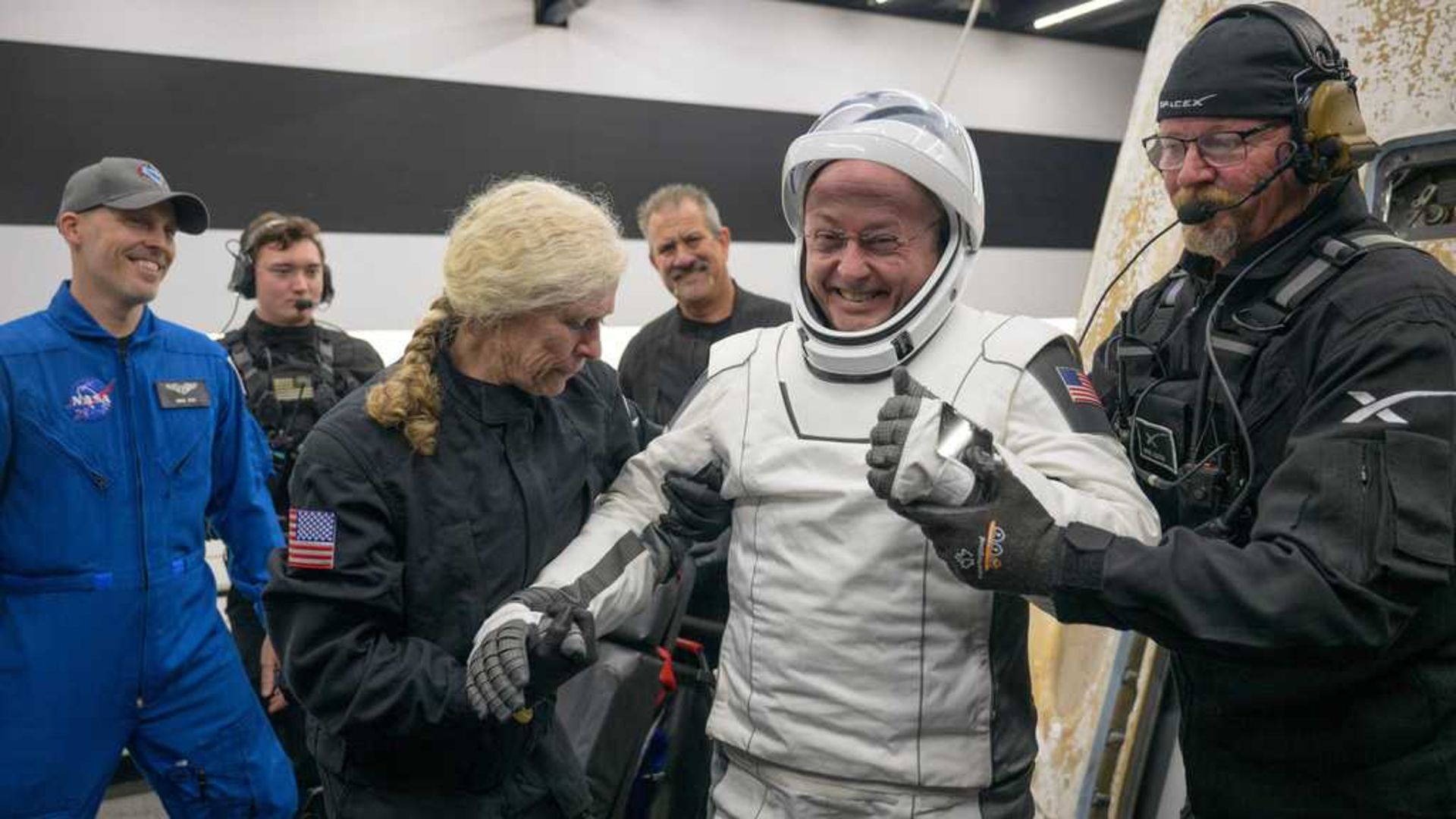
As NASA prepares to fly four astronauts around the moon on the 10-day Artemis II mission, a veteran astronaut’s unexplained illness in orbit is highlighting one of the biggest risks of deep space travel: the need for emergency medical systems.
NASA astronaut Michael Finke said a sudden incident aboard the International Space Station (ISS) in January left him unable to speak and forced NASA’s first-ever medical evacuation from an orbiting laboratory. Finke told The Associated Press that doctors ruled out a heart attack, but the cause of the medical problem is not yet known.
NASA was able to return Finke (along with three other crew members) from the ISS to Earth relatively quickly. But that may not be the case for the long-term lunar missions the agency envisions under its Artemis program. As NASA works to build a permanent human presence on and around the moon, including plans for a $20 billion lunar base, it may become harder to dismiss unexplained medical emergencies like Finke’s as one-off horrors.
Article continues below
you may like
“It was completely unexpected. It happened incredibly fast,” Finke said, according to the Associated Press. “The crew definitely knew I was in distress. Within seconds they were all on deck.”
Finke, who piloted NASA’s SpaceX Crew 11 mission to the ISS, flew with NASA astronaut Zena Cardman, Japan Aerospace Exploration Agency cosmonaut Kamiya Yui, and Roscosmos cosmonaut Oleg Platonov. Crew-11 conducted research on astronaut health and other space station science while supporting the operation of orbital laboratories.
The episode occurred on January 7, 2026, when Finke was eating dinner after preparing for the spacewalk. He said he didn’t feel any pain and the event lasted about 20 minutes. Seeing Finke’s distress, the crew quickly recalled the flight surgeon to Earth.
Finke had been on duty for more than five months when the medical issue arose. He said NASA uses the station’s ultrasound equipment in emergencies, and the agency is currently reviewing astronauts’ medical records to see if something similar has happened in space.
The accident curtailed Crew-11’s mission, as NASA canceled the next day’s spacewalk and Finke and his three crew members returned home early on January 15.
For now, Finke says he feels good. Artemis II’s scheduled launch date approaches April 2026, and although Finke was not scheduled for that mission, the medical mystery highlights a key weakness that NASA must overcome if astronauts are to be able to live and operate safely outside Earth.
Think you know the history of the moon landing? Take our moon landing quiz and see how fast you can guess the names of all 12 Apollo astronauts!
