


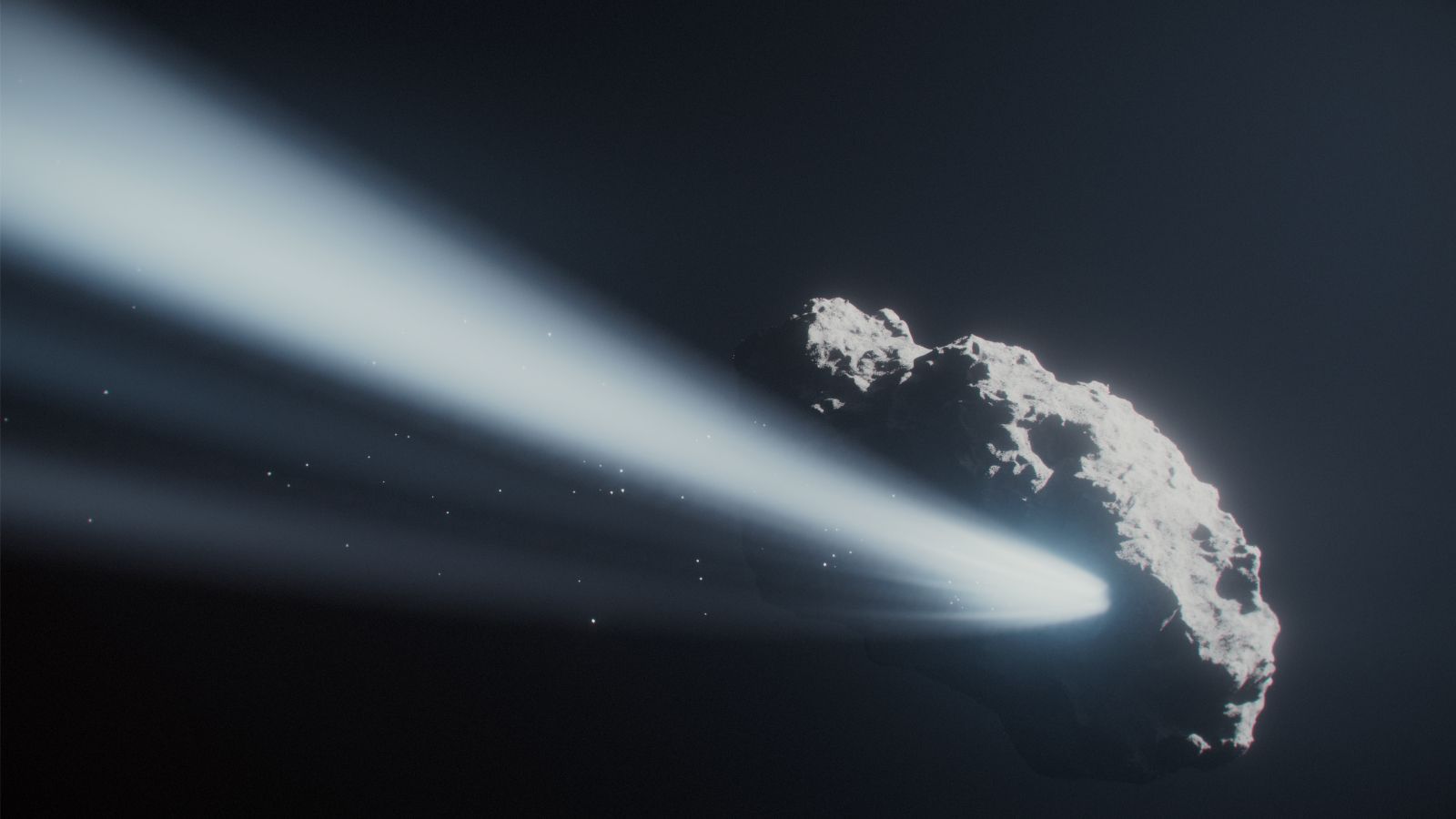
Thanks to newly analyzed Hubble Space Telescope photos, astronomers have, for the first time in history, witnessed a comet change the speed and direction of its rotation. A new study says the unexpected reversal was caused by an “outgassing” jet that injected an icy mixture of gas and dust into the solar system.
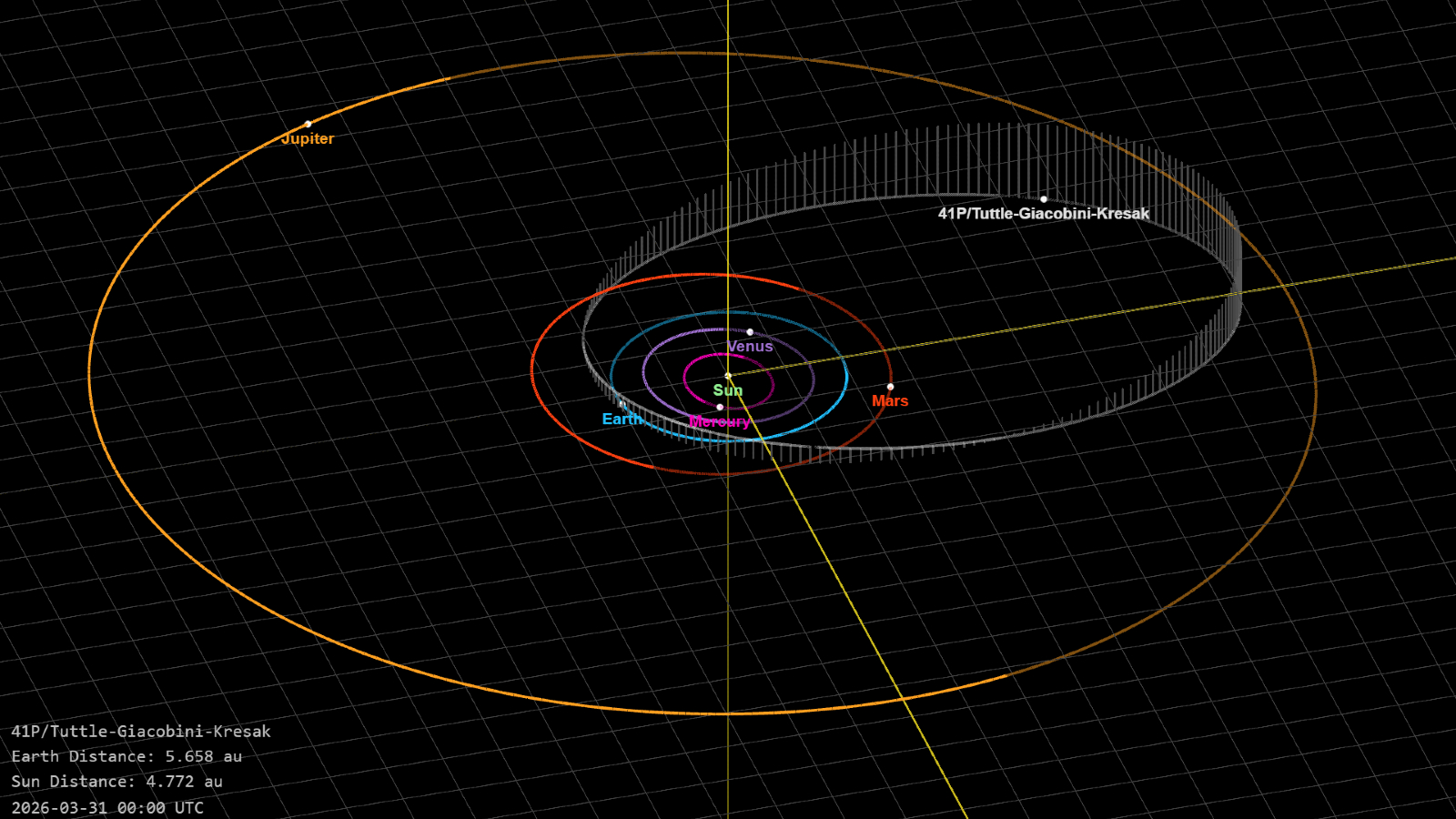
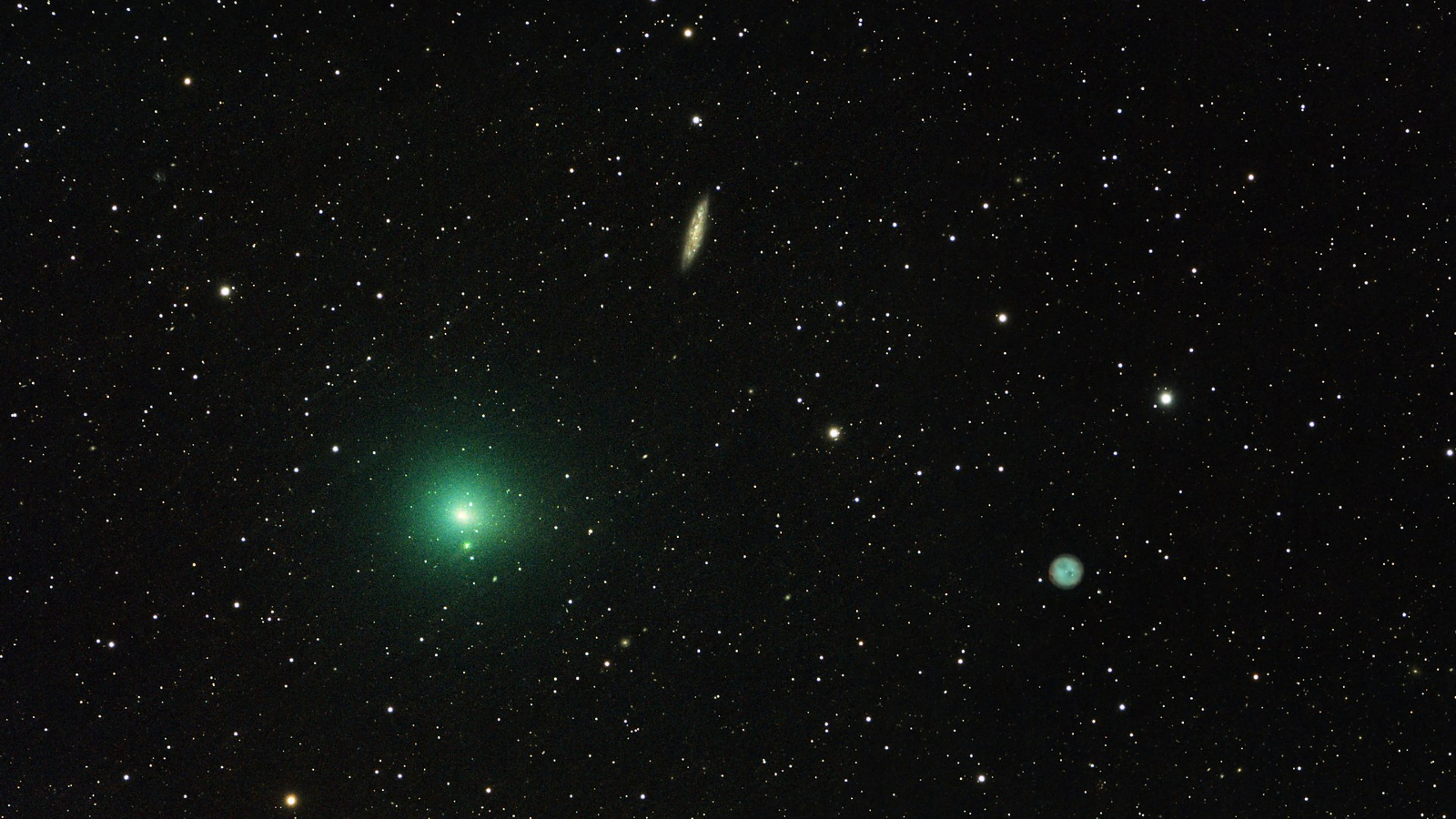
The comet, named 41P Tuttle-Giacobini-Krezák (41P for short), was discovered in 1858 by American astronomer Horace Parnell Tuttle, then rediscovered by French astronomer Michel Giacobini in 1907, and again in 1951 by Slovakian scientist Lebor Krezák (hence its long name). Comet 41P likely originated from the Kuiper Belt, a ring of asteroids, comets, and dwarf planets outside Neptune’s orbit, and likely spent most of its long life orbiting the Sun on timescales of decades to centuries.
you may like
During the 2017 flyby, astronomers noticed that 41P’s rotational speed slowed significantly as the comet passed Earth. Scientists previously thought this was due to a standard outgassing phenomenon. Hubble also took extensive photos of the flyby. However, these images were kept on file and not properly studied.
Now, in a new study published March 26 in the Astronomical Journal, astronomers analyzed 2017 Hubble images and found that the sudden deceleration was followed by a previously unrecognized acceleration event.
Study author David Jewitt, an astronomer at UCLA, estimated changes in 41P’s rotation throughout 2017 by comparing Hubble images with data collected by ground-based telescopes. He found that by May of that year, the comet’s rotation had slowed to about one revolution every 46 to 60 hours, about three times slower than its rotation in March 2017. According to Live Science’s sister site Space.com, it completed one rotation every 14 hours, a much faster recovery than had previously been achieved.
But if the outgassing slowed down the comet’s rotation, how could it speed up again so quickly? Jewitt argues that it would only make sense if the comet’s direction of rotation was completely reversed.
“It’s like pushing a merry-go-round,” he said in a statement. “If it’s spinning in one direction and you push against it, you can slow it down and reverse it.”
Jewitt also used Hubble data to constrain the actual size of 41P’s nucleus. It is about 0.6 miles (1 kilometer) in diameter and about three times as wide as the Eiffel Tower in Paris. While that may sound impressive, it’s actually quite small for a comet. And its small size may be the key to explaining its unusual behavior.
passing gas
Almost every known comet has been observed to “outgas” at some point in its life. This phenomenon occurs when ice, gas, and dust from the comet’s interior ejects through tiny cracks that appear in the comet’s core. This is usually due to solar radiation sublimating the comet’s interior and cracking its icy shell as it approaches the Sun.
What to read next
In recent years, we have witnessed some surprising examples of outgassing, including the devilish horns of the explosive Comet 12P/Ponsbrooks, which orbited the Sun in 2024, and the jets and antitail of the interstellar object 3I/ATLAS, which was discovered passing through our solar system last year.
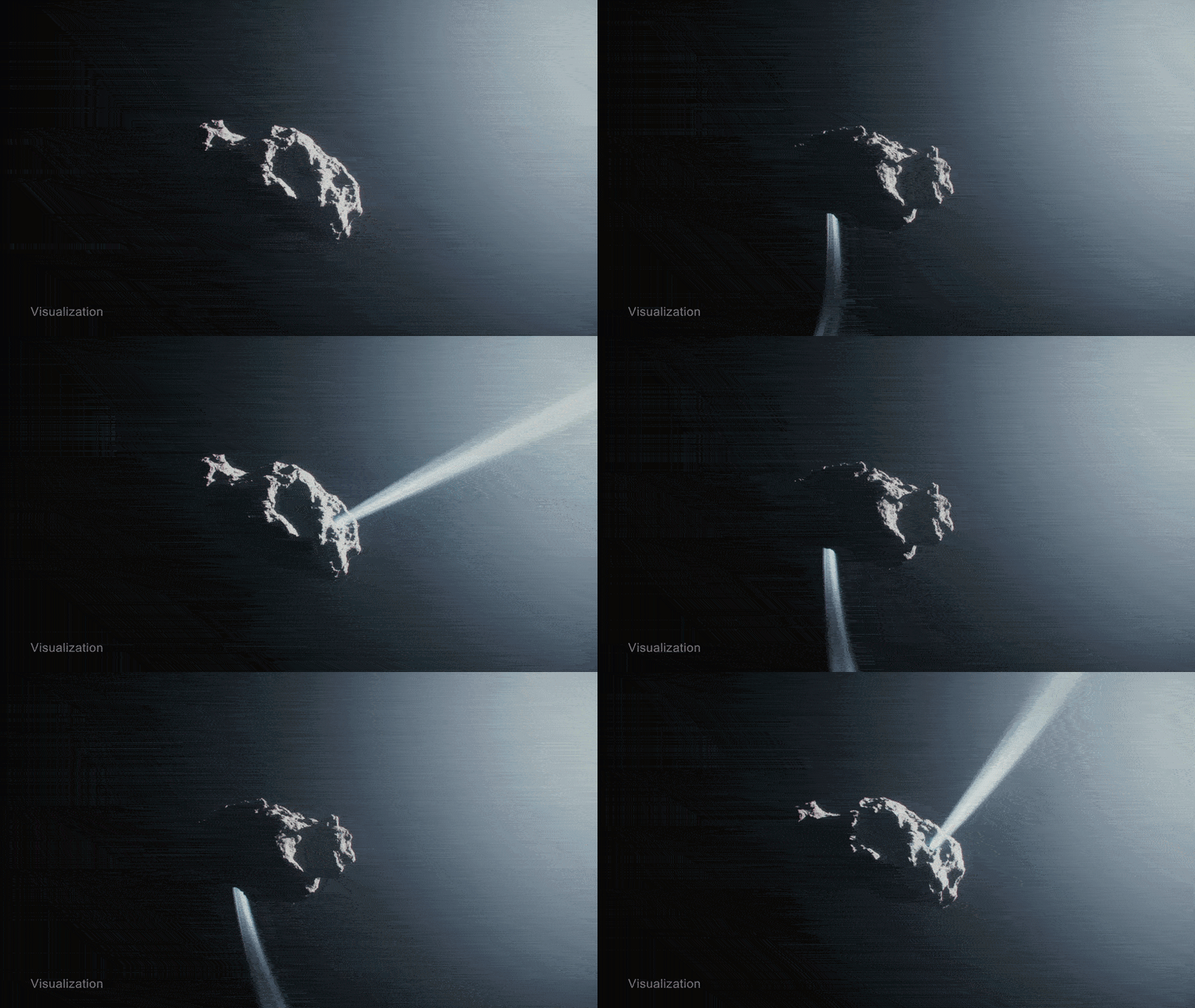
Scientists have long known that the release of gas can change a comet’s rotation, but most of these objects are too large for the outgoing jet to make much of a difference before disappearing. However, because 41P is relatively small, the comet’s jet could have had a larger impact.
“Gas ejected from the surface could act like a miniature thruster,” Jewitt said in a statement. “The uneven distribution of these jets can dramatically change the way comets, especially small comets, rotate.”
Experts are unsure whether 41P’s extreme outgassing event was caused by multiple jets or a single large spill. But if a repeat event occurs during the comet’s next few perihelions, the ice ball could tear itself apart, similar to the spectacular breakup of comet C/2025 K1 (ATLAS) in late 2025.
“I’m expecting this nuke [41P] It would self-destruct in no time,” Jewitt said.