

Close Menu
  • Home
  • Identity
  • Inventions
  • Future
  • Science
  • Startups
  • Spanish
What's Hot

Amazon imposes ‘fuel surcharge’ on sellers as global energy market turmoil due to Iran war

Artemis II is NASA’s last lunar mission without Silicon Valley

Hackers exploit CVE-2025-55182 to compromise 766 Next.js hosts and steal credentials

Facebook X (Twitter) Instagram
  • Home
  • About Us
  • Advertise with Us
  • Contact Us
  • DMCA
  • Privacy Policy
  • Terms & Conditions
  • User-Submitted Posts
Facebook X (Twitter) Instagram
Fyself News
  • Home
  • Identity
  • Inventions
  • Future
  • Science
  • Startups
  • Spanish
Fyself News
Home » Chinese satellite equipped with robotic Octopus arm passes critical refueling test in orbit – increasing chances of extending the lifespan of space assets
Science

Chinese satellite equipped with robotic Octopus arm passes critical refueling test in orbit – increasing chances of extending the lifespan of space assets

By April 2, 2026No Comments4 Mins Read
Share Facebook Twitter Pinterest Telegram LinkedIn Tumblr Email Copy Link
Follow Us
Google News Flipboard
Share
Facebook Twitter LinkedIn Pinterest Email Copy Link

A Chinese satellite equipped with a robotic “octopus arm” has passed a crucial refueling test in low Earth orbit (LEO), state media said. This achievement highlights China’s continued leadership in this particular technology, which NASA has yet to catch up to.

The experimental spacecraft will eventually deploy giant balloons in LEO, which could help solve another important problem with satellite “megaconstellations” like SpaceX’s Starlink network.

The satellite, called Hukeda-2 (also known as Yuxing-3 06 in China), was launched on March 16 aboard a Kuaizhou-11 rocket from the Jiuquan Satellite Launch Center, according to the website of Jonathan McDowell, a now-retired astronomer at the Harvard-Smithsonian Center for Astrophysics who has been tracking the movements of Earth-orbiting spacecraft for more than 20 years. It is one of eight satellites deployed during the mission and is currently orbiting Earth at an altitude of about 335 miles (540 kilometers).

you may like

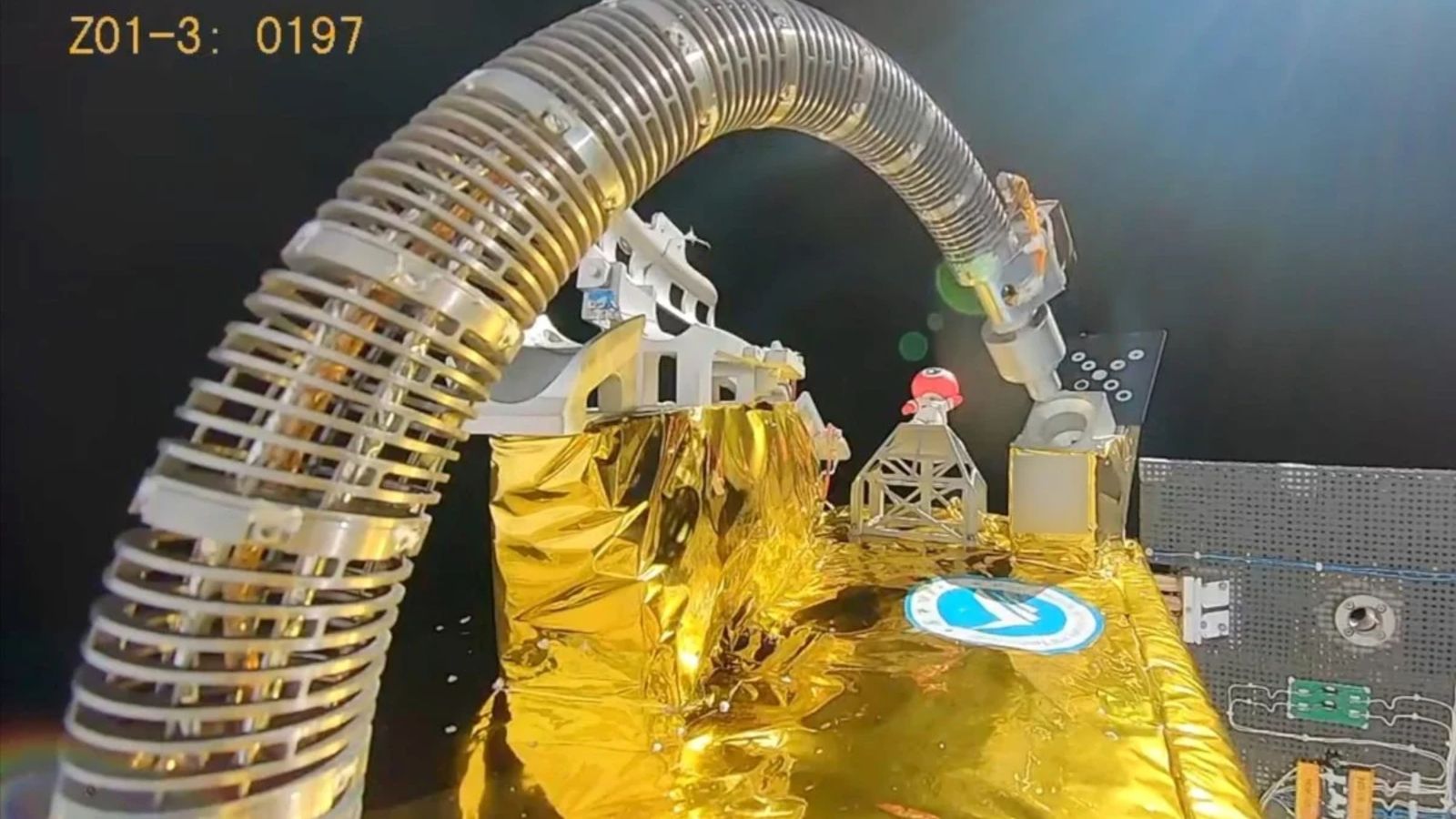
Hukeda-2 is a demonstration satellite intended to test new technologies in LEO. According to the South China Morning Post, its most notable attachment is an octopus-like robotic arm that can “roll, twist and wrap objects to work in tight, complex spaces, and has a nozzle-like tip at one end designed to line up and connect to a target port.”

The arm, made of a series of spring-like tubes threaded with cables connected to motors, can bend in almost any direction and make the small adjustments needed to dock with another satellite while both spacecraft are traveling at speeds of about 16,800 miles (27,000 km) per hour.
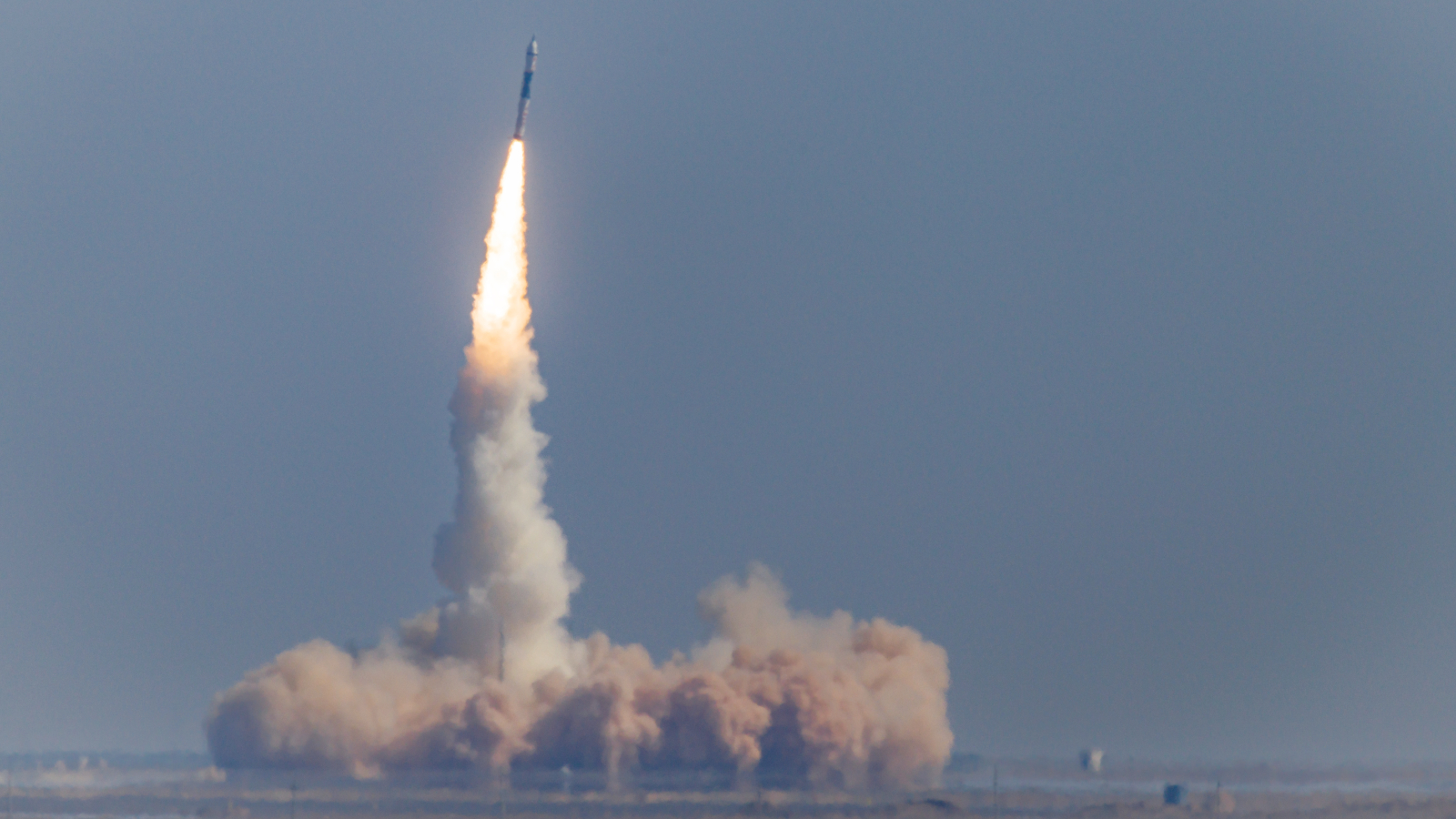
Photo of Kuizhou-11 rocket being launched from China

Hukeda-2 was launched into space along with seven other commercial satellites on the Kuaizhou-11 rocket launch on March 16. (Image credit: VCG/VCG via Getty Images)

On March 24, Chinese state media reported that Hukeda-2’s robotic arm had successfully completed its first refueling test. It was initially unclear whether another satellite was involved in this test. However, photos later showed that the robotic arm was docked to a target port on Hukeda-2 itself.

This marks the biggest milestone in satellite refueling since June 2025, when China’s Shijian-25 satellite successfully connected to and refueled the previously out-of-fuel Shijian-21 satellite. The encounter, which occurred in geostationary orbit about 22,000 miles (33,500 km) above the Earth’s surface, was the first confirmed case of satellite-to-satellite refueling, according to Live Science’s sister site Space.com.

Get the world’s most fascinating discoveries delivered straight to your inbox.

Refuel, reuse and recycle

When a satellite runs out of fuel, it is unable to maintain its altitude and is slowly pulled back toward Earth, eventually burning up in the upper atmosphere. Refueling allows operators to keep the same spacecraft in orbit for longer, making it more cost-effective and sustainable and reducing the need to launch replacements. This has been a major goal for NASA and Western companies for several years, but so far they have not been able to achieve it.

China is likely to seek to use similar refueling spacecraft to service its rapidly expanding Qianfan (“Qianfan”) satellite constellation, which is scheduled to launch its first batch of satellites in 2024 and rival Starlink in the coming years. (Currently, there are approximately 108 Qianfan satellites in orbit, with plans to deploy 15,000 by 2030.)

SpaceX, on the other hand, doesn’t seem interested in keeping its satellites operational. Instead, the company prefers to repeatedly launch new spacecraft on reusable Falcon 9 rockets to keep costs down.

What to read next
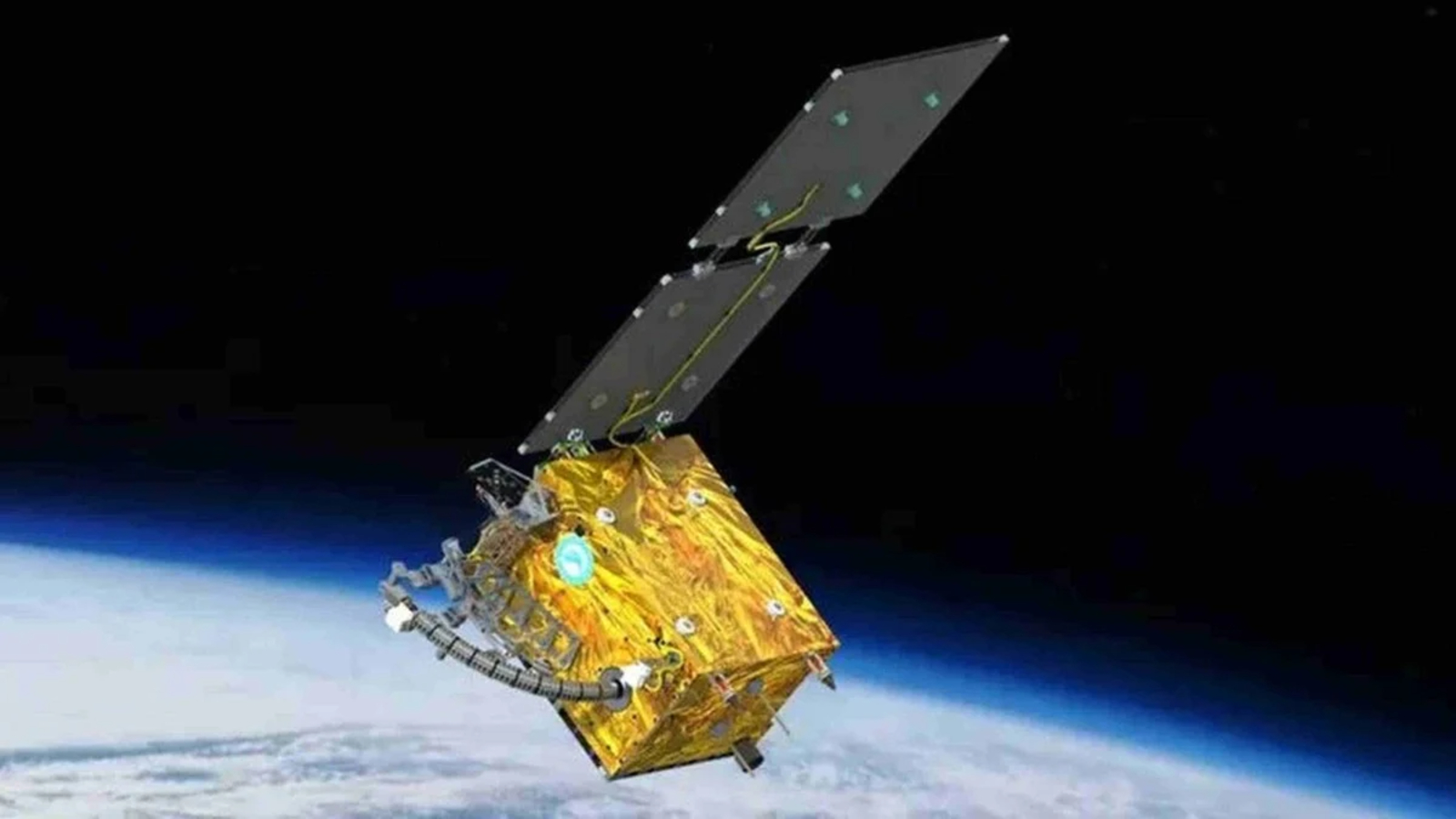
Artist's illustration of the Hukeda-2 satellite in Earth orbit

In addition to testing its robotic arm, Hukeda-2 will deploy a large balloon in LEO to help solve another big problem. (Image credit: CCTV handout)

Another problem with the expanding constellation is that the number of dead spacecraft waiting to return to Earth is rapidly increasing, taking up valuable space that could be occupied by new satellites. To solve this, Hukeda-2 deploys an 8-foot-wide (2.5-meter) balloon at the end of its mission. This increases atmospheric resistance and speeds the return to Earth.

If this goes well, future Chinese satellites could be equipped with similar devices that would allow them to fall back to Earth without initiating a final deorbit burn. However, it is unclear when Hukeda-2 will deploy its test balloon.

Deorbiting satellites quickly would be wise, but it is unlikely to solve the larger problem of overcrowding that is expected to occur in LEO in the coming decades, especially if SpaceX’s controversial plan to launch a million data centers in orbit comes to fruition.

Recent studies have also revealed that satellite re-entry releases high levels of metal pollution into the upper atmosphere, which may cause problems that we are not yet fully aware of.

“What goes up must come down,” University of Regina astronomer and giant constellation critic Samantha Lawler recently wrote for Live Science.


Source link

#Biotechnology #ClimateScience #Health #Science #ScientificAdvances #ScientificResearch
Follow on Google News Follow on Flipboard
Share. Facebook Twitter Pinterest LinkedIn Tumblr Email Copy Link
Previous ArticleCisco Patch 9.8 CVSS IMC and SSM flaws allow remote systems to be compromised
Next Article Microsoft takes on AI rivals with three new basic models

Related Posts

‘That’s not the way to build a digital mind’: How failures in reasoning are preventing AI models from achieving human-level intelligence

April 2, 2026

Scientists cured type 1 diabetes in mice by creating a mixed immune system

April 2, 2026

Native Americans invented dice and games of chance more than 12,000 years ago, archaeological research reveals

April 2, 2026
Add A Comment
Leave A Reply Cancel Reply

Latest Posts

Amazon imposes ‘fuel surcharge’ on sellers as global energy market turmoil due to Iran war

Artemis II is NASA’s last lunar mission without Silicon Valley

Hackers exploit CVE-2025-55182 to compromise 766 Next.js hosts and steal credentials

Microsoft takes on AI rivals with three new basic models

Trending Posts

Subscribe to News

Subscribe to our newsletter and never miss our latest news

Please enable JavaScript in your browser to complete this form.
Loading

Welcome to Fyself News, your go-to platform for the latest in tech, startups, inventions, sustainability, and fintech! We are a passionate team of enthusiasts committed to bringing you timely, insightful, and accurate information on the most pressing developments across these industries. Whether you’re an entrepreneur, investor, or just someone curious about the future of technology and innovation, Fyself News has something for you.

Castilla-La Mancha Ignites Innovation: fiveclmsummit Redefines Tech Future

Local Power, Health Innovation: Alcolea de Calatrava Boosts FiveCLM PoC with Community Engagement

The Future of Digital Twins in Healthcare: From Virtual Replicas to Personalized Medical Models

Human Digital Twins: The Next Tech Frontier Set to Transform Healthcare and Beyond

Facebook X (Twitter) Instagram Pinterest YouTube
  • Home
  • About Us
  • Advertise with Us
  • Contact Us
  • DMCA
  • Privacy Policy
  • Terms & Conditions
  • User-Submitted Posts
© 2026 news.fyself. Designed by by fyself.

Type above and press Enter to search. Press Esc to cancel.