

Close Menu
  • Home
  • Identity
  • Inventions
  • Future
  • Science
  • Startups
  • Spanish
What's Hot

We can’t help but root for small open source AI model maker Arcee

Russian government hackers break into thousands of home routers and steal passwords

Chrome finally has a better way to deal with having too many tabs open

Facebook X (Twitter) Instagram
  • Home
  • About Us
  • Advertise with Us
  • Contact Us
  • DMCA
  • Privacy Policy
  • Terms & Conditions
  • User-Submitted Posts
Facebook X (Twitter) Instagram
Fyself News
  • Home
  • Identity
  • Inventions
  • Future
  • Science
  • Startups
  • Spanish
Fyself News
Home » Deadly bright green blob spreads across South Africa’s reservoir — Earth seen from space
Science

Deadly bright green blob spreads across South Africa’s reservoir — Earth seen from space

By April 7, 2026No Comments5 Mins Read
Share Facebook Twitter Pinterest Telegram LinkedIn Tumblr Email Copy Link
Follow Us
Google News Flipboard
Share
Facebook Twitter LinkedIn Pinterest Email Copy Link

simple facts

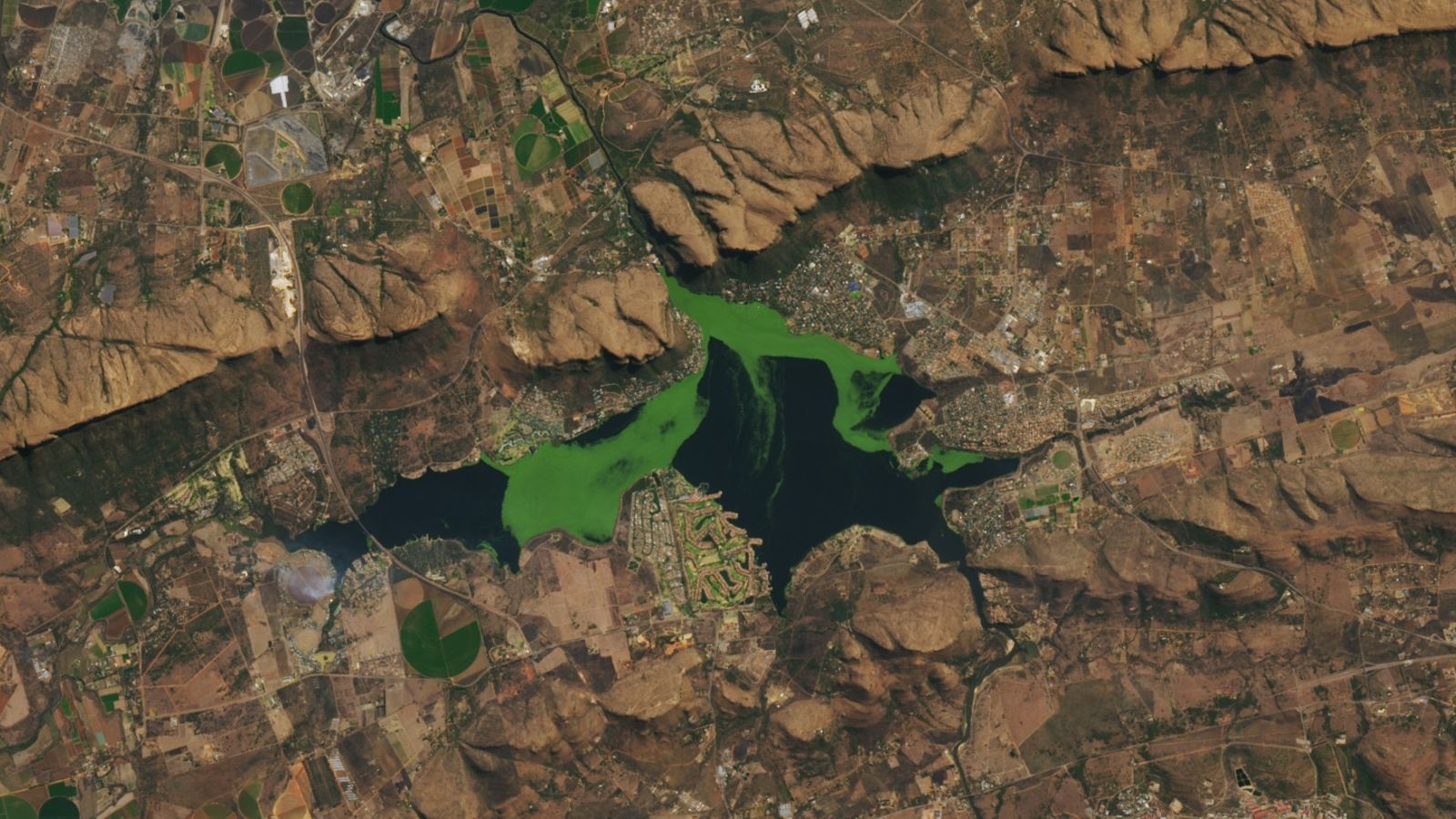
Where is it? Hartbeespoort Dam, North West Province, South Africa [-25.74486936, 27.858152164]

What is in the photo? Bright green toxic algae and planets spread across reservoirs

Which satellite took the photo?Landsat 8

When was it taken? August 10, 2022

This impressive satellite photo shows lush clumps of algae and other aquatic plants spread across the surface of a South African recreational reservoir. This frequent event creates hidden “dead zones” where toxic chemicals can be released into the water and cause widespread fish mortality.

The reservoir is located at Hartbeespoort Dam, built in the 1920s, about 25 miles (40 km) west of Pretoria. This man-made water source is located just south of the Magaliesberg Mountains, partially visible at the top of the image, and is fed by the Crocodile River (spelled Krokodyillivier in Afrikaans), which runs through the nearby mountains. It is used not only to provide fresh water to nearby cities and farms, but also for recreational activities such as fishing and water sports.

Most large bodies of water experience seasonal blooms, in which photosynthetic algae or cyanobacteria rapidly multiply and spread across the water surface due to changes in weather or nutrient inputs. However, Hartbeesport Reservoir is always in a state of ‘hypereutrophication’, meaning that nutrients such as nitrogen and phosphorus are present in excess. As a result, blooms there are becoming more frequent and intense, according to NASA’s Earth Observatory.

you may like

“On clear days…satellite images clearly show reservoirs with deep blue hues punctuated by bright green drifting spots,” Earth Observatory representatives wrote.

However, algae is not the only thing that grows on the surface of the reservoir. The lush community also includes aquatic plants such as water hyacinth (Pontederia crassipes) and Salvinia minima. Both are invasive species and grow in large tangled mats across the surface of the reservoir.
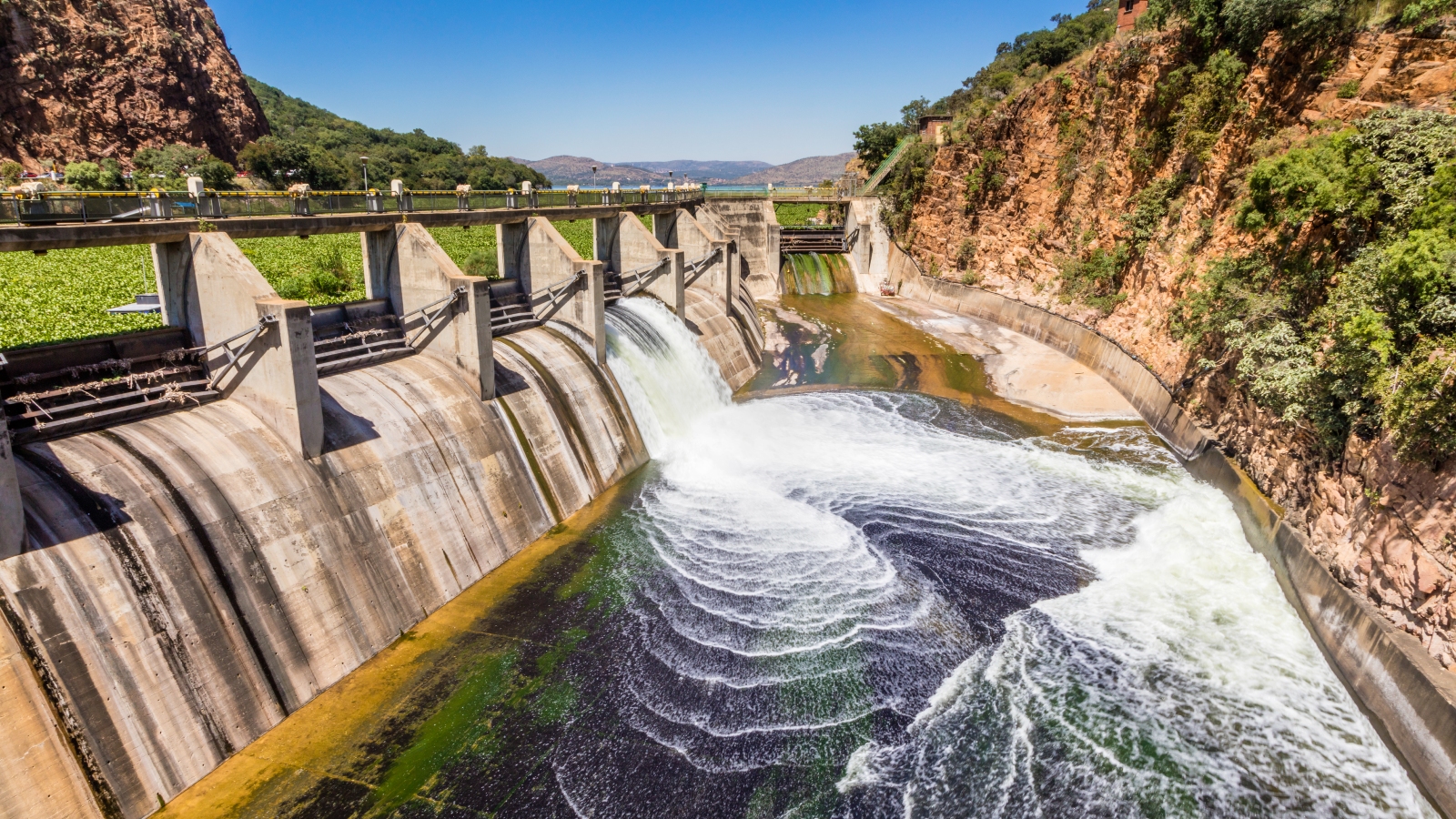
Photo of water flowing through the gates of Hartbeesport Dam

Hartbeespoort Dam was built in the 1920s and has been in a near-constant eutrophic state for about 50 years. (Image credit: THEGIFT777, Getty Images)

Eutrophication occurs when too many nutrients are added to a body of water, often due to human influence, and can lead to unnaturally large algae blooms. “It’s like having a garden,” Bridget Segers, an oceanographer at Maryland’s Goddard Space Flight Center who heads NASA’s Cyanobacteria Assessment Network, told the Earth Observatory. “The more nutrients you give, the bigger you grow.” (Hypertrophication is a more extreme version of this phenomenon.)

However, unlike in gardens, unwanted flowers cannot be easily cut away, and the consequences of failing to suppress plant life are even more severe. For example, some algae in Hartbeesport Reservoir can produce toxins that must be removed by filtering the water to make it safe to drink.

Get the world’s most fascinating discoveries delivered straight to your inbox.

But the bigger problem is that excessive plant growth on the surface sucks in oxygen from the water below and becomes toxic to fish, which need to extract oxygen from the water through their gills in order to breathe. These oxygen-poor waters are often referred to as “dead zones,” and when a bloom spreads over a large area, there is little safe space for fish to go.
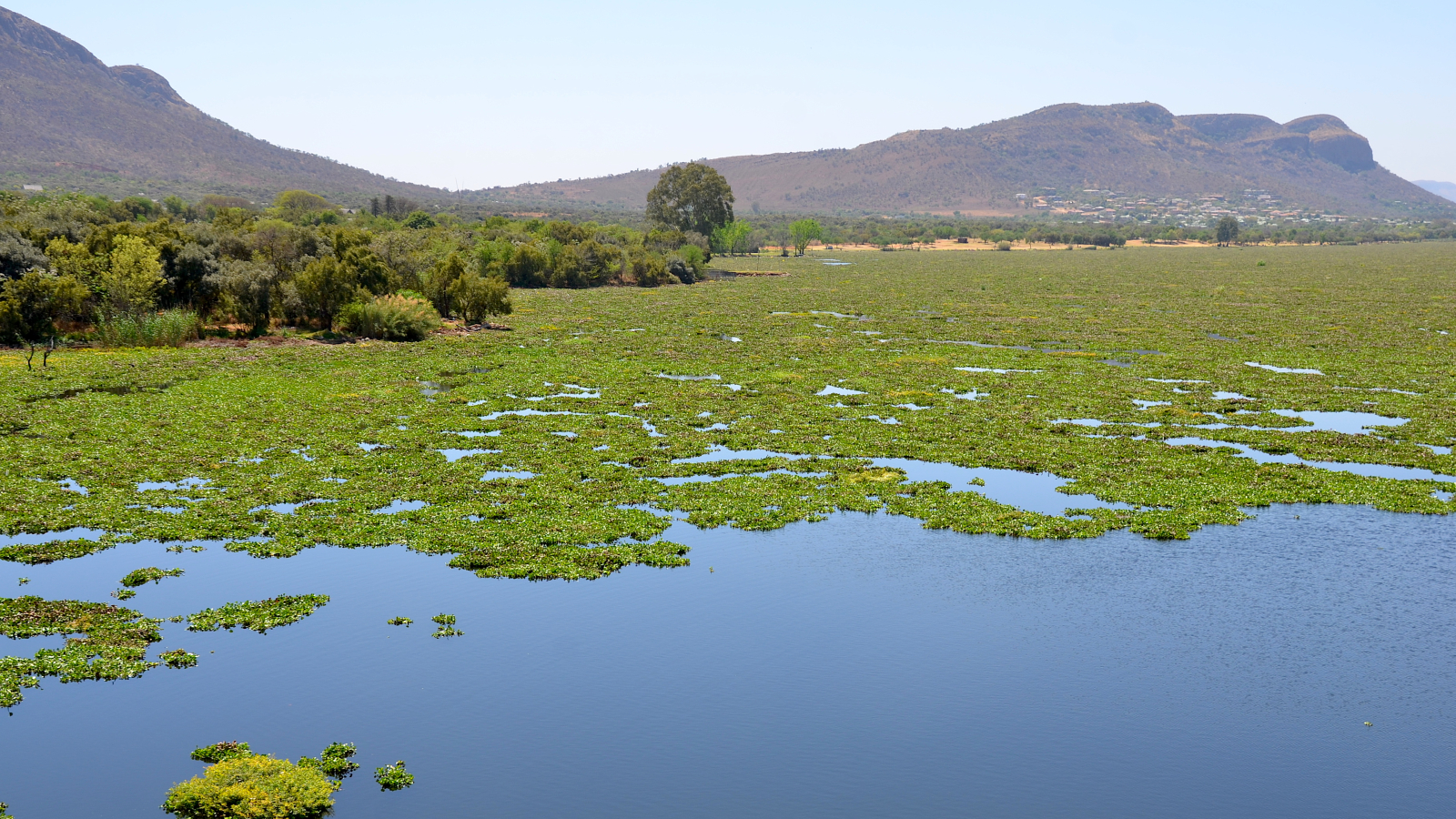
Photo of the thick green mat of aquatic plants on the surface of the reservoir at Hartbeespoort Dam

The abundance of invasive aquatic plants such as P. crassipes and S. minima created oxygen-depleted “dead zones” throughout the reservoir. (Image credit: Olga Ernst/Wikimedia)

According to a government report, in April 2023, a lack of oxygen occurred in parts of the reservoir, leading to mass die-offs of fish, including hundreds of large carp. And in November 2025, another bloom caused similar deaths, likely leaving the fish gasping for air “for air” on the surface of the reservoir, South Africa-based News24 reported. These blooms eventually disappear, but the next one rarely appears very late.

Hartbeesport Reservoir has experienced almost continuous hypereutrophication since the 1970s, with the exception of a brief period in the 1990s when a successful bioremediation program was introduced, but then quickly discontinued due to high costs. As a result, algae bloomed continuously for decades, spreading over the entire surface of the reservoir and continuing to dry it up.

This can be seen in the animation below created from aerial imagery collected by Landsat 8, Landsat 9, and Sentinel satellites between June 2022 and July 2023.
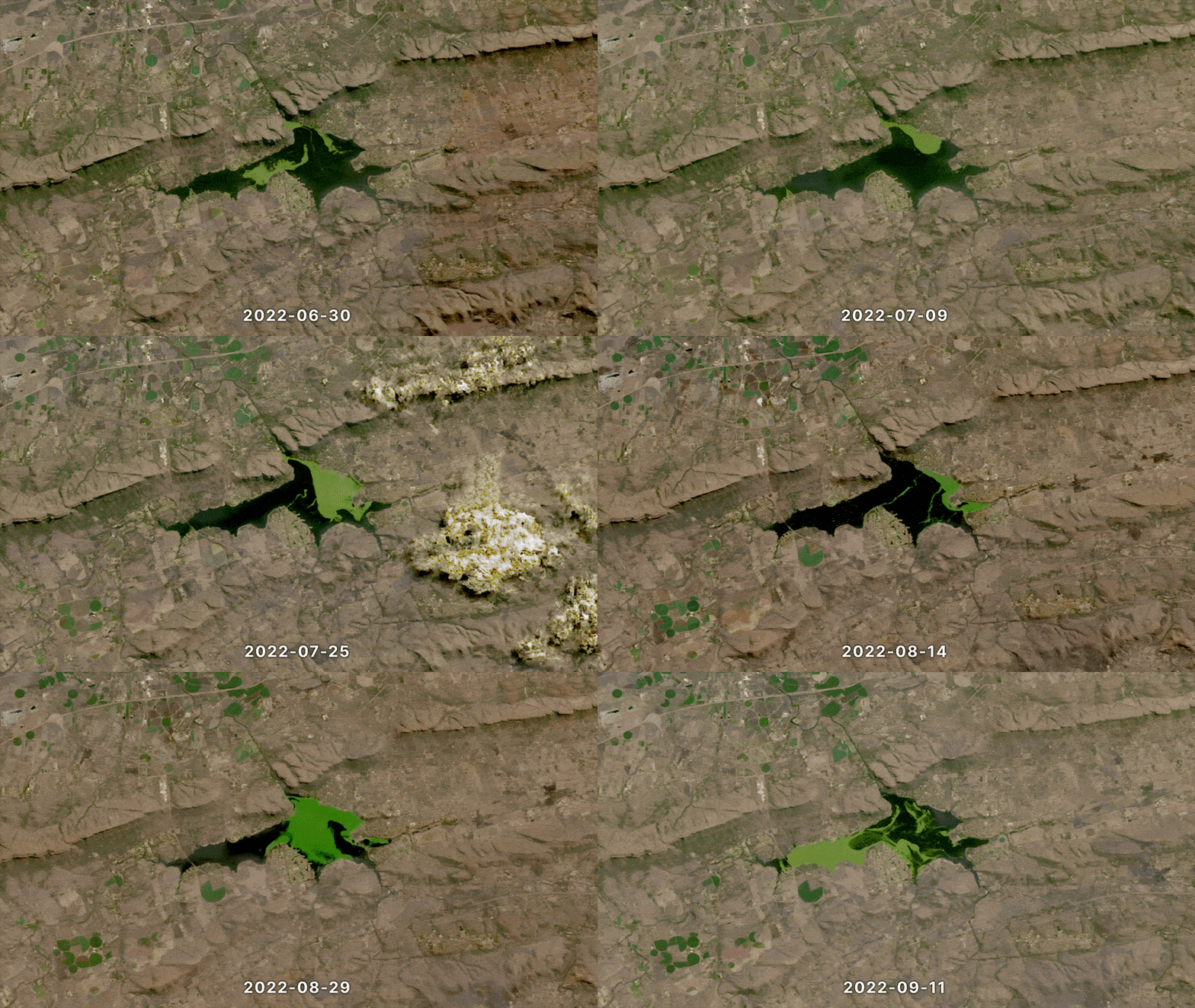
Loop video footage of time-lapse photos of algae spreading on the surface of Hartbeesport Dam

(Image credit: NASA)

A 2023 study that analyzed data from the past 40 years found that the main culprit was the Crocodile River, which was heavily polluted by runoff from farms and golf courses that used nutrient-rich fertilizers.

In addition to threatening wildlife, toxins in the water are known to cause rashes in water sports enthusiasts and sick dogs.
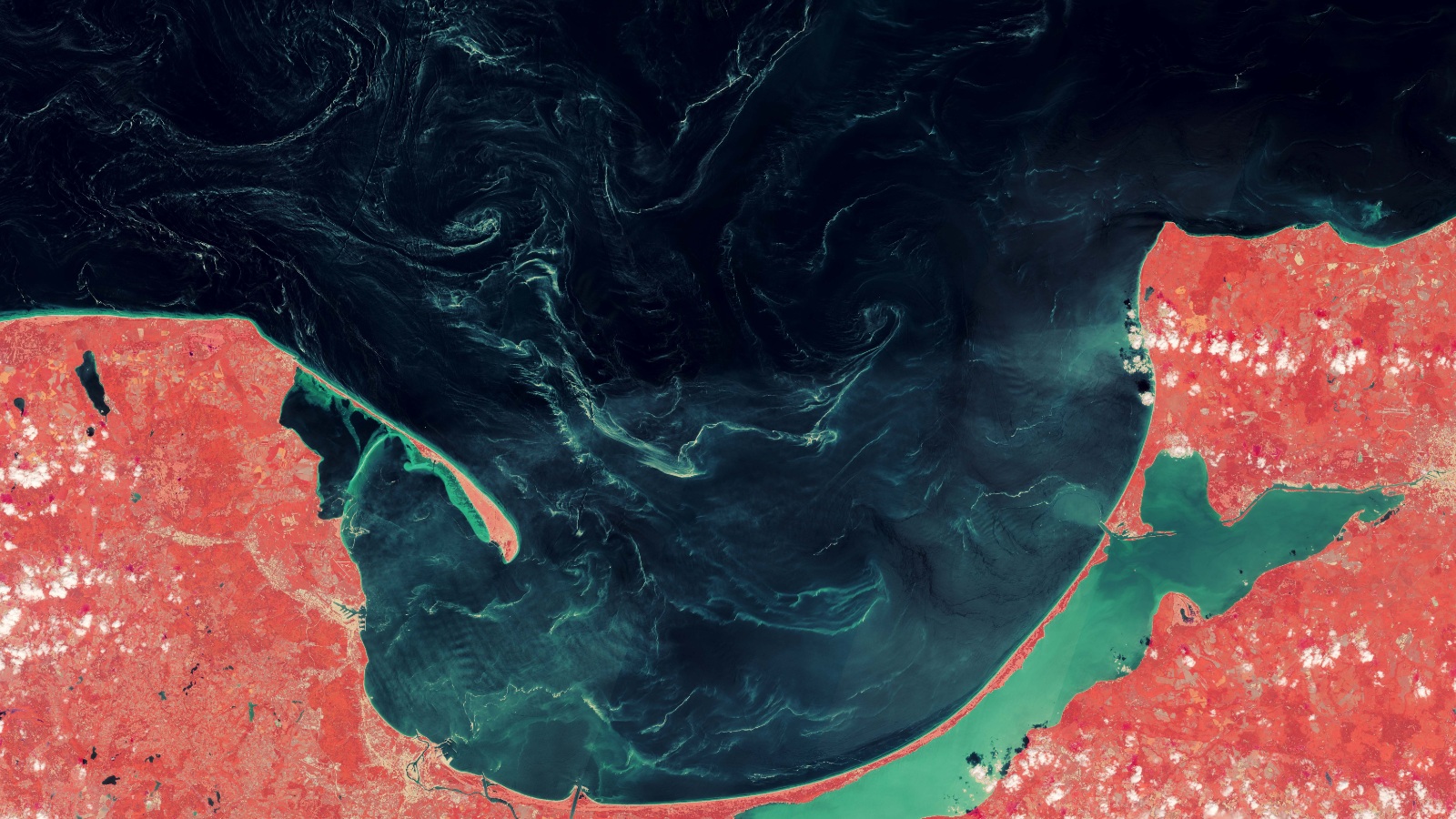
A large green vortex on the sea surface seen from space
Mysteries swirling around the Baltic Sea

Satellite images from 2018 show an unknown substance swirling in the Gulf of Gdańsk, Poland. Scientists were shocked to discover what it actually was.
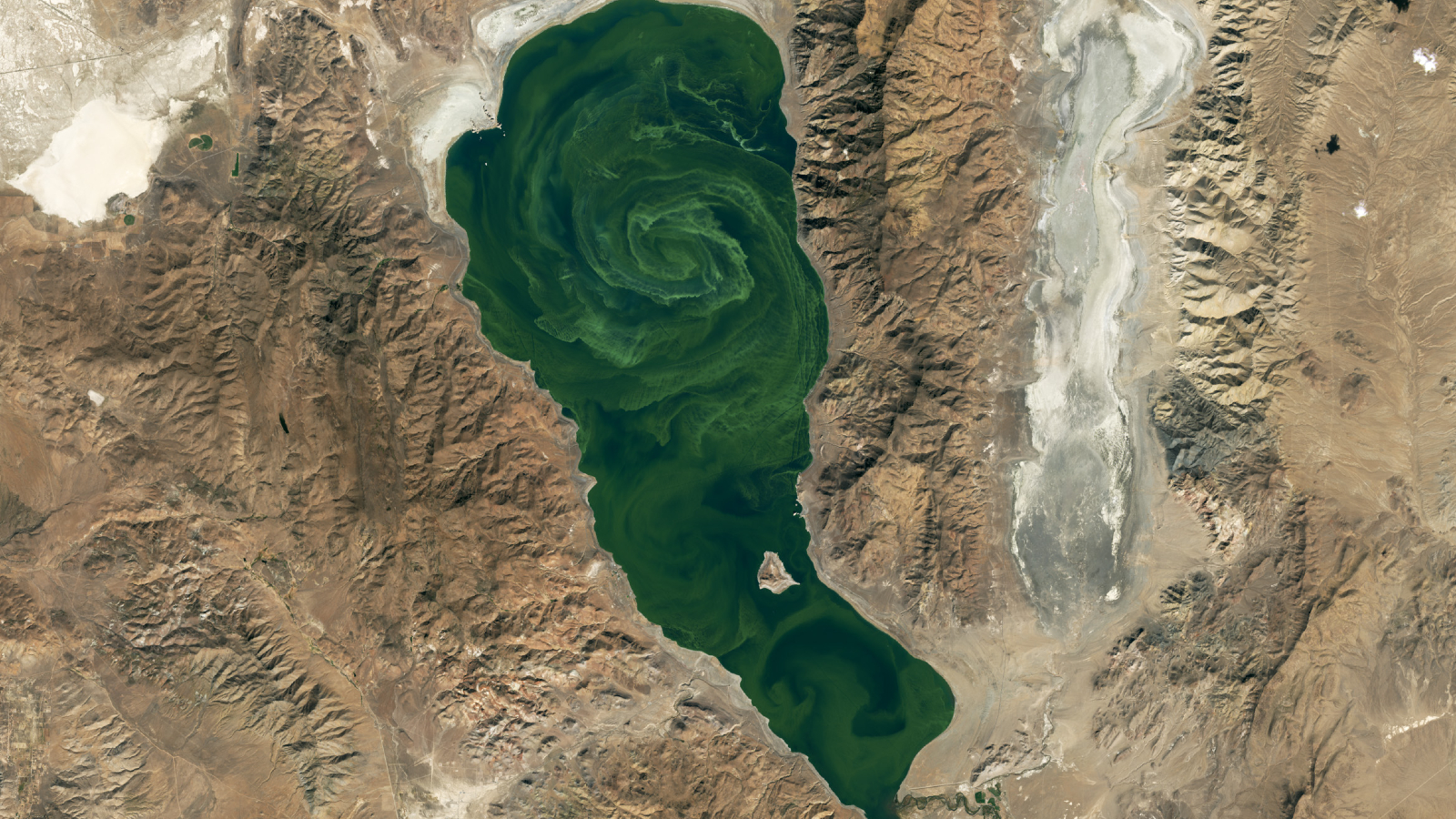
Satellite view of a desert lake with dark green swirling water due to algae blooms
Toxic flowers bloom in Nevada

Satellite images from 2024 show an unusually active outbreak of toxic cyanobacteria swirling in the waters of Nevada’s Pyramid Lake. Research shows that this algae has been blooming there for at least 9,000 years.
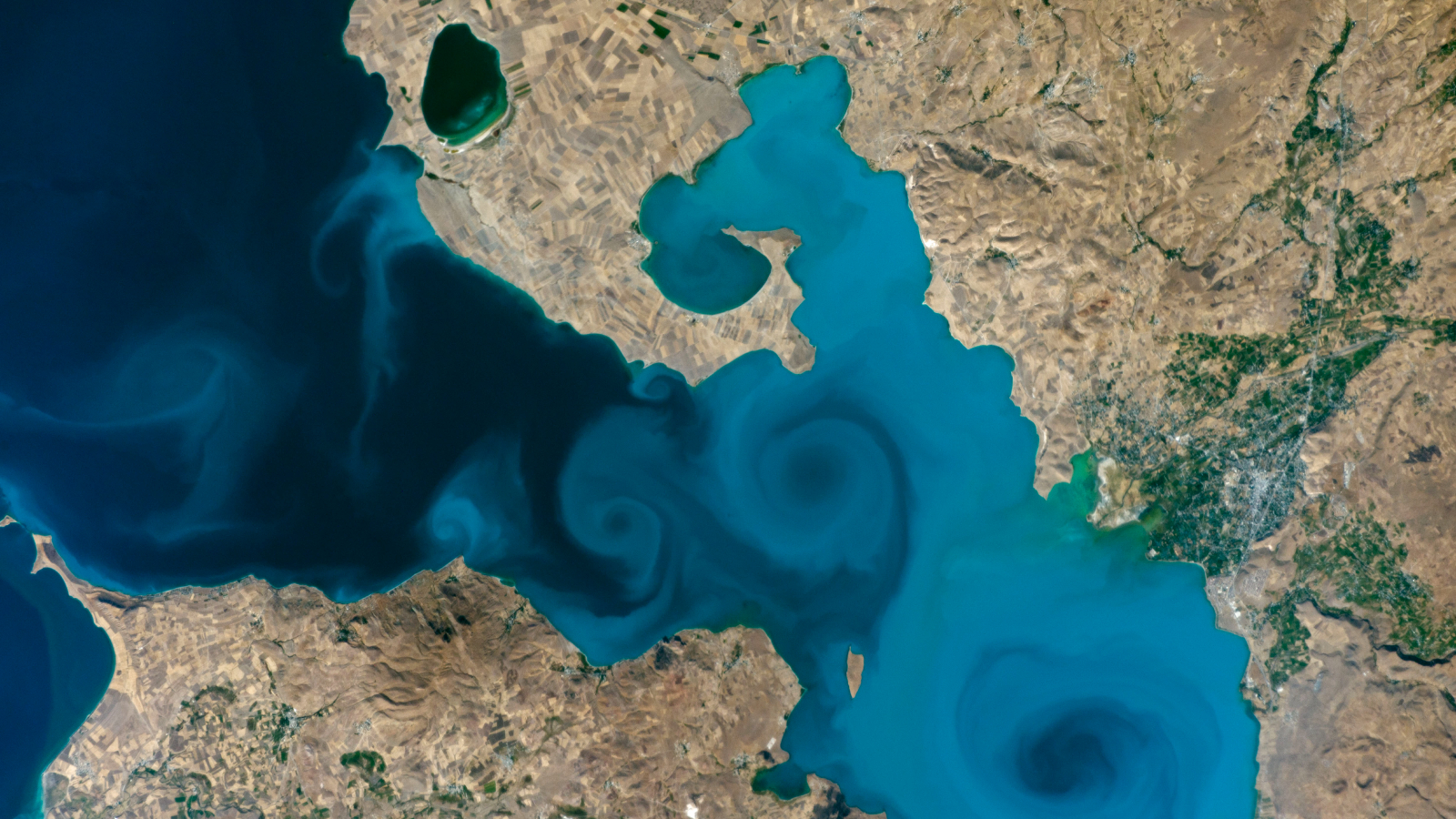
Astronaut photo of a deep blue lake in Turkey with milky light blue swirls spinning underwater
Milky swirls of a Turkish lake

A 2016 astronaut photo shows an astonishing plume of milky-white material swirling underwater in Turkey’s Lake Van, the largest alkaline lake on Earth.


Source link

#Biotechnology #ClimateScience #Health #Science #ScientificAdvances #ScientificResearch
Follow on Google News Follow on Flipboard
Share. Facebook Twitter Pinterest LinkedIn Tumblr Email Copy Link
Previous ArticleHow IH-MIE is accelerating hydrogen mobility across Europe
Next Article Artemis II sets human spaceflight record with historic lunar flyby

Related Posts

Physicists transport volatile antimatter in a truck for the first time in history – paving the way for groundbreaking new research

April 7, 2026

The Artemis II astronauts flew further from Earth than any human in history.

April 6, 2026

Biomedical researchers are using AI to write and run code. What are the risks?

April 6, 2026
Add A Comment
Leave A Reply Cancel Reply

Latest Posts

We can’t help but root for small open source AI model maker Arcee

Russian government hackers break into thousands of home routers and steal passwords

Chrome finally has a better way to deal with having too many tabs open

Russian state-affiliated APT28 exploits SOHO routers in global DNS hijacking campaign

Trending Posts

Subscribe to News

Subscribe to our newsletter and never miss our latest news

Please enable JavaScript in your browser to complete this form.
Loading

Welcome to Fyself News, your go-to platform for the latest in tech, startups, inventions, sustainability, and fintech! We are a passionate team of enthusiasts committed to bringing you timely, insightful, and accurate information on the most pressing developments across these industries. Whether you’re an entrepreneur, investor, or just someone curious about the future of technology and innovation, Fyself News has something for you.

Castilla-La Mancha Ignites Innovation: fiveclmsummit Redefines Tech Future

Local Power, Health Innovation: Alcolea de Calatrava Boosts FiveCLM PoC with Community Engagement

The Future of Digital Twins in Healthcare: From Virtual Replicas to Personalized Medical Models

Human Digital Twins: The Next Tech Frontier Set to Transform Healthcare and Beyond

Facebook X (Twitter) Instagram Pinterest YouTube
  • Home
  • About Us
  • Advertise with Us
  • Contact Us
  • DMCA
  • Privacy Policy
  • Terms & Conditions
  • User-Submitted Posts
© 2026 news.fyself. Designed by by fyself.

Type above and press Enter to search. Press Esc to cancel.