

Close Menu
  • Home
  • Identity
  • Inventions
  • Future
  • Science
  • Startups
  • Spanish
What's Hot

France ditches Windows for Linux to reduce dependence on US technology

PSA: If you use the Meta AI app, your friends will find out and embarrass you

GlassWorm campaign uses Zig Dropper to infect multiple developer IDEs

Facebook X (Twitter) Instagram
  • Home
  • About Us
  • Advertise with Us
  • Contact Us
  • DMCA
  • Privacy Policy
  • Terms & Conditions
  • User-Submitted Posts
Facebook X (Twitter) Instagram
Fyself News
  • Home
  • Identity
  • Inventions
  • Future
  • Science
  • Startups
  • Spanish
Fyself News
Home » Artemis II returns live: NASA prepares for Artemis II crew’s dangerous return to Earth at record-breaking speed
Science

Artemis II returns live: NASA prepares for Artemis II crew’s dangerous return to Earth at record-breaking speed

By April 10, 2026No Comments5 Mins Read
Share Facebook Twitter Pinterest Telegram LinkedIn Tumblr Email Copy Link
Follow Us
Google News Flipboard
Share
Facebook Twitter LinkedIn Pinterest Email Copy Link

refresh

2026-04-10T13:26:38.000Z

Final review of the crew’s mission

While we can’t give you the exact backstory on the contents of the crew’s dreams at this point, we can at least share some of their bedtime reflections on their historic journey.

When asked what she would tell her younger self about what they do now, Christina Koch recalled a family trip to the Kennedy Space Center when she was 10 years old.

“If you told that little girl who took Earthrise photos home and hung them in her room that she would end up starting from the same place and seeing the same views, I don’t think she would believe it,” Koch said. “But I still can’t believe it, and I’m sure she won’t either, but she followed that dream and it turned out to be a reality.”

“It’s such an honor to hear that we were inspired. It’s really one of the top things we’ve ever wanted to do,” she concluded.

2026-04-10T13:18:42.149Z

What are the Artemis II astronauts doing now?

The Artemis II crew is currently getting some much-needed sleep ahead of a very busy day returning to Earth, and are expected to wake up in a few hours.

Here is today’s complete schedule (EDT) taken from NASA’s website:

3:05am: Crew sleep begins.

11:35 a.m.: Crew wakes up for flight day 10

1:50 p.m.: Orion cabin setup begins for reentry.

14:53 Return trajectory correction burn

6:30pm: NASA+ coverage begins

7:33pm: Separation of crew module and service module

7:37 p.m.: Crew module raises burn

7:53 PM: Admission Interface

8:07pm: Splashdown in the Pacific

10:30 p.m.: Post-splashdown press conference at NASA Johnson Space Center

ben turner

ben turner

Trend News Deputy Editor

2026-04-10T13:07:17.860Z

What time is Splashdown?

NASA expects the Artemis II crew to splash down in the Pacific Ocean off the coast of San Diego at 8:07 p.m. EDT. The space agency and the US Navy will be waiting for them on a recovery ship.

NASA’s live coverage of the crew’s return to Earth will begin at 6:30 p.m. ET.

Patrick Pester's photo

patrick pester

Popular news writer

2026-04-10T11:52:35.061Z

So what about parachutes?
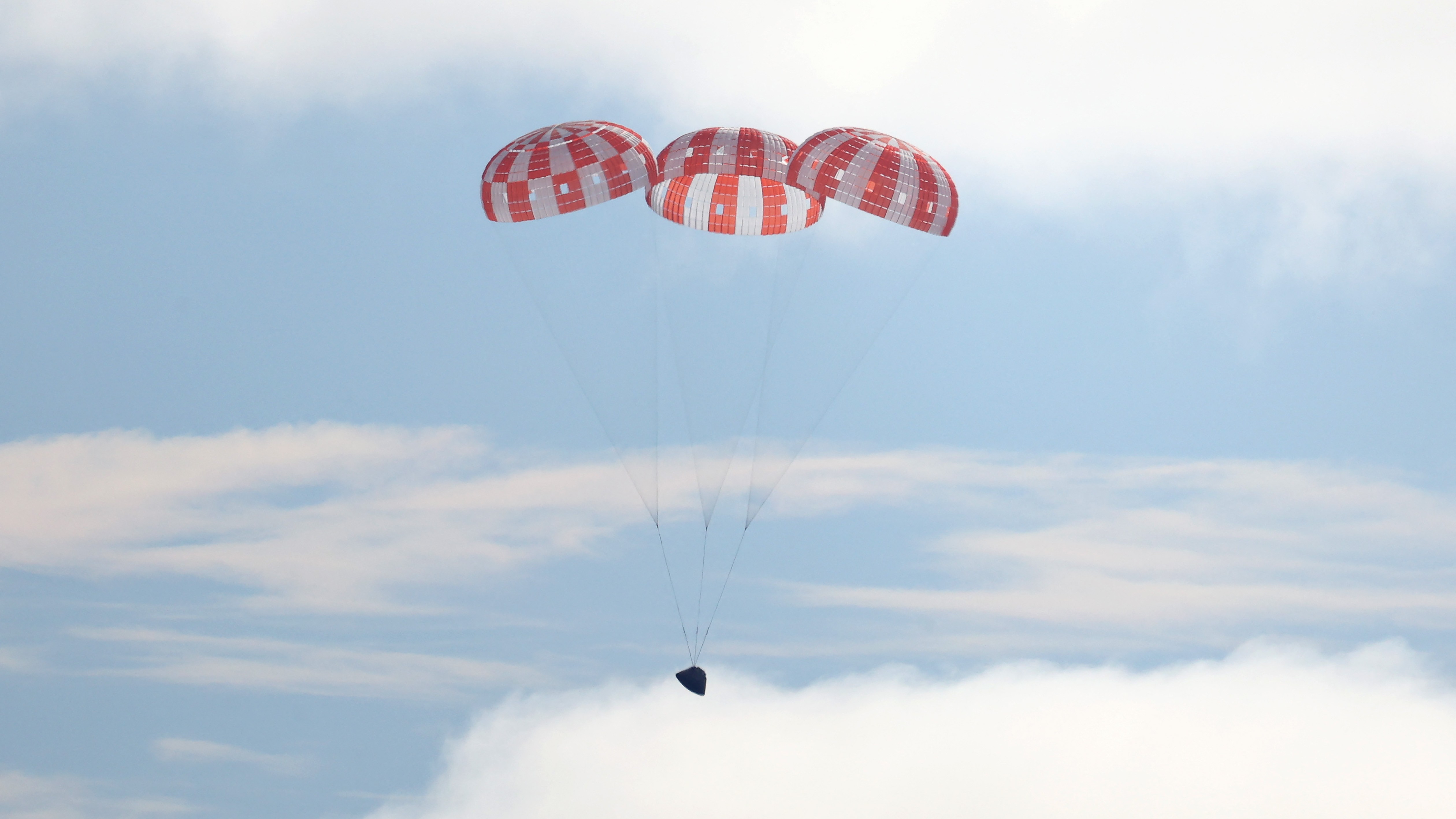
A parachute deploys behind the falling Artemis I Orion capsule.

NASA’s unmanned spacecraft Orion splashes down in the Pacific Ocean off the coast of Baja California, Mexico, on December 11, 2022. (Image credit: Mario Tama/Pool/AFP via Getty Images)

Heat shield durability is certainly a big question today, but what about that parachute that Ben mentioned earlier?

A total of 11 parachutes are attached to the Orion spacecraft, all of which are deployed in a very specific order to slowly stabilize the capsule and lower it safely into the ocean. These include three forward baycover parachutes, two drogue parachutes, three pilot parachutes, and three main parachutes.

The most iconic of these are the three main parachutes, each measuring 116 feet (35 meters) in diameter, weighing 300 pounds (136 kilograms), and consisting of 10,000 square feet of fabric.

Upon re-entry, the crew would experience six minutes of radio interference due to the build-up of super-hot plasma around the capsule. After this, NASA will first deploy two drogue parachutes at an altitude of 6.7 kilometers (22,000 feet). Then, at around 1.8 km (6,000 ft), the three main chutes are released and the Orion capsule slowly descends at 20 mph (32 km/h) before splashdown.

Kenna Hughes-Castleberry photo

Kenna Hughes Castleberry

content manager

2026-04-10T11:39:55.917Z

feel the heat
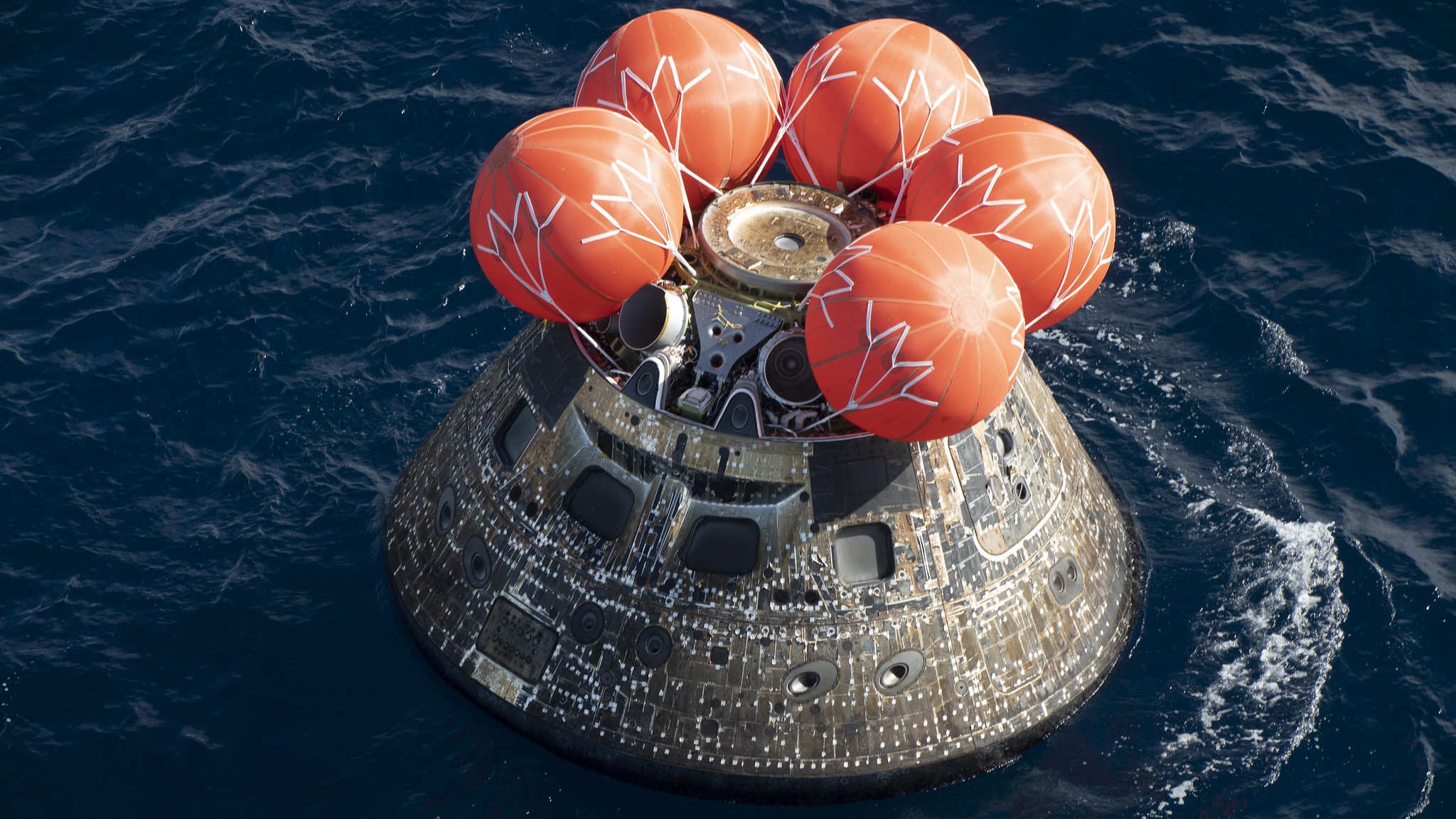
A photo of the Artemis I Orion capsule underwater after splashdown.

NASA discovered that the Artemis I Orion capsule had a heat shield issue after it fell in 2022. (Image credit: NASA)

The Artemis II crew will return to Earth at a record-breaking speed, reaching the top of the atmosphere at about 25,000 miles per hour (40,000 kilometers per hour).

To dissipate all that energy and reach a more reasonable splashdown speed of 20 miles per hour (32 kilometers per hour) in the Pacific Ocean off the coast of San Diego, the Orion capsule uses two key technologies: a parachute and a heat shield.

Artemis II’s heat shield is designed to protect the crew and slow the capsule by heating it to about 2,800 degrees Celsius (5,000 degrees Fahrenheit). But there’s a problem with that. It’s nearly identical to Artemis I’s heat shield, which infamously cracked during atmospheric reentry.

Therefore, the next stage of this mission will be the most dangerous.

But while NASA officials acknowledged they had “unreasonable” doubts, they said they were not worried. why? For the complete answer, check out Patrick’s story here.

2026-04-10T11:30:53.908Z

what goes up
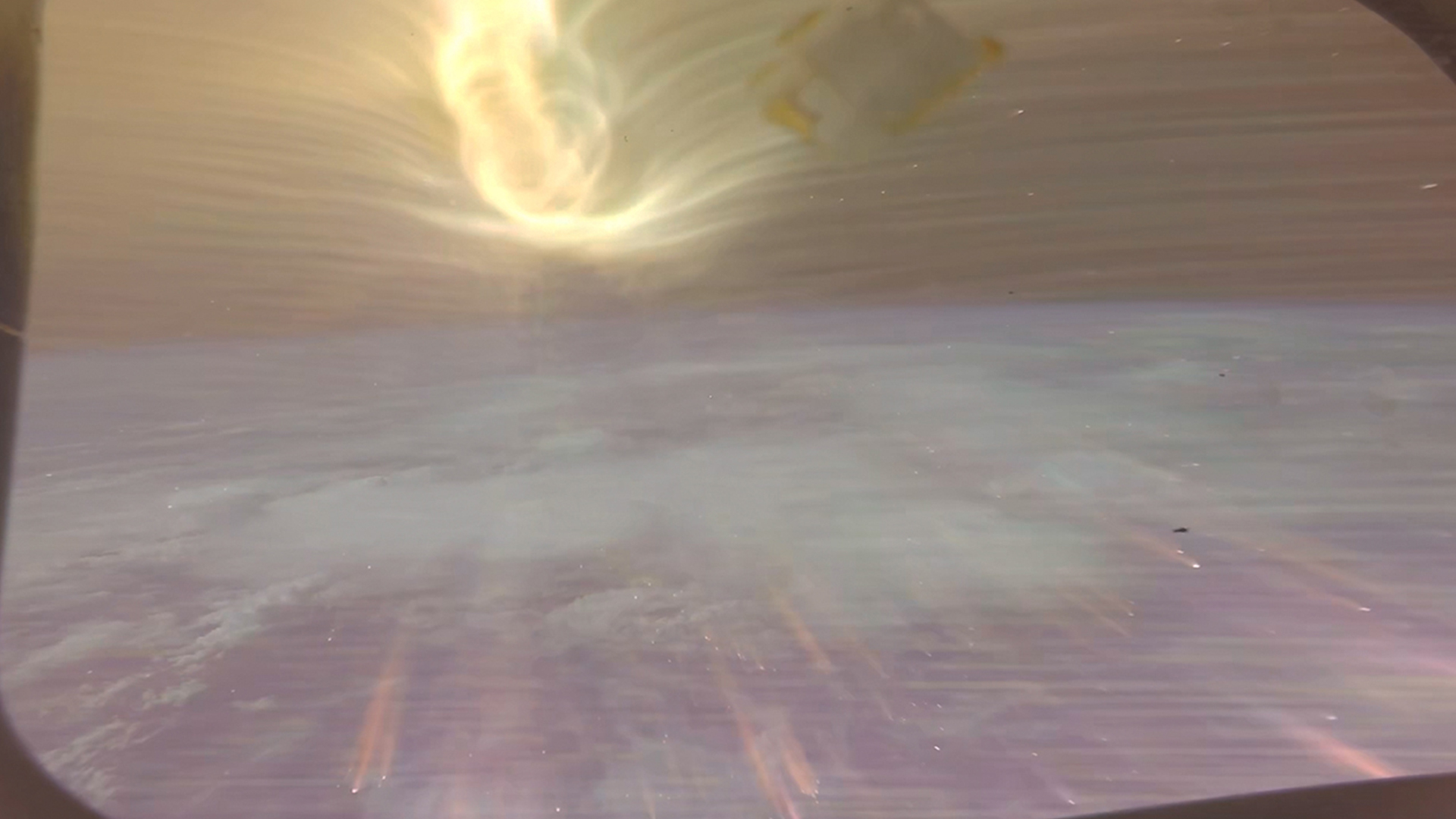
NASA's Orion capsule captured this footage as it re-entered Earth's atmosphere on December 11, 2022, at the end of Artemis 1's lunar mission.

Footage from NASA’s Artemis 1 Orion capsule that re-entered Earth’s atmosphere on December 11, 2022. (Image credit: NASA)

Good morning, science fans! We’re back to cover the harrowing final stages of the Artemis II mission. The mission saw a crew of four astronauts embark on a 685,000-mile (1.1 million-kilometer) 10-day journey around the moon and back.

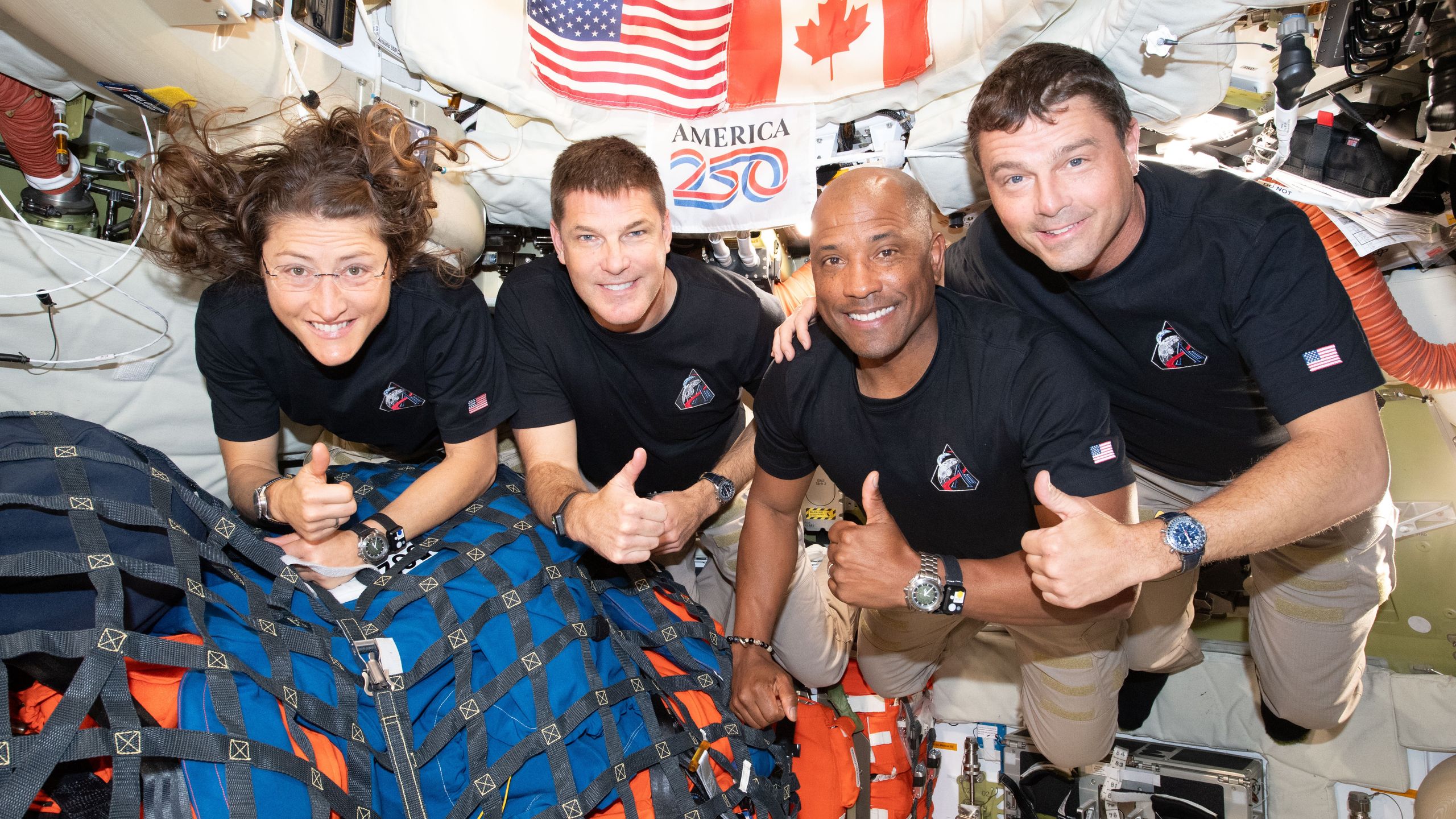
The crew, consisting of Captain Reed Wiseman, Pilot Victor Glover, and Mission Specialists Christina Koch and Jeremy Hansen, has captivated millions of people around the world with their voyages, delivering stunning images, scientific insights, laughter and tears while making history and laying the foundation for man’s return to the moon.

All that’s left now is to get home safely.

Just hours away from re-entering the atmosphere at record-breaking speed, Live Science will follow every moment of the finale of this perilous journey, bringing you the latest information and expert commentary. Let’s see them home.

ben turner

ben turner

Trend News Deputy Editor

Please follow our community guidelines. ” data-join-the-conversation-text=”Join the conversation”>

You must verify your public display name before commenting

If you log out and log back in, you will be asked to enter a display name.

Logout


Source link

#Biotechnology #ClimateScience #Health #Science #ScientificAdvances #ScientificResearch
Follow on Google News Follow on Flipboard
Share. Facebook Twitter Pinterest LinkedIn Tumblr Email Copy Link
Previous ArticleBrowser extensions are the new AI consumption channel no one is talking about
Next Article PoET telescope makes first observation in exoplanet research

Related Posts

James Webb Telescope discovers ‘Stingray’ galaxy that could solve ‘little red dot’ mystery

April 9, 2026

Scientists develop new type of encryption to protect video files from quantum computing attacks

April 9, 2026

There are problems with Artemis II’s heat shield, but NASA isn’t worried. Here’s why:

April 9, 2026
Add A Comment
Leave A Reply Cancel Reply

Latest Posts

France ditches Windows for Linux to reduce dependence on US technology

PSA: If you use the Meta AI app, your friends will find out and embarrass you

GlassWorm campaign uses Zig Dropper to infect multiple developer IDEs

PoET telescope makes first observation in exoplanet research

Trending Posts

Subscribe to News

Subscribe to our newsletter and never miss our latest news

Please enable JavaScript in your browser to complete this form.
Loading

Welcome to Fyself News, your go-to platform for the latest in tech, startups, inventions, sustainability, and fintech! We are a passionate team of enthusiasts committed to bringing you timely, insightful, and accurate information on the most pressing developments across these industries. Whether you’re an entrepreneur, investor, or just someone curious about the future of technology and innovation, Fyself News has something for you.

Castilla-La Mancha Ignites Innovation: fiveclmsummit Redefines Tech Future

Local Power, Health Innovation: Alcolea de Calatrava Boosts FiveCLM PoC with Community Engagement

The Future of Digital Twins in Healthcare: From Virtual Replicas to Personalized Medical Models

Human Digital Twins: The Next Tech Frontier Set to Transform Healthcare and Beyond

Facebook X (Twitter) Instagram Pinterest YouTube
  • Home
  • About Us
  • Advertise with Us
  • Contact Us
  • DMCA
  • Privacy Policy
  • Terms & Conditions
  • User-Submitted Posts
© 2026 news.fyself. Designed by by fyself.

Type above and press Enter to search. Press Esc to cancel.