

Close Menu
  • Home
  • Identity
  • Inventions
  • Future
  • Science
  • Startups
  • Spanish
What's Hot

Google adds Rust-based DNS parser to Pixel 10 modems for added security

The science of getting there

Mirax Android RAT turns devices into SOCKS5 proxies and reaches 220,000 via meta ads

Facebook X (Twitter) Instagram
  • Home
  • About Us
  • Advertise with Us
  • Contact Us
  • DMCA
  • Privacy Policy
  • Terms & Conditions
  • User-Submitted Posts
Facebook X (Twitter) Instagram
Fyself News
  • Home
  • Identity
  • Inventions
  • Future
  • Science
  • Startups
  • Spanish
Fyself News
Home » Ancient Egyptian stone monument depicting Roman emperor as pharaoh discovered in Luxor
Science

Ancient Egyptian stone monument depicting Roman emperor as pharaoh discovered in Luxor

By April 12, 2026No Comments4 Mins Read
Share Facebook Twitter Pinterest Telegram LinkedIn Tumblr Email Copy Link
Follow Us
Google News Flipboard
Share
Facebook Twitter LinkedIn Pinterest Email Copy Link

Archaeologists in Egypt have discovered a 2,000-year-old sandstone monument depicting a Roman emperor as a pharaoh.

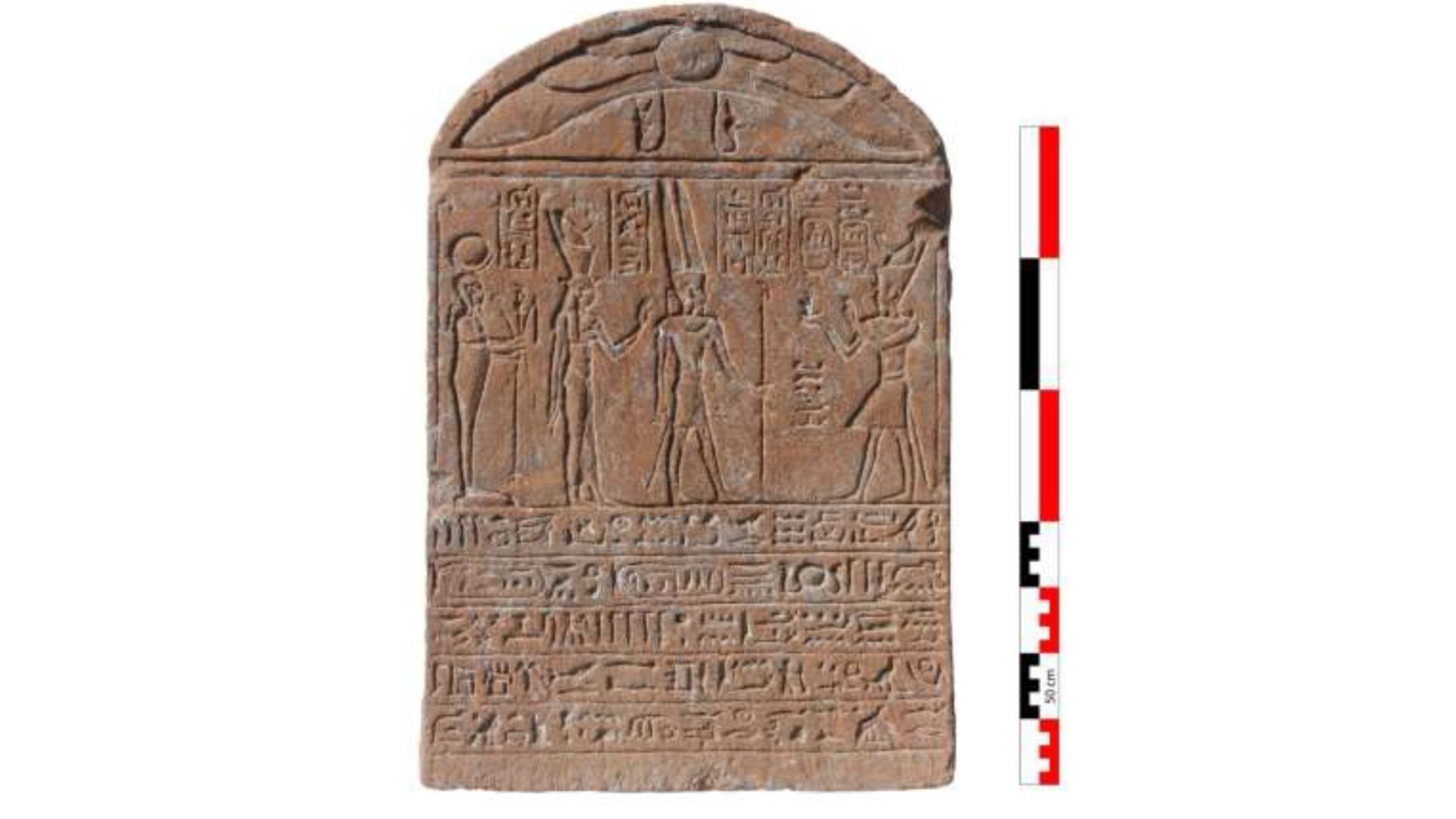
This small rectangular monument, called a stele or stele, was discovered during restoration work on the Karnak temple complex in Luxor (ancient Thebes). The tablet, approximately 60 x 40 centimeters in size, dates from the reign of Tiberius (14 to 37 AD) and depicts a powerful emperor, according to a translation released by Egypt’s Ministry of Tourism and Antiquities.

When Tiberius came to power, Egypt had already been a province of the Roman Empire for 44 years. Tiberius was therefore a ruler responsible for preserving the principles of ma’at, or cosmic order, in ancient Egyptian religion, says Egyptologist Abdelghaffar Wagdi, general director of the Luxor Antiquities Museum and co-director of the Egyptian-French Archaeological Center, which is leading the mission.

you may like

“To fulfill this role, the ruler needed to appear in a form acceptable to God, performing traditional rituals as a pharaoh,” Wagdi told Live Science in an email.

The newly discovered stela statue depicts Tiberius standing before the gods Amun, Mut, and Khonsu, who are worshiped in Luxor, making him as important as the Roman emperor. “By offering ma’at to them, the emperor shows that he is fulfilling his obligation to the local divine order,” Wagdi said. “The trio also represents the sacred family (father, mother, and son), reflecting the structure of kingship itself and reinforcing the legitimacy of the emperor.”

By introducing Tiberius as pharaoh, the Egyptians allowed him to be incorporated into the state’s religious system. Egyptian-style representations of Roman emperors were common in religious settings. However, Wagdi said the emperor retained Roman style in his coins and official Roman statues.
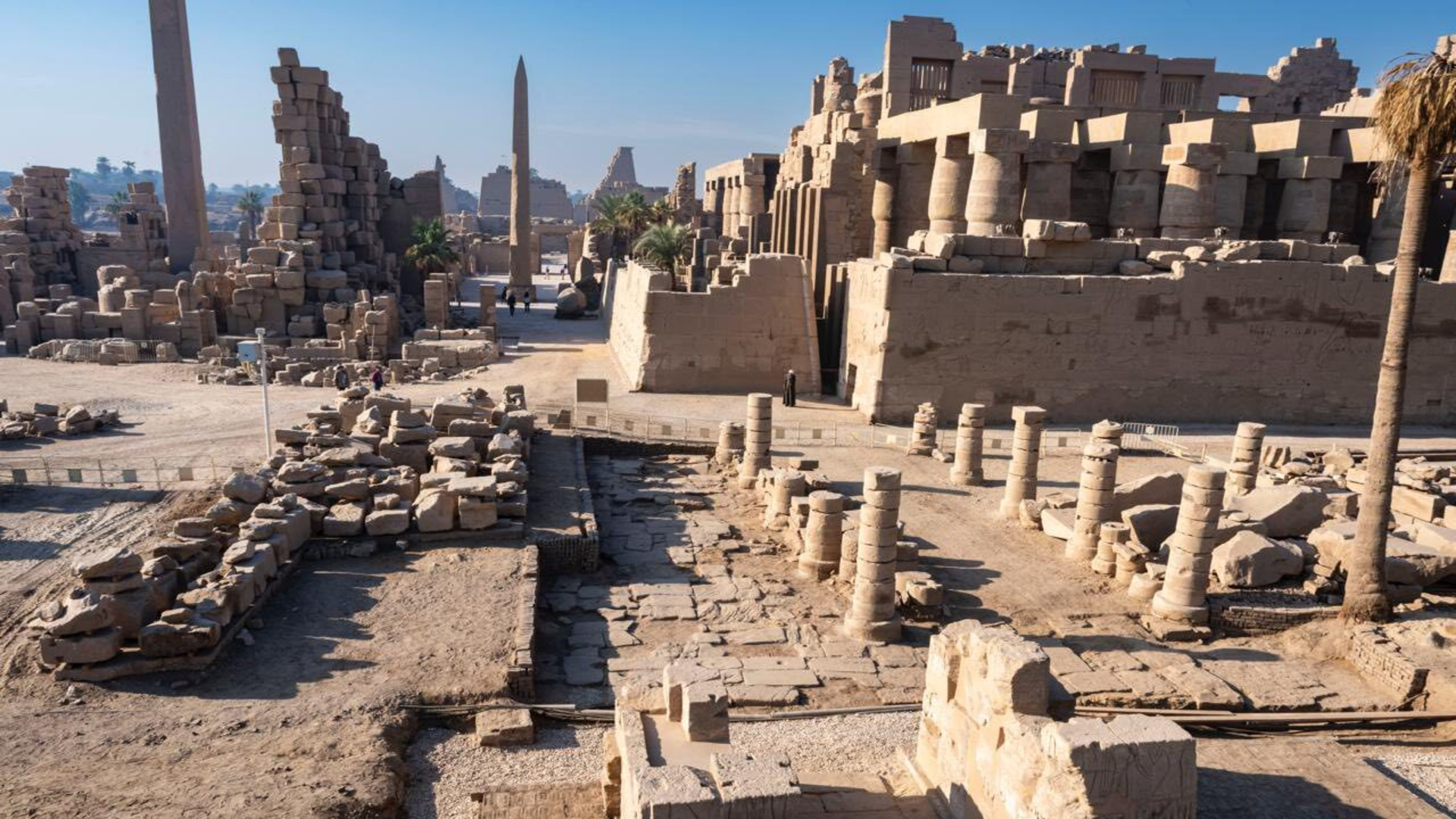
Photos from archaeological excavations. It shows a brown stone tablet with hieroglyphics written on it, a group of people standing around the tablet, and a shot of the ruins of an ancient city.

Ruins of Karnak temple complex in Luxor. Where archaeologists discovered a 2,000-year-old monument. (Image credit: Provided by the Egyptian Ministry of Tourism and Antiquities)

The incorporation of Egypt into the Roman Empire is closely associated with three famous figures: Augustus (formerly Octavian), Mark Antony, and Cleopatra VII. After abandoning the third member of the triumvirate, the generals Marcus Aemilius Lepidus, Augustus, and Antony each sought to control the entire empire. Anthony allied with Cleopatra, the last pharaoh of ancient Egypt. The future first Roman emperor Augustus finally defeated the two lovers at the Battle of Actium near Greece in 31 BC, and Egypt became a Roman province the following year.

Get the world’s most fascinating discoveries delivered straight to your inbox.

Augustus was succeeded by his stepson Tiberius, who exercised authority in Egypt through envoys but never set foot in Egypt, as was the usual practice of Roman emperors. Wagdi explained that Tiberius’ name is inscribed on monuments associated with Egyptian temples as a means of preserving religious sites in the region.

The stele “reflects a standard ideological and administrative system in which the emperor is represented as the pious builder and protector of the temple, regardless of the actual level of involvement,” he said. “Rather than recording individual achievements, this monument expresses what a king should be in Egyptian terms.”
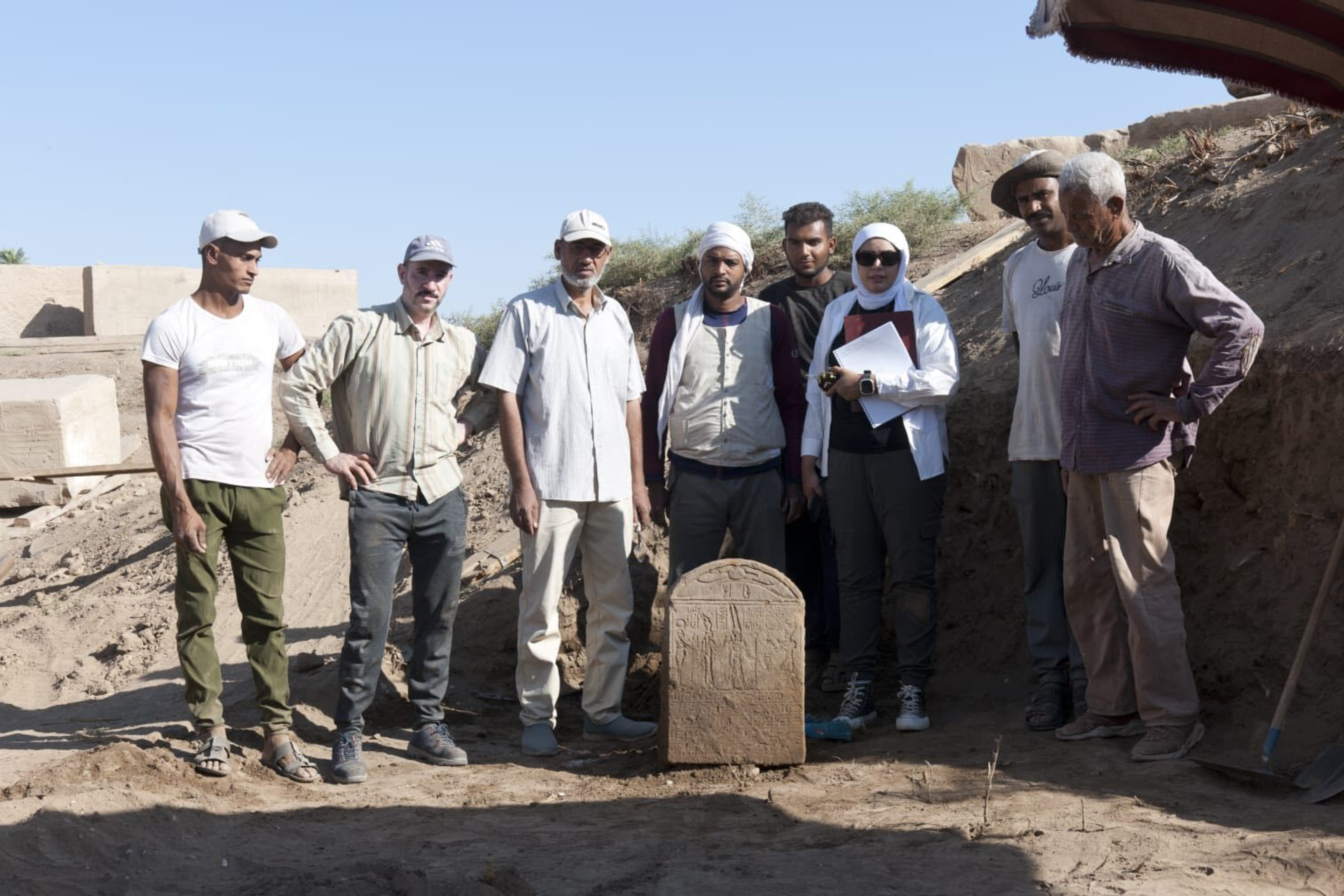
Photos from archaeological excavations. It shows a brown stone tablet with hieroglyphics written on it, a group of people standing around the tablet, and a shot of the ruins of an ancient city.

Researchers are displaying a 2,000-year-old stone inscription in Luxor (ancient Thebes). (Image credit: Provided by the Egyptian Ministry of Tourism and Antiquities)

The stela was discovered during recent restoration of the north gate of the Karnak temple complex, which was built from about 4,000 years ago to Roman times. Coincidentally, the stele also features five lines of hieroglyphs detailing the renovation of the walls of Amun-Ra temple, the statement said.

“It is likely that this stone originally served as a fixed architectural marker, embedded in the exterior of the enclosure wall to commemorate the restoration of that very part of the gate,” Wagdi said. But the era of public access is not over yet. Wagdi said in a statement that after 2,000 years, the stone monument’s new home will become a museum.

How much do you know about ancient Egypt? Test your knowledge with our ancient Egypt quiz!


Source link

#Biotechnology #ClimateScience #Health #Science #ScientificAdvances #ScientificResearch
Follow on Google News Follow on Flipboard
Share. Facebook Twitter Pinterest LinkedIn Tumblr Email Copy Link
Previous Article‘No human mind should have to go through this’: Artemis II crew recalls the surreal moment Earth disappeared — Space Photo of the Week
Next Article At the HumanX conference, everyone was talking about Claude

Related Posts

Homo erectus’ tools contained impressive geodes and fossils, perhaps as a way to connect with the universe, study finds

April 13, 2026

Physicists entangle two moving helium atoms for the first time to test ‘spooky’ quantum theory

April 13, 2026

‘We still haven’t processed what we just did’: Artemis II astronauts tell all at first press conference after splashdown

April 13, 2026
Add A Comment
Leave A Reply Cancel Reply

Latest Posts

Google adds Rust-based DNS parser to Pixel 10 modems for added security

The science of getting there

Mirax Android RAT turns devices into SOCKS5 proxies and reaches 220,000 via meta ads

X-SEED project: Supercritical membraneless electrolysis

Trending Posts

Subscribe to News

Subscribe to our newsletter and never miss our latest news

Please enable JavaScript in your browser to complete this form.
Loading

Welcome to Fyself News, your go-to platform for the latest in tech, startups, inventions, sustainability, and fintech! We are a passionate team of enthusiasts committed to bringing you timely, insightful, and accurate information on the most pressing developments across these industries. Whether you’re an entrepreneur, investor, or just someone curious about the future of technology and innovation, Fyself News has something for you.

Castilla-La Mancha Ignites Innovation: fiveclmsummit Redefines Tech Future

Local Power, Health Innovation: Alcolea de Calatrava Boosts FiveCLM PoC with Community Engagement

The Future of Digital Twins in Healthcare: From Virtual Replicas to Personalized Medical Models

Human Digital Twins: The Next Tech Frontier Set to Transform Healthcare and Beyond

Facebook X (Twitter) Instagram Pinterest YouTube
  • Home
  • About Us
  • Advertise with Us
  • Contact Us
  • DMCA
  • Privacy Policy
  • Terms & Conditions
  • User-Submitted Posts
© 2026 news.fyself. Designed by by fyself.

Type above and press Enter to search. Press Esc to cancel.