
X-SEED project: Supercritical membraneless electrolysis
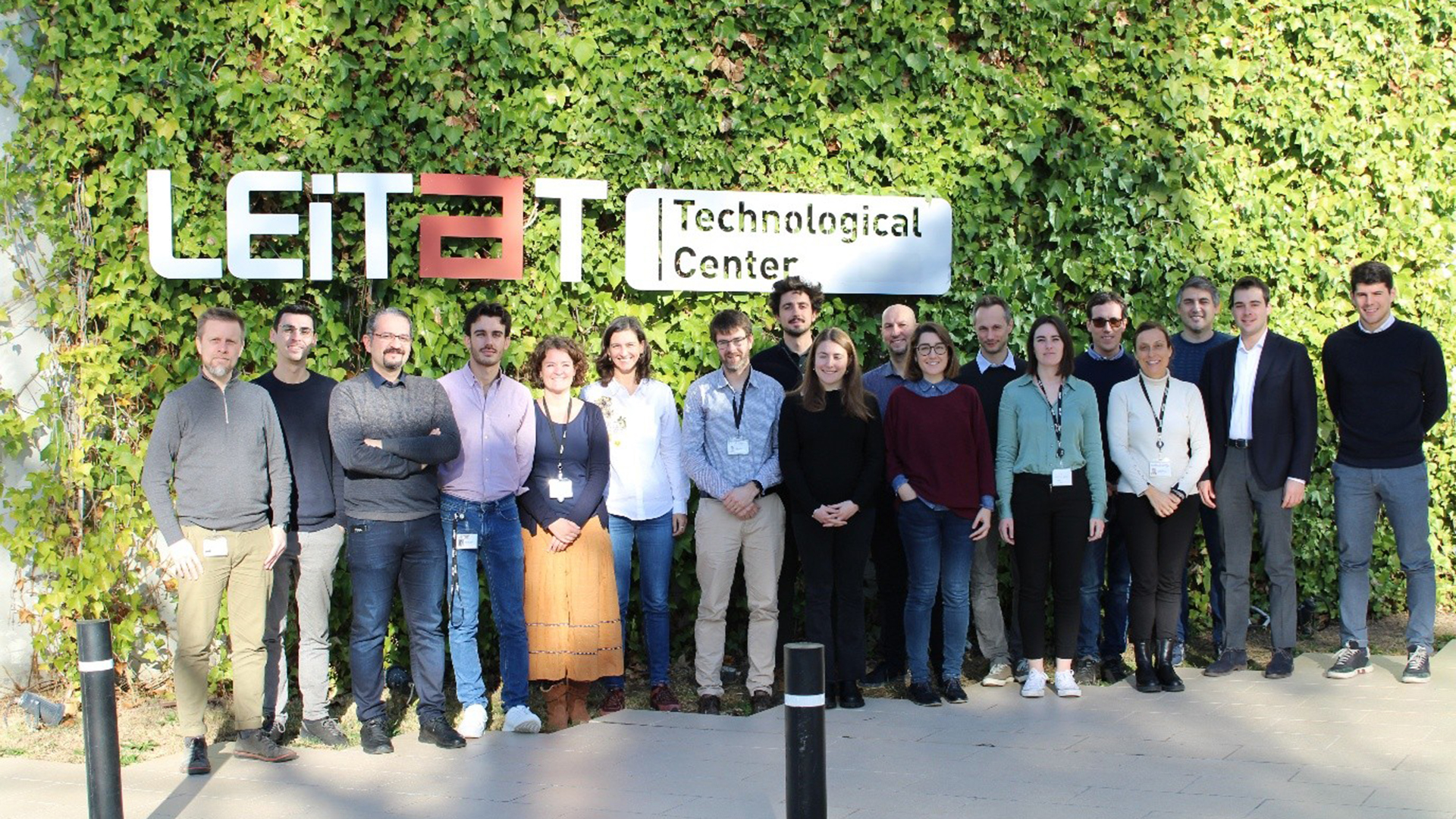
A European consortium is promoting electrolysis with membrane-less electrolyzers to improve the production of renewable hydrogen to support Europe’s climate-neutral energy goals.
X-SEED is a European research initiative to develop supercritical membraneless electrolysis technology to accelerate the production of renewable hydrogen. The consortium brings together industry and research partners to improve the efficiency, durability and cost competitiveness of next generation electrolyzers.
Why is this important now?
Currently, electrolysis accounts for only about 0.1% of the approximately 100 million tons produced each year worldwide. The majority of hydrogen still comes from fossil-based sources, primarily the production of so-called “gray” hydrogen, which uses natural gas and coal without CO₂ capture, rather than green hydrogen produced by electrolysis of water.
By the end of 2024, the European Union has installed around 340 MW of capacity, far below the 6 GW target set in the 2020 European Union Hydrogen Strategy. The 6GW target was to produce up to 1 million tons of renewable hydrogen per year, but in reality installed capacity has only reached about 5-6% of the target.
How do we get there?
X-SEED’s membraneless electrolysis aims to address the limitations of conventional electrolyzers. By operating at higher pressures and temperatures, energy losses associated with internal resistance and membrane overvoltage are minimized, increasing efficiency and reducing power consumption for hydrogen production. This design also reduces capital and operating costs by eliminating fragile membrane components and reducing maintenance requirements.
Progress on this project will be validated on a five-cell electrolysis stack in a laboratory environment, positioning it for large-scale deployment and supporting Europe’s renewable hydrogen goals.
Innovation: membrane-free supercritical electrolysis
X-SEED is developing an electrolyzer that uses water to produce hydrogen at very high temperatures and pressures (supercritical conditions of 374°C and at least 220 bar). Instead of using membranes to separate gases, the design separates hydrogen and oxygen through a controlled flow of water (laminar flow). The goal is to obtain high purity hydrogen (>99%) directly from the system at pressures above 200 bar, reducing the energy required for subsequent compression and increasing overall efficiency.
Under supercritical conditions, the transport and thermophysical properties of water change significantly. Due to the absence of liquid, the gas phase boundary eliminates bubble formation, increases ionic conductivity and molecular diffusivity, and changes the water self-dissociation equilibrium, all of which lower the internal resistance.
Increasing the operating temperature accelerates the electrode reaction rate, improves the reaction thermodynamics, and can lower the cell voltage at a given current density. X‑SEED’s membraneless architecture eliminates polymer electrolyte membranes and their associated gas crossover, durability, and supply chain constraints, thereby simplifying the cell bill of materials.
Operation at moderate to high temperatures and pressures produces hydrogen at pressures close to the supply, reducing or eliminating downstream compression hardware and costs. Collectively, these innovations aim to: System-level specific energy consumption < 42 kWh kg-1 H₂. Levelized cost < 3 EUR/kg H₂; Endurance < 1% performance degradation per 1,000 hours. The loading of critical raw materials in the electrode was reduced (< 0.3 mg W-1). Achievement of these indicators will significantly strengthen the techno-economic rationale for green hydrogen in industrial and mobility applications and strengthen the competitiveness and deployment of electrolysis to produce renewable hydrogen.
From concept to verification
X-SEED begins at Technology Readiness Level (TRL) 2, meaning the concepts and scientific principles behind the technology are still being explored and formulated. This project aims to progress to TRL4. This means that the technology will be validated at laboratory scale through demonstration of single cells and short stacks under controlled conditions.
This project integrates multiphysics modeling, materials development and characterization, cell and stack engineering, and electrochemical testing of electrolytic processes under supercritical conditions. These technology activities are complemented by work on sustainability assessments, social acceptance, and utilization strategies to ensure that the technology is not only technically validated but also positioned for future real-world deployment.
Results to date
The project is currently a little more than halfway through, and the specific achievements so far are as follows.
Material selection and development
Materials were selected to construct the electrolyzer and to withstand supercritical conditions. Inconel-based foam mesh substrates were used for the electrodes, Inconel 625 for the structural components, Grafoil® for the high-pressure seals, and zirconia for the electrical insulation. Different types of catalysts, perovskites and nickel-based oxides, were fabricated through two scalable fabrication techniques: electrospinning and continuous flow hydrothermal synthesis. Also, coated substrates were fabricated using the synthesized catalyst and exhibited suitable electrochemical performance for oxygen and hydrogen evolution reactions.
Electrolyte conductivity under supercritical conditions
A custom and proprietary high T/P conductance setup was designed and commissioned to characterize alkaline electrolytes under a wide range of temperatures and pressures. The measured trends show that the conductivity peaks below the critical point and decreases as the supercritical region is approached. That is, for 1 M KOH, about 200 mS cm-1 at 380°C (subcritical) decreases to about 64 mS cm-1 at 410°C. The measured conductivities are consistent with the limited data available in the literature.
Membraneless architecture developed and validated by modeling
2D/3D models covering fluid mechanics, species and mass transport (Nernst–Planck), charge conservation, heat transfer, and Butler–Volmer kinetics guided the concept selection. A membrane-free laminar flow cell was selected and designed into a single cell and then into a five-cell stack. Simulations show that with 1 M electrolyte and short electrode spacing, 1 A cm-2 at approximately 2 V is achievable. Reducing the gap reduces resistive losses without violating safety limits. Under the modeled conditions, mixing of hydrogen and oxygen at the H2 outlet is not a problem. Mixing on the O₂ side can be managed downstream.
Thermal Integration and Circularity Pipelines The mass-energy baseline emphasizes the case for heat recovery. Heating 1 m3 of water from ambient temperature to supercritical temperature requires approximately 555 kWh. In parallel, to capture value, X-SEED is compiling industrial datasets on waste heat sources to accelerate circular integration in pilot projects.
The road to scale
The consortium has implemented a stepwise scale-up strategy, progressing from single-cell validation to short stacks and integration with test benches. In parallel, gas management and energy management strategies are gradually being developed and refined to ensure stable and efficient operation as systems become more complex.
In addition to the core technology development, the project also addresses manufacturability aspects, such as the development of new catalysts and electrodes for electrolysis, with the aim of enabling future industrial production. Additionally, the downstream gas handling system is designed to ensure that hydrogen (H₂) and oxygen (O₂) remain outside flammability limits, thereby ensuring safe operation during testing and future scale-up.
X SEED will demonstrate whether high-pressure, high-purity hydrogen can be produced more efficiently, more sustainably and at a lower cost, demonstrating exactly what the market needs to enable adoption.
To stay up to date with the X-SEED project, follow us on LinkedIn and subscribe to our newsletter.
Disclaimer
Project X-SEED (grant agreement number 101137701). This project is supported by the Clean Hydrogen Partnership and its members. Co-funded by the European Union. However, the views and opinions expressed are those of the authors alone and do not necessarily reflect the views and opinions of the European Union or the Clean Hydrogen Partnership. Neither the European Union nor the licensing authorities can be held responsible for them.
Please note: This is a commercial profile
This article will also be published in the quarterly magazine issue 26.
Source link

