

Close Menu
  • Home
  • Identity
  • Inventions
  • Future
  • Science
  • Startups
  • Spanish
What's Hot

n8n webhook has been exploited since October 2025 to deliver malware via phishing emails

After selling its shoe business, Allbirds shifts focus to AI

Snap cuts 1,000 jobs, or 16% of its workforce

Facebook X (Twitter) Instagram
  • Home
  • About Us
  • Advertise with Us
  • Contact Us
  • DMCA
  • Privacy Policy
  • Terms & Conditions
  • User-Submitted Posts
Facebook X (Twitter) Instagram
Fyself News
  • Home
  • Identity
  • Inventions
  • Future
  • Science
  • Startups
  • Spanish
Fyself News
Home » Scotland’s Stone Age graves reveal ‘web of descent’ between male relatives
Science

Scotland’s Stone Age graves reveal ‘web of descent’ between male relatives

By April 13, 2026No Comments3 Mins Read
Share Facebook Twitter Pinterest Telegram LinkedIn Tumblr Email Copy Link
Follow Us
Google News Flipboard
Share
Facebook Twitter LinkedIn Pinterest Email Copy Link

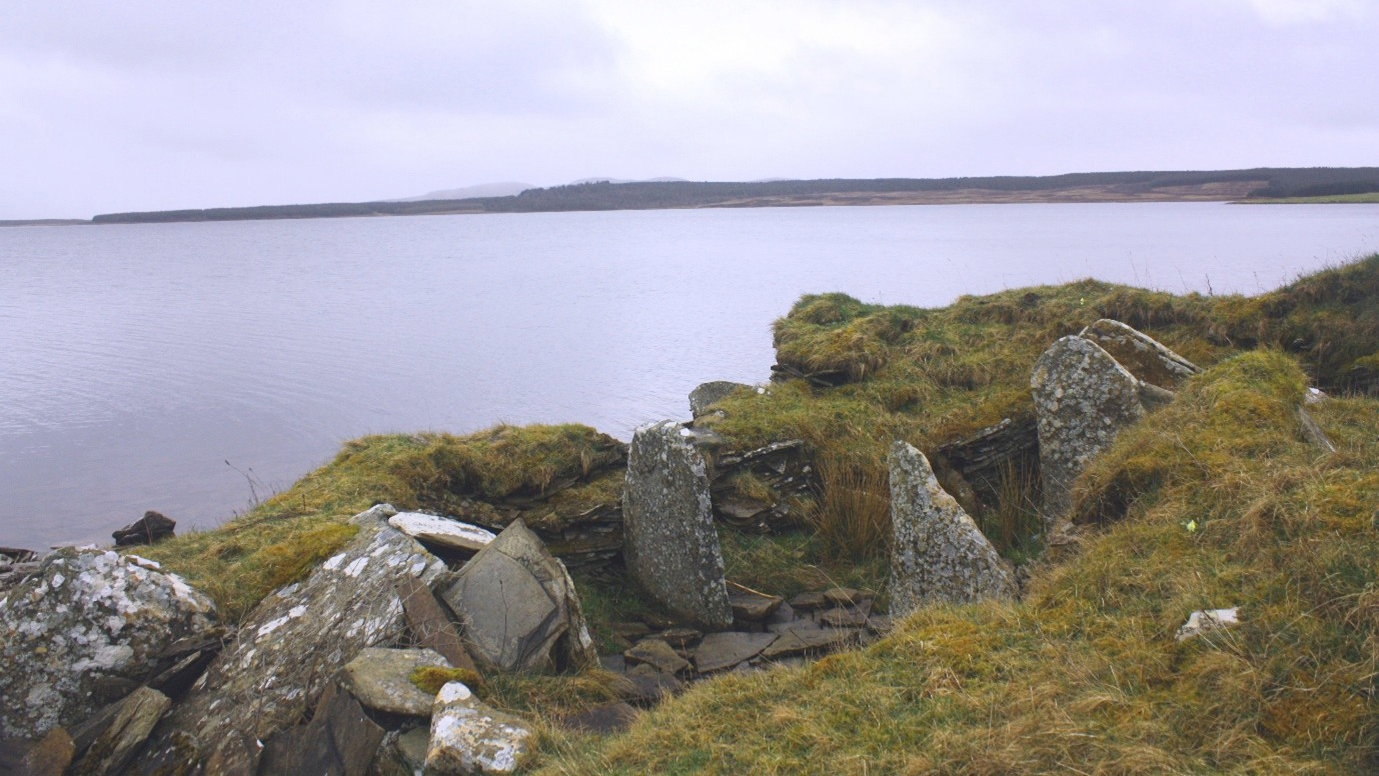
Stone Age people in northern Scotland buried related men, rather than women, together in the same graves, creating a “web of descent” at several Neolithic sites, new DNA research has revealed.

In the study, published in the journal Antiquity on Tuesday (April 14), researchers analyzed DNA from 22 people taken from five graves in Caithness County, northern Scotland, and the Orkney Islands. These tombs were used between 3800 and 3200 BC, when prehistoric Scotland was transitioning from foraging to farming.

But the human bones in these Stone Age tombs were scattered, mixed, and degraded over almost 6,000 years, meaning archaeologists learned little about social relations in Neolithic Scotland.

you may like

Using ancient DNA analysis, researchers can now ask and answer questions about kinship in this era. For example, “How often were graves used to house the remains of close genetic relatives? How often were individuals selected for inclusion because they were related along the male line?” study co-author Chris Fowler, an archaeologist at the University of Newcastle in the UK, said in a statement.

Inside the grave, researchers discovered close genetic relatives, all of whom were linked along the male line. Two of the tombs contained father-son pairs, and one contained a brother. A pair of half-brothers, or paternal uncle and nephew, were discovered in two adjacent graves. And one of the graves at Loch Calder in north-east Scotland contained the only evidence of a father, son and grandson being buried together in Neolithic Scotland.

“It’s incredible to think that more than 5,000 years after these people were placed in these tombs, we can now reconstruct how they were related through analysis of ancient DNA,” study lead author Vicki Cummings, an archaeologist at Cardiff University in Wales, said in a statement. “This study shows that the people who built these monuments placed particular importance on the male line.”

No close relationship was found in the skeletons of the women the researchers studied. For example, there are no mother-daughter or sister pairs in the tomb, and the closest genetic relationship between two women is a fifth-degree relative, equivalent to first cousins.

Get the world’s most fascinating discoveries delivered straight to your inbox.

However, the two women buried in the Orkney graves were genetically related to the men buried in the mainland graves, suggesting that women may have played an important role in maintaining a “web of lineage” across the oceans, the researchers wrote in the study.

Experts have long believed that the region’s Neolithic people organized along male lines, and new research confirms that belief.

“These results are consistent with the interpretation that paternal lineage has been traced in this area,” Cummings said. “For the people who brought the Neolithic to Britain, this social bond may have been as important as the pot, the ox, or the axe.”

Cummings, V., Fowler, C., Olalde, I., Cuthbert, S., and Reich, D. (2026). Neolithic people in northern Scotland built tombs and buried their dead as a technology of descent and affinity. Ancient. https://doi.org/10.15184/aqy.2026.10291

Stone Age Quiz: What do you know about the Paleolithic, Mesolithic and Neolithic periods?


Source link

#Biotechnology #ClimateScience #Health #Science #ScientificAdvances #ScientificResearch
Follow on Google News Follow on Flipboard
Share. Facebook Twitter Pinterest LinkedIn Tumblr Email Copy Link
Previous ArticleUber and Nuro begin testing premium robotaxi service in San Francisco
Next Article OpenAI acquires AI personal finance startup hiro

Related Posts

Physicists witnessed the needle of darkness traveling faster than the speed of light without violating the theory of relativity

April 14, 2026

‘Oslo patient’ likely cured of HIV after receiving stem cell transplant from brother who is genetically resistant to the virus

April 13, 2026

Preservative-resistant bacteria spread through hospital air, early research suggests

April 13, 2026
Add A Comment
Leave A Reply Cancel Reply

Latest Posts

n8n webhook has been exploited since October 2025 to deliver malware via phishing emails

After selling its shoe business, Allbirds shifts focus to AI

Snap cuts 1,000 jobs, or 16% of its workforce

Reid Hoffman weighs in on the ‘token maxing’ debate

Trending Posts

Subscribe to News

Subscribe to our newsletter and never miss our latest news

Please enable JavaScript in your browser to complete this form.
Loading

Welcome to Fyself News, your go-to platform for the latest in tech, startups, inventions, sustainability, and fintech! We are a passionate team of enthusiasts committed to bringing you timely, insightful, and accurate information on the most pressing developments across these industries. Whether you’re an entrepreneur, investor, or just someone curious about the future of technology and innovation, Fyself News has something for you.

Castilla-La Mancha Ignites Innovation: fiveclmsummit Redefines Tech Future

Local Power, Health Innovation: Alcolea de Calatrava Boosts FiveCLM PoC with Community Engagement

The Future of Digital Twins in Healthcare: From Virtual Replicas to Personalized Medical Models

Human Digital Twins: The Next Tech Frontier Set to Transform Healthcare and Beyond

Facebook X (Twitter) Instagram Pinterest YouTube
  • Home
  • About Us
  • Advertise with Us
  • Contact Us
  • DMCA
  • Privacy Policy
  • Terms & Conditions
  • User-Submitted Posts
© 2026 news.fyself. Designed by by fyself.

Type above and press Enter to search. Press Esc to cancel.