


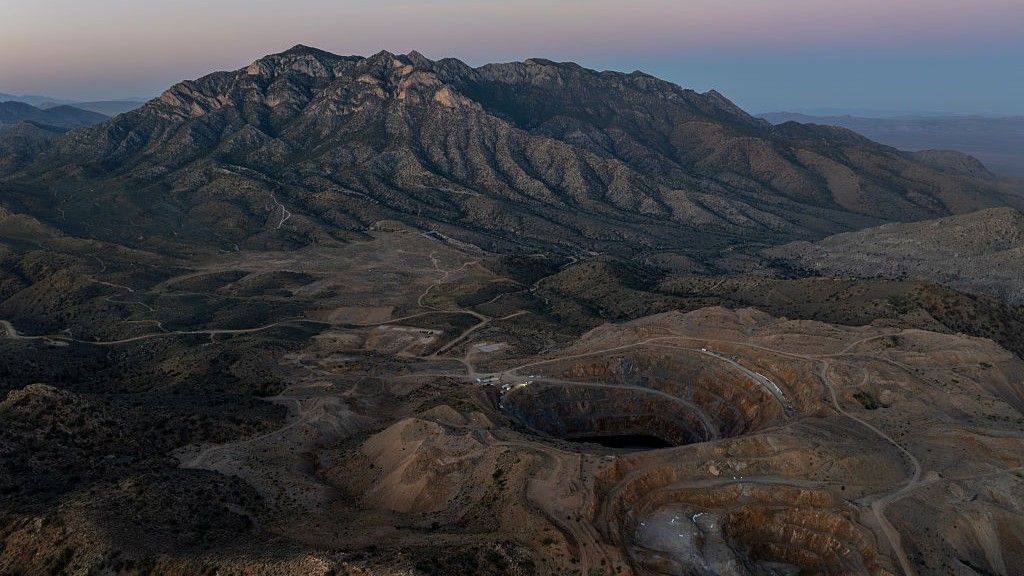
Researchers may have discovered a new way to find deposits of rare earth elements essential to the technology and energy industries.
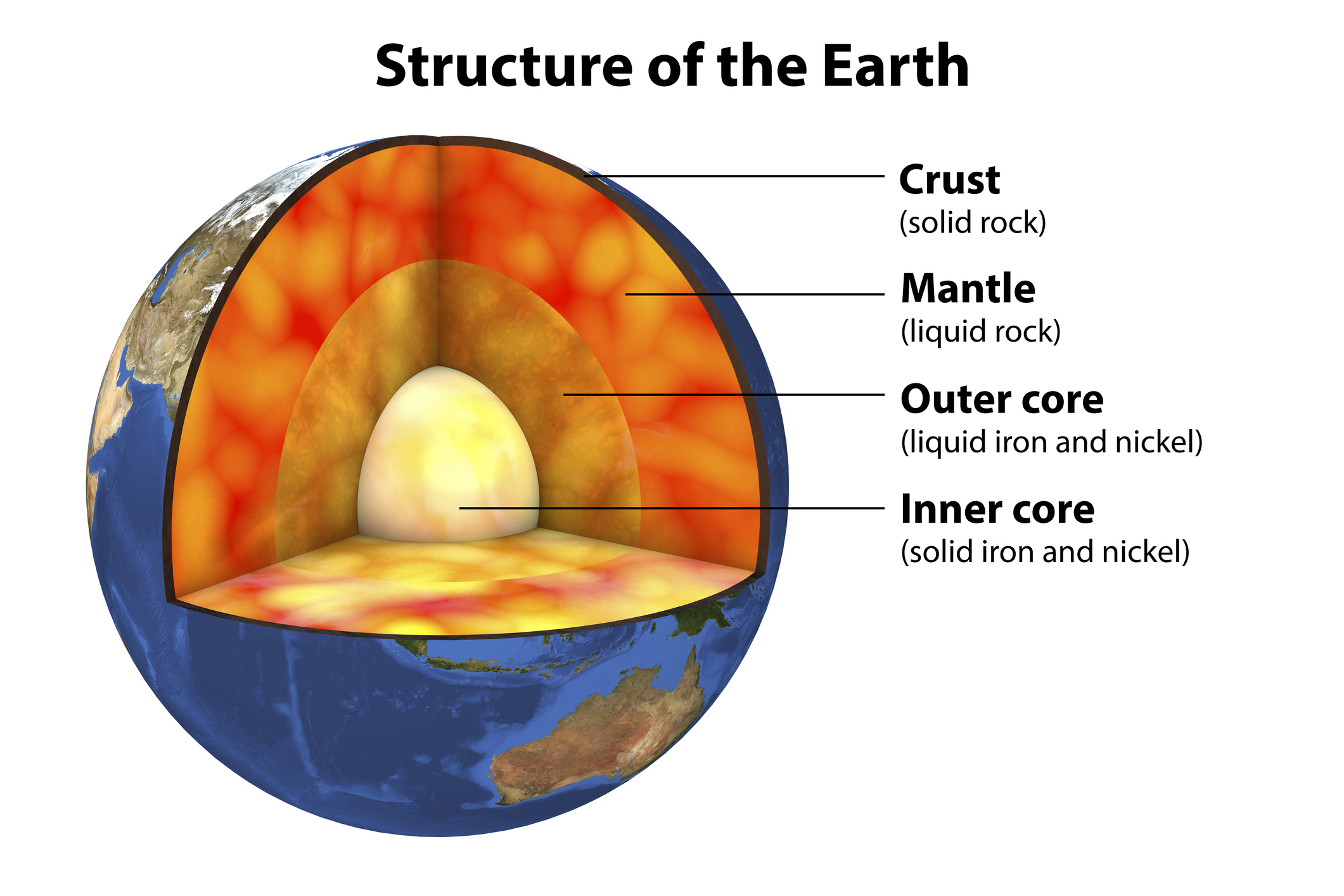
Rare earth elements crystallize within the Earth’s mantle in magma masses rich in alkali metals such as sodium and potassium and carbonate minerals such as calcite and dolomite. In a new study, scientists found that these types of magma, known as alkaline and carbonatite magmas, form over ancient subduction zones, where one plate slides beneath another.
you may like
The study, published April 8 in the journal Science Advances, challenges previous theories that link rare earth deposits primarily to mantle plumes, giant mushroom-shaped columns of red-hot lava that occur near the Earth’s core. Mantle plumes may be involved in the production of rare earth elements, the researchers say in a study. However, there is no clear overlap between the two, and the plume may be too hot to produce alkaline or carbonatite magma.
In the study, the team used advanced modeling techniques to reconstruct Earth’s plate tectonics and subduction processes over the past two billion years. (Scientists think plate subduction began at least 3.1 billion years ago, but the best models date back only 2 billion years.) The researchers then compared the location of the subduction zone to the current location of rare earth deposits and to regions of the mantle where alkaline and carbonatite magma clumps are known to exist.
Spandler and his colleagues discovered that globally known rare earth element deposits, and the pockets of magma that house them, frequently occur above ancient subduction zones.
When a tectonic plate plunges beneath another plate in a subduction zone, fluids (such as water) and halogen elements (fluorine, chlorine, bromine, iodine, astatine, and tennessine) are released into the overlying mantle. The researchers proposed that these materials react with rocks such as peridotite to form a “fertile” mantle region that can remain stable for millions of years, then gradually melt to produce alkaline or carbonatite magmas, which in turn produce rare earth deposits.
Theoretically, a variety of geological processes could melt the mantle’s fertile material, including mantle plumes, the stretching and thinning of the continents above, and pressure drops due to surface deglaciation, the researchers said in the study. Regardless of the specific process, the large age differences between some subduction zones and the overlying magma masses and rare earth deposits in this study suggest that fertile regions can persist in perpetuity.
“This lag is one of the most surprising aspects of our findings,” Spandler said in a statement. “This shows that the Earth’s mantle can preserve these enriched zones for incredibly long periods of time until the conditions are right for mineral deposits to form.”
The results showed that 67% of known alkaline and carbonatite magma masses and 72% of known rare earth deposits are overlying fertile mantle material. Older rare earth deposits tend to be larger and higher grade than newer ones, so the researchers re-analyzed deposits that are more than 540 million years old and found that 92% of them sit above fertile mantle regions.
What to read next
The researchers wrote that the rare earth deposits, which were not associated with fertile mantle regions in the study, are likely associated with subduction zones more than 2 billion years old. Notably, more alkaline and carbonatite magma masses and rare earth deposits were present in regions of the world where multiple mantle fertile regions overlapped, the researchers wrote.
There are 17 types of rare earth elements. Yttrium, scandium, and the 15 other metallic elements at the bottom of the periodic table. These elements are essential components in electric car batteries, wind turbines and smartphones, but until now it has been difficult to find deposits large enough to mine them.
Study co-author Andrew Mardis, a researcher at the University of Adelaide’s School of Physics, Chemistry and Geosciences, said in a statement that the results could help countries and companies discover more deposits of rare earth elements. “By focusing on these ancient tectonic zones, exploration companies and governments can take a more targeted and efficient approach to discovering new mineral deposits,” Merdis said.
The best places to look may be areas with ancient subduction zones, cold-forming magma, and highly stable crust and upper mantle regions, the researchers said in their paper.
By refining the model and looking back further into the past, scientists may be able to identify even more promising regions, the researchers added.
Spandler, C., Merdith, A. S., and Griffin, A. (2026). Carbonatite, rare earth ores, and subduction connect the fertile mantle lithosphere. Advances in Science, 12 (15), eaeb2942. https://doi.org/10.1126/sciadv.aeb2942
What’s Inside the Earth Quiz: Test your knowledge about Earth’s hidden layers