


simple facts
What is it: Trifid Nebula (Messier 20)
Location: 5,000 light years from Earth in the constellation Sagittarius
Share date: April 20, 2026
you may like
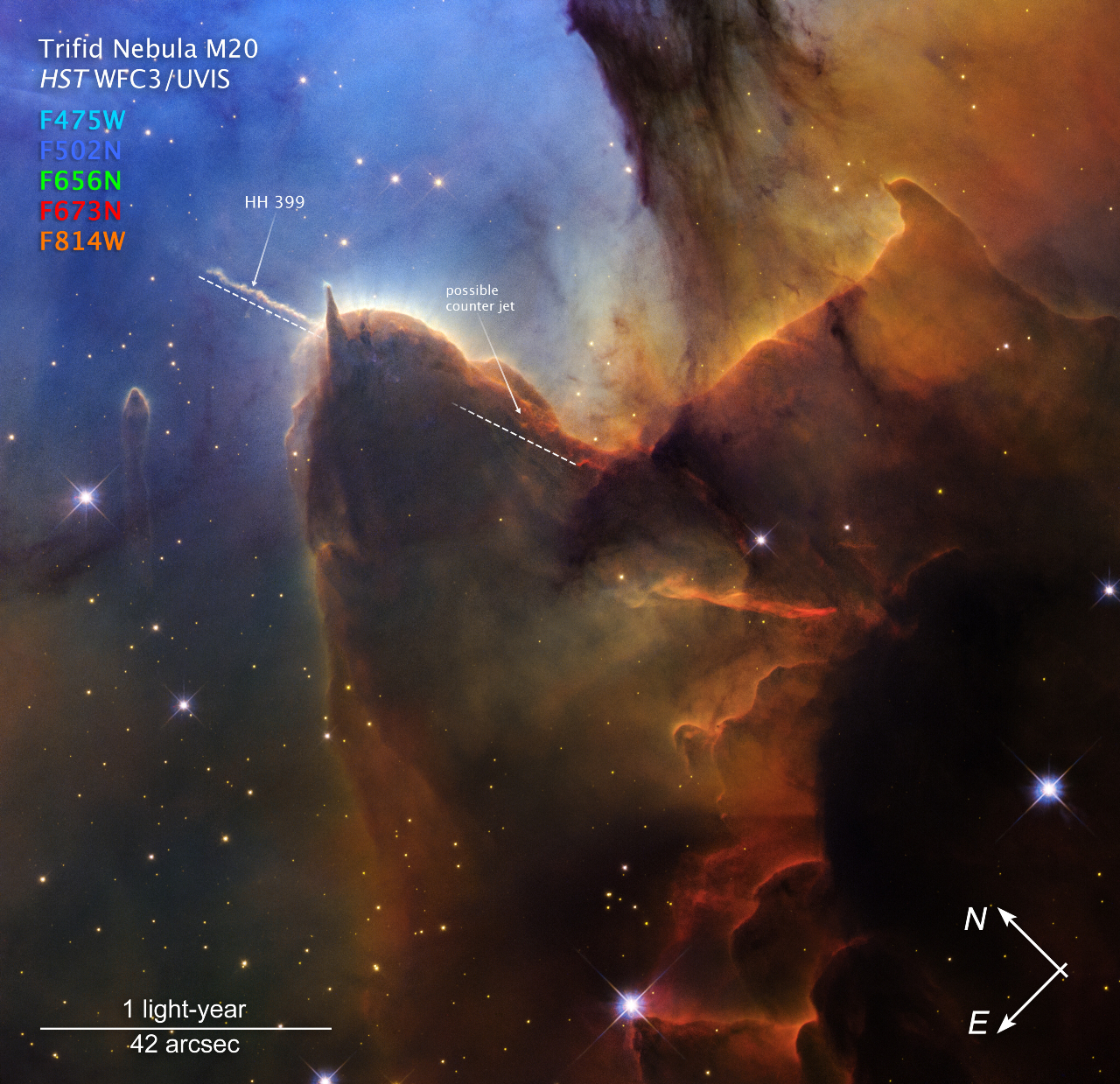
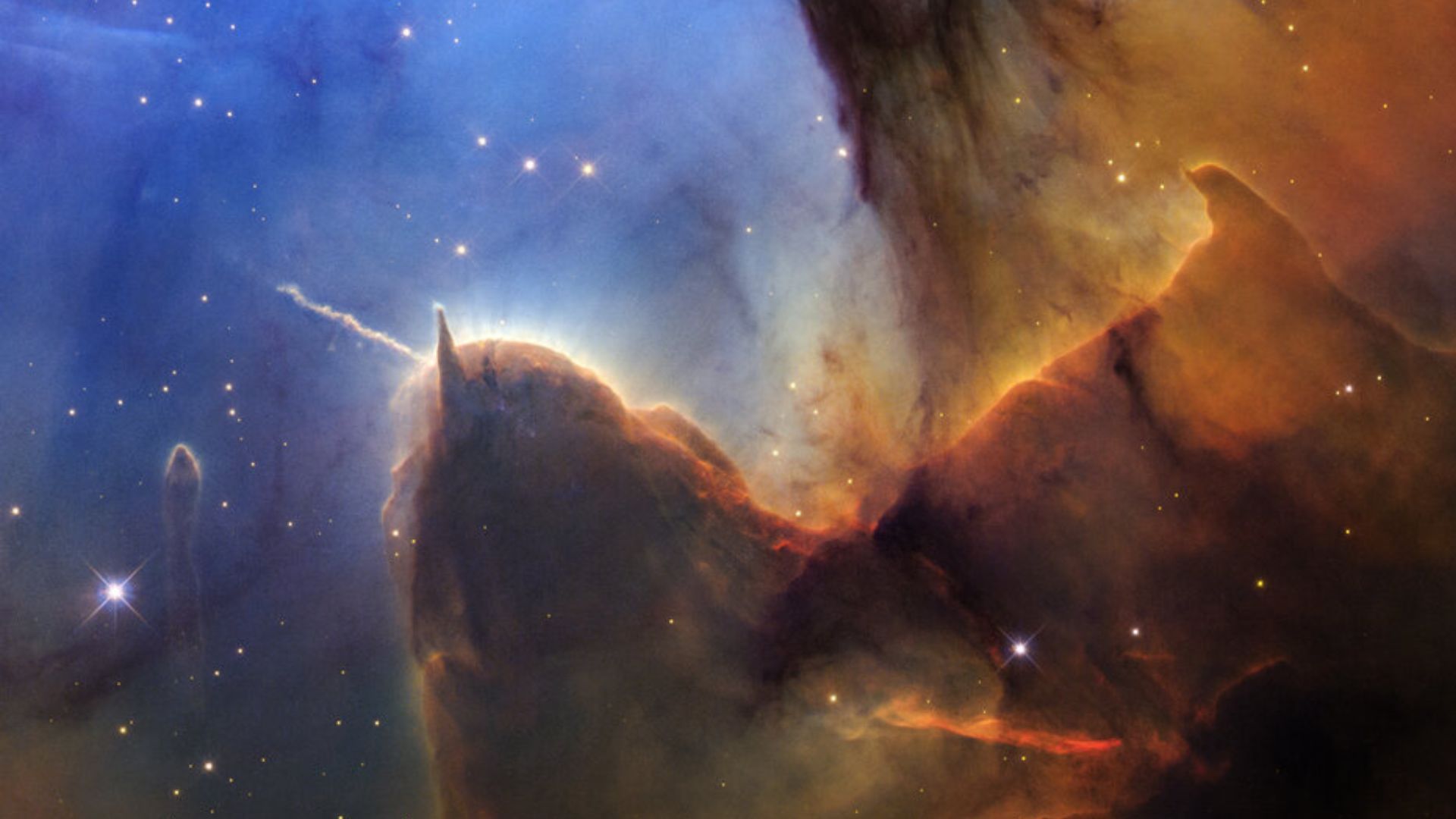
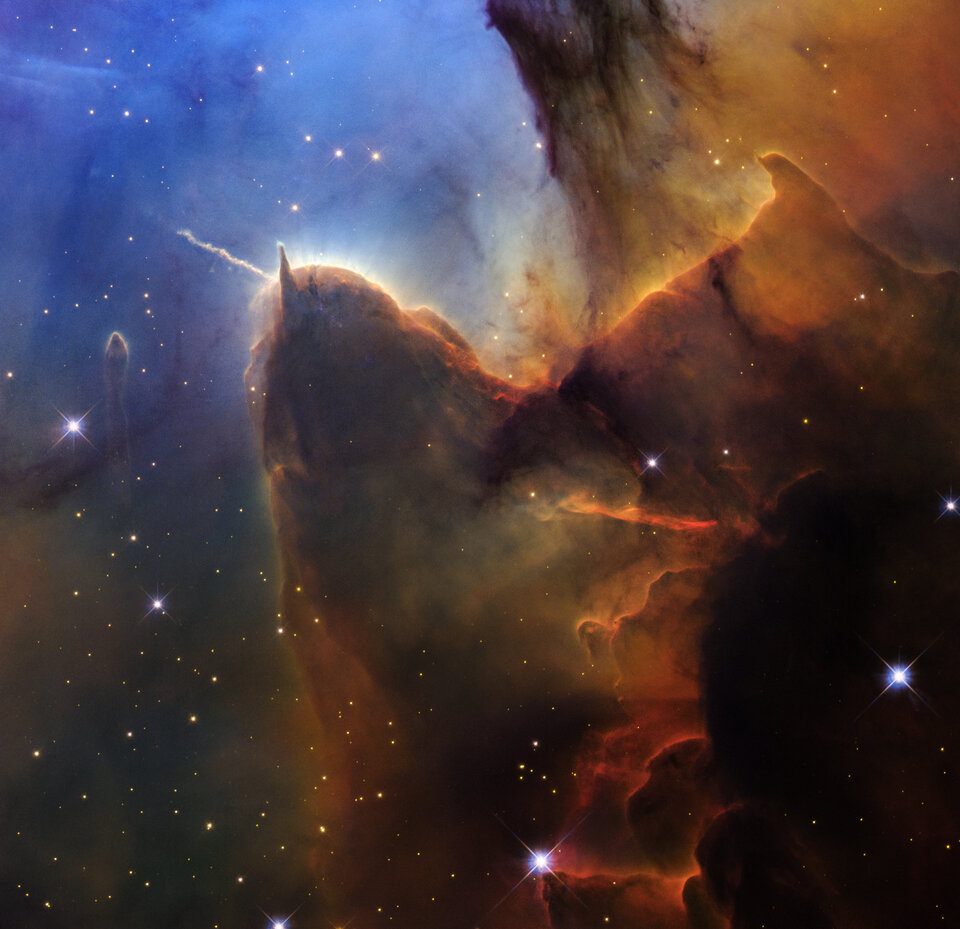
In the new image, a mesmerizing orange cloud lining shows where intense ultraviolet radiation from a massive star strips electrons from nearby gas, making it glow. The stellar wind has removed some of the surrounding dust, as shown in the bright blue region where the dust is thinnest. The far right corner, which is almost pitch black, is where the dust is the thickest.
The conspicuous brown-shaped structure to the left of the center of the image is the “head” of the Space Sea Lemon. Its “body” is a rust-colored gas cloud. Between the two “corners”, yellow gas scatters outward like the glow of volcanic lava, as if something is being destroyed there. And that’s exactly what’s happening. According to the European Space Agency, these are areas where ultraviolet light is eating away at gas and dust.
The main peak, visible to the left of Sea Lemon’s head, is accompanied by a jet of high-energy gas. This region is part of a Herbig Halo (HH) object called HH-399, and the jets are emitted by a baby star inside Sea Lemon’s head. (HH objects are bright regions of nebulae produced by the powerful jets of newborn stars.)
The researchers compared the new observations with images from 1997 and actually observed the jet as it expanded. This change allows scientists to estimate the speed of the jet, revealing how much energy the young star is injecting into its surroundings. There is also a thick streak of bright orange and fiery red material that appears to be expanding to the right. This could be a jet ejected from another newly formed star.
Bright orange stars scattered throughout the scene have already won the battle against the nebula. They are fully formed, their light and stellar winds sweeping the space around them. Over the next several million years, the remaining stars buried in the nebula will do the same. The gas and dust gradually disappear, leaving only the stars.
In this image, Hubble not only celebrates 36 years of operation, but also puts its improved capabilities on full display. The newly opened Vera C. Rubin Observatory, located in Chile’s Atacama Desert, also captured the Trifid Nebula, which looks like a giant cotton candy cloud in its first images.