
U.S.-Europe fusion agreement extends Wendelstein 7-X research for another 10 years
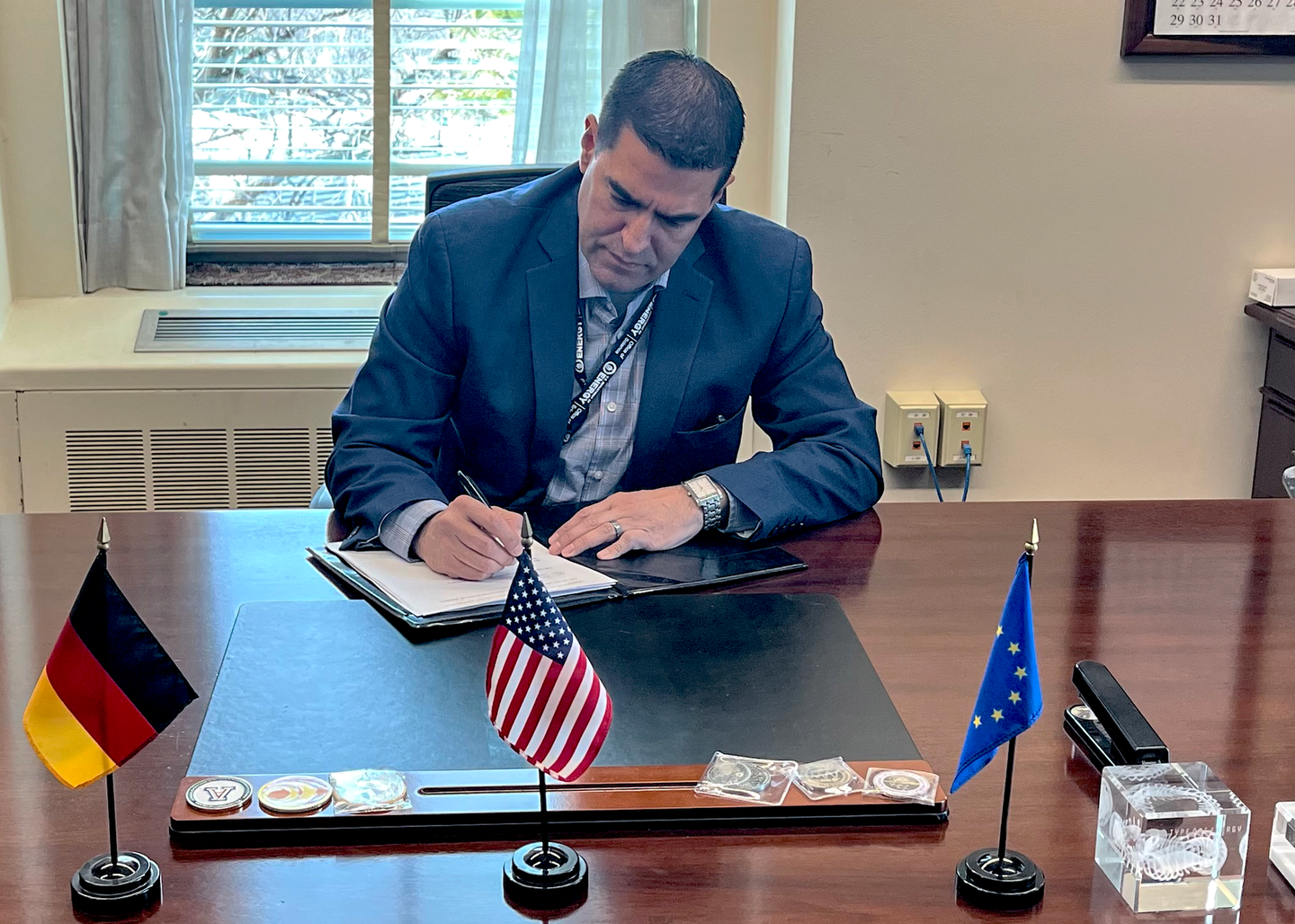
The Wendelstein 7-X program enters a new phase after the U.S. Department of Energy (DOE) and Germany’s Max Planck Institute for Plasma Physics (IPP) formalize a 10-year research agreement to continue joint research on advanced fusion energy systems.
The agreement establishes a long-term framework for collaboration between U.S. and European scientists working on Wendelstein 7-X, the flagship stellarator experiment based in Germany.
It is also the first initiative launched under a new joint project model between the United States and the European Commission, aimed at simplifying and standardizing international fusion partnerships.
The result is a more streamlined path to large-scale scientific collaboration, reduced administrative barriers, and accelerated progress toward commercial fusion energy.
Researchers are looking forward to new efforts to strengthen experimental results and deepen technical exchanges between institutions involved in the Wendelstein 7-X project.
Jean-Paul Allan, director of DOE’s Office of Fusion, commented: “This agreement reflects our deep commitment to international partnerships that accelerate progress in fusion energy.
“The cooperation between the United States and IPP on Wendelstein 7-X has already been highly productive for more than 20 years, and this agreement moves us forward into the next decade and beyond.”
Strategic enhancement of Wendelstein 7-X research
Wendelstein 7-X is widely known as one of the most advanced stellarator experiments currently in operation.
Unlike tokamaks, which rely on pulsed magnetic confinement, stellarators are designed to continuously maintain a stable plasma state. This makes it a promising candidate for future power generation.

Since its first plasma in 2015, Wendelstein 7-X has delivered a series of high-performance results, demonstrating improved plasma confinement and stability. These achievements strengthen confidence in the stellarator concept as a viable route to net energy gain.
The new agreement will ensure that this progress continues uninterrupted. By locking in a decade of coordinated research, scientists can pursue long-term experimental campaigns and refine reactor designs more consistently.
The Expanding Role of Princeton Research Institute
A key contributor to the Wendelstein 7-X effort is the Princeton Plasma Physics Laboratory (PPPL), which is involved across multiple aspects of the project, including diagnostics, engineering systems, and scientific analysis.
PPPL researchers have played a key role in interpreting experimental data and developing tools to improve plasma performance. Their involvement reflects the United States’ broader participation in international fusion research, where expertise and infrastructure are shared across borders.
The new framework formalizes this contribution and ensures that U.S. laboratories remain integrated into the evolution of Wendelstein 7-X. It also creates opportunities for deeper integration with European teams working on related convergence technologies.
A new model for international fusion collaboration
Beyond its scientific goals, this agreement brings structural changes to the way large-scale research partnerships are managed.
A new project framework between the United States and the European Union is designed to reduce duplication, standardize compliance processes, and expedite project approvals.
This approach addresses a long-standing bottleneck in international science: complex administrative requirements that can slow collaboration. Establishing a consistent legal and operational template will help launch future partnerships more efficiently.
For Wendelstein 7-X, this means faster implementation of upgrades, easier coordination between institutions, and better oversight of joint research activities.
Impact on commercial fusion energy
The long-term goal of Wendelstein 7-X is to demonstrate that stellarators can form the basis of commercially viable fusion power plants. Nuclear fusion has yet to achieve large-scale, sustained net energy output, but experiments like W7-X are closing the gap.
Expanding partnerships support this trajectory by enabling continued experimentation and technology refinement. This also coincides with growing interest from private fusion companies seeking access to established research infrastructure and expertise.
Facilities linked to PPPL and its partners are expected to play a role in this ecosystem, providing testing environments and technical support without the prohibitive costs of building stand-alone reactors.
Wendelstein 7-X continues its momentum
Wendelstein 7-X is positioned to remain at the forefront of stellarator research, with a 10-year collaboration guaranteed. This agreement not only strengthens transatlantic scientific connections, but also provides a template for future fusion partnerships around the world.
As fusion research moves closer to commercialization, frameworks like this could determine how quickly breakthroughs are translated into real-world energy solutions.
For now, Wendelstein 7-X remains an important testbed and centerpiece for the next generation of fusion innovation.
Source link

