
New $7 million research center in Colorado targets safer PFAS destruction technology
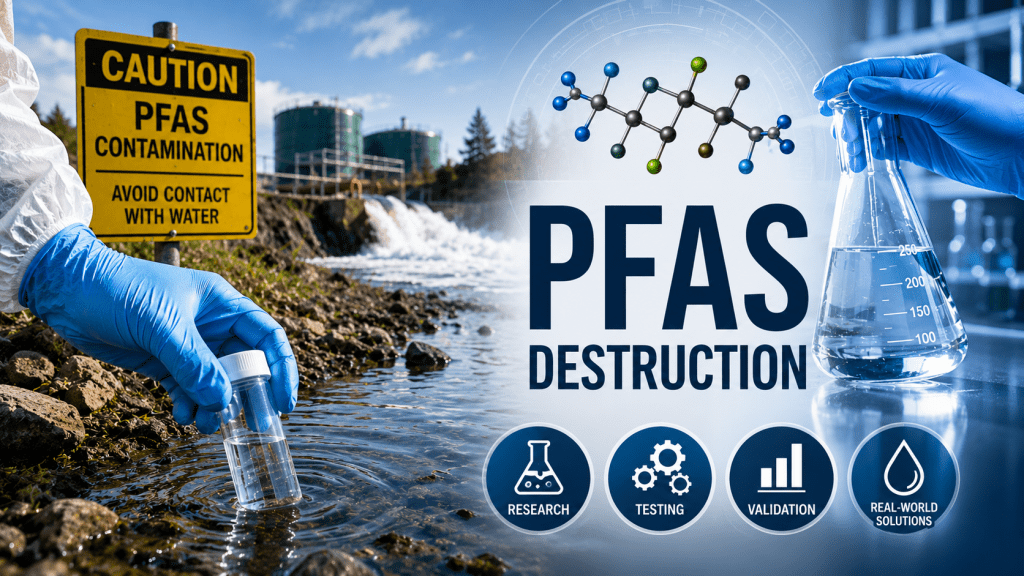
A new federally funded research center led by the Colorado School of Mines aims to accelerate the development of safer and more effective PFAS destruction technologies as concerns about permanent chemicals continue to grow around the world.
The effort has received $7 million in funding to evaluate new treatment systems and provide independent scientific guidance to communities addressing PFAS contamination.
The project, called the PFAS Remediation Technology Engineering Center (PFAS RiTE Center), will bring together researchers, engineering companies, and environmental experts to assess how well current and new PFAS destruction methods work outside the laboratory.
The center is funded through the Environmental Security Technology Certification Program (ESTCP) within the U.S. Department of Defense.
The initiative comes amid growing regulatory pressure and public concern over pollution associated with per- and polyfluoroalkyl substances, commonly known as PFAS.
Researchers working on the project say their goal is to help decision makers identify scalable and cost-effective remediation strategies that completely destroy PFAS rather than relocate contamination.
Growing demand for reliable PFAS destruction solutions
PFAS chemicals are widely used in industrial and consumer products because they are resistant to heat, water, and grease. These are commonly found in firefighting foam, electronics, batteries, nonstick coatings, and some medical devices.
They are also chemically stable, making them one of the most difficult environmental pollutants to remove. PFAS compounds can persist in soil and water for decades, contaminating drinking water supplies and ecosystems in both urban and rural areas.
As governments tighten environmental regulations and contamination cases increase, there is increasing pressure to develop remediation systems that can permanently remove PFAS chemicals.
Researchers at the PFAS RiTE Center say many local governments currently lack reliable data on which technologies can safely achieve their goals at scale.
The center will address this gap by providing standardized testing protocols, independent performance evaluations, and technical guidance for organizations evaluating PFAS destruction systems.
Concerns grow over existing cleanup methods
Current PFAS treatment approaches often rely on separation techniques such as activated carbon filtration. Although these systems can remove PFAS from contaminated water, they still produce concentrated waste streams that must be disposed of.
In many cases, that waste is sent to landfills or incinerators, raising questions about whether the chemicals are truly being removed or just being moved elsewhere in the environment.
Researchers have also identified concerns about byproducts produced during some PFAS destruction processes. A recent study conducted by the Colorado School of Mines and North Carolina State University highlighted the potential risks posed by products of incomplete fracture known as PID.
These airborne compounds can persist in the environment and pose additional remediation challenges if treatment systems fail to fully degrade the original PFAS chemicals.
The PFAS RiTE Center will evaluate whether emerging technologies can achieve complete PFAS destruction while maintaining economics and energy efficiency.
National cooperation to advance PFAS destruction
The new center will establish a peer review framework to assess the readiness and performance in the field of both established and emerging treatment technologies.
Planned activities include pilot-scale testing, independent validation studies, identifying critical data gaps, and developing standardized assessment methods for PFAS destruction systems.
The researchers also plan to create online resources and technology roadmaps to support governments, utilities and environmental managers.
Academic partners participating in this effort include North Carolina State University, Texas Tech University, University of Minnesota, and Florida International University. Industry collaborators include Geosyntec, GSI Environmental, AECOM, CDM Smith, and Jacobs.
Project leaders said the center will begin gathering input from developers of PFAS separation and destruction technologies later this year as part of a broader effort to accelerate the deployment of safer remediation systems across the United States.
Source link

