
Scientists race to understand the health risks of microplastics
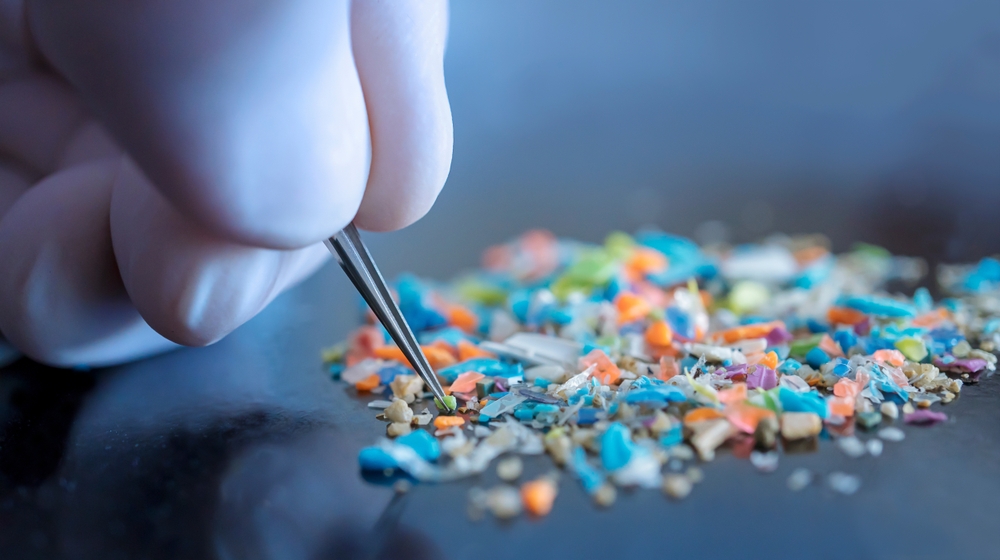
From urban air to drinking water, it is becoming impossible to avoid microplastics. EU-funded researchers are currently investigating how these tiny particles interact with our bodies and assessing their long-term health effects.
Those who visited Utrecht’s Wilhelmina Park in the summer of 2023 may have encountered the unusual sight of volunteers cycling for science on stationary bikes.
Bicycles were placed in different parts of the park. This could be in the center of a park, on the side of a busy road, or at an intersection where cars frequently stop and start. The aim was to observe how the body reacts to pollution.
After the ride, the researchers analyzed the cyclists’ blood to look for changes in white blood cells associated with exposure to small plastic particles in the air.
These particles, known as microplastics, are now found almost everywhere. Tires fall off as vehicles move, synthetic materials degrade over time, and plastics remain in the environment long after they are disposed of.
A Dutch study found that breathing contaminated air containing these particles can temporarily affect the immune system. All the volunteers were healthy and recovered quickly, but the discovery raised an even bigger question: What happens after years of repeated exposure?
“We know that people are exposed all the time,” said Dr. Raymond Peters, an immunotoxicologist at Utrecht University. “What we don’t know yet is what that means in the long term.”
Understanding the health effects of microplastics
Peters led a four-year research initiative called POLYRISK, which was funded by the European Union and ended in September 2025. His team, in collaboration with a network of European research institutions, set out to better understand how microplastics and nanoplastics (MNPs) enter the body, at what levels we are exposed to them, and whether and how they affect the immune system over time.
The scale of the problem is grave. It is estimated that the equivalent of 200 to 600 Olympic-sized swimming pools of microplastics are released into the environment each year. They have been detected in the ocean, drinking water, and even the air we breathe.
In response, European policymakers are stepping up efforts to tackle the problem at its source, targeting both intentionally added microplastics and microplastics produced by the breakdown of plastics. The goal is to reduce pollution by 30% by 2030 as part of a broader effort to protect health and the environment.
chronic exposure
Although the extent to which MNPs can cause health problems is not yet fully understood, we do know that we are constantly exposed to health problems.
“We are exposed through the food we eat, the water we drink and the air we breathe,” said Alba Hernández, a toxicology researcher at Spain’s Autonomous University of Barcelona. “However, it is still unclear which route is the most important or most harmful.”
Hernandez also led a parallel research effort in Europe called PLASTICHEAL, which investigated the effects of plastic in the body on human health.
By exposing cells to MNPs and developing new methods to detect them in human samples, her team discovered early signs of inflammation, DNA damage, and other forms of cellular stress. These are not diseases in themselves, but warning signs.
One theory is that repeated exposure causes low-level inflammation in the body, small “fires” that build up over time and can contribute to chronic disease or develop diseases such as cancer.
At the same time, detecting the smallest particles remains a major challenge. Some are hundreds of times thinner than a human hair and cannot be seen with a standard microscope, making them difficult to track both in the environment and in the body.
trojan horse effect
Microplastics can also pose more indirect risks. As it ages, its surface becomes rougher and more susceptible to picking up environmental toxins such as traffic-related pollutants, heavy metals, and even bacteria and viruses.
“They’re good at attracting substances from the environment,” Hernandez said. “And when you inhale or ingest these particles, you also take in all the other substances.”
Scientists call this the “Trojan Horse” effect. In this case, plastic particles act as a medium, transporting potentially harmful substances into the body.
It is still unclear how significant this effect is. Researchers still don’t know how much plastic humans typically absorb, which types are most harmful, and how different pollutants interact once in the body.
Researchers also discovered that once inside the body, even the tiniest particles can be taken up by immune cells known as macrophages, which are literally “gluttons.” These cells normally take in and break down harmful substances, but plastics are not easily digested.
“Macrophages can take them up, but they can’t break them down,” Peters says. “The particles can also be absorbed and travel through the body, but we don’t know what effects they have.” Some studies suggest they can accumulate in tissues such as the liver, kidneys, and fat.
concerted effort
To address these issues, the EU has funded five different research initiatives working together in parallel within the framework of the European Research Cluster for Understanding the Health Impacts of Micro- and Nanoplastics (CUSP).
Each CUSP initiative focuses on a different stage of the journey. Together, they provide a more complete picture of how these invisible particles can affect human health over time, from exposure to impact.
While Hernández’s research focused on detecting plastic in the body and assessing its health effects, other teams are focusing on more specific health issues. One is investigating whether microplastics may play a role in allergic diseases, and the other is investigating how exposure during pregnancy and childhood affects development.
Coordinated by UK-based research consultancy Optimat, the PlasticsFatE research team brought together 28 partners from 11 European countries to investigate how plastic particles behave in the body, tracking how they move through organs, what they carry, and how they accumulate over time.
PlasticsFatE researchers have developed a laboratory model that mimics human organs such as lungs and intestines, allowing them to study how particles behave without experimenting on humans.
“We built tissue cultures to mimic what happens in the real world,” said Mark Morrison, who coordinated the study.
Their findings suggest that some plastic particles can cross the intestinal barrier and enter the bloodstream, reaching other organs.
For most healthy adults, current evidence suggests that low-level exposure is unlikely to cause immediate harm. But scientists remain concerned about the long-term effects, especially on more vulnerable populations.
For example, people with diseases such as inflammatory bowel disease may be more susceptible. In these people, the intestinal barrier may be less effective, making it easier for particles to enter the bloodstream.
measurement problems
One of the biggest challenges is understanding how much plastic we are exposed to.
“We don’t yet have reliable tools to measure what’s in our environment, in our food, in our bodies,” Hernandez says. “That makes it very difficult to assess the risk.”
The problem is complicated by the wide variety of plastics available. Different types behave differently, such as polyethylene, polypropylene, and polystyrene, and the additives used to color and strengthen plastics can themselves have health effects.
Some researchers believe that plastic particles may be less harmful than the substances they contain.
“It’s not just the particles themselves,” Morrison says. “That’s what they transport. They can function like a conveyor belt for other chemicals.”
Despite uncertainty, don’t be afraid to act
Interest in these findings is growing, including within the industry, as companies anticipate future regulations. At the same time, international efforts to tackle plastic pollution continue.
Negotiations on a global plastics treaty have stalled in 2025, despite organizations such as the United Nations Environment Program and the Lancet Plastics and Health Commission warning that plastic pollution is a growing health concern.
To integrate these elements, CUSP researchers created a roadmap for next steps. Published in 2025, the book highlights the biggest knowledge gaps, from how much plastic we are exposed to to how the smallest particles behave in our bodies, and lays out priorities for future research.
One message stands out. That means we shouldn’t let uncertainty cause us to delay action.
Although there is no complete answer, CUSP scientists argue that reducing exposure to microplastics now could help limit potential risks in the future.
“We already have enough information to be concerned,” Hernandez said. “We shouldn’t wait until we have all the answers. We should act now.”
This article was originally published in Horizon, EU Research and Innovation Magazine.
The research for this article was funded by the EU’s Horizon program.
Source link

