
Former Tesla executive and Heron Power CEO Drew Baglino launches heat pump startup
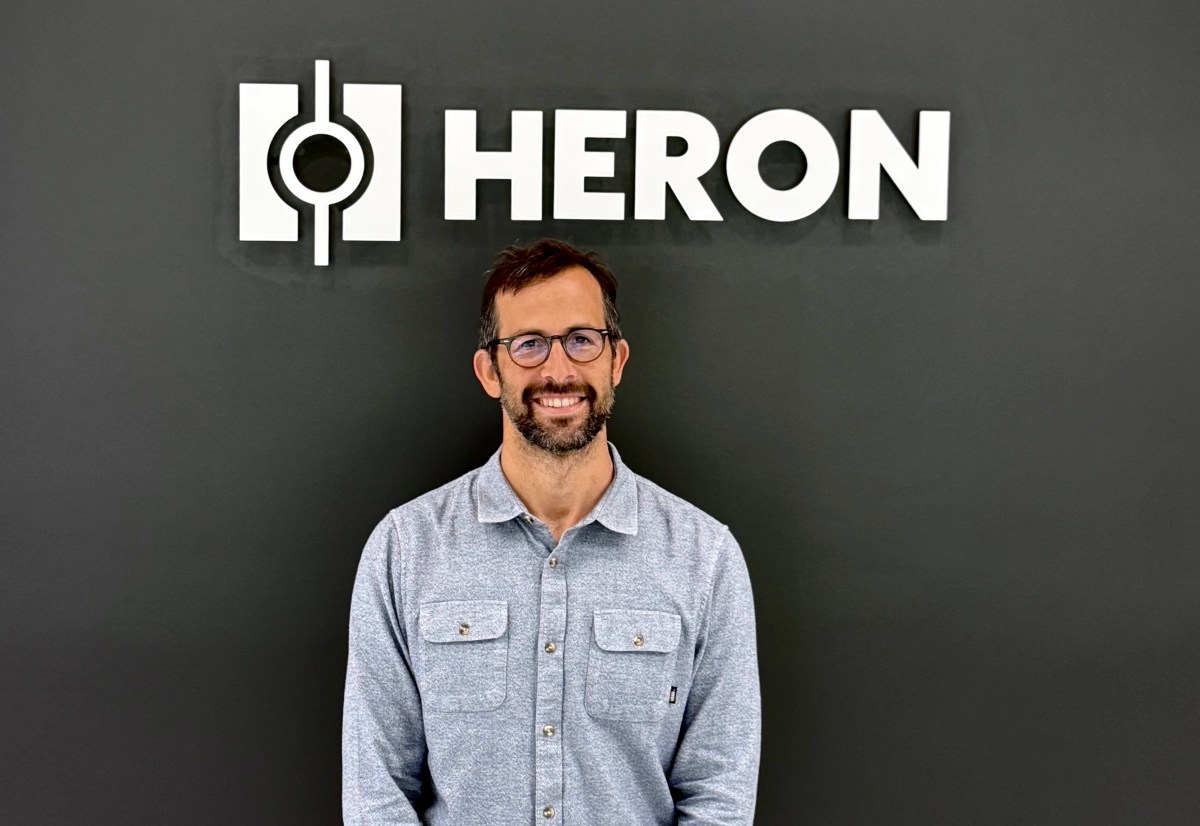
Former Tesla executive Drew Baglino secretly founded a heat pump startup, TechCrunch has learned.
This is the second company Baglino has founded in the two years since leaving Tesla. Sources have confirmed the existence of a startup called Sadi Thermal Machines, and TechCrunch reviewed the company’s filings in Delaware and California.
Sadie was founded in June 2025 and shares its headquarters in Scotts Valley, Calif., with Heron Power, a start-up that sells solid-state transformers also founded by Baglino, according to company filings.
The company’s name is apparently a nod to Nicolas Léonard Sadie Carnot, the pioneering French physicist who formed the basis of modern thermodynamics such as the internal combustion engine and heat pumps. Little is known about Sadi Thermal Machines, but the company appears to employ several Tesla graduates, according to reviews on LinkedIn and sources familiar with the startup.
TechCrunch was unable to reach Baglino or the PR firm representing Heron Power. This article will be updated if they respond.
Before founding Heron Power and Sadi Thermal Machines, Baglino spent nearly 20 years at Tesla, working on everything from the original Roadster to the Powerwall and Powerpack energy storage systems. When Baglino left Tesla in April 2024, he was promoted to senior vice president and oversaw the development of the company’s core energy technologies, including electric motors, batteries and power electronics.
Along the way, Baglino worked on Tesla’s heat pumps. He is listed as the inventor of a patent for a thermal management system that operates two cooling loops, one to cool the battery and one to cool drivetrain components.
To manage the two loops, Baglino and his teammates developed three-way and four-way valves that give an EV’s thermal management system greater control over the temperatures of various components. Such a system would allow Tesla, for example, to collect heat from the traction motor and use it to preheat the battery to ensure optimal performance during fast charging in cold climates.
The patent reveals some of the design principles that form the basis of Tesla’s “octovalve” system, which first appeared in the Model Y. The vehicle’s heat pump manages the temperature of the cabin, battery, and motor, all in a package the size of a suitcase.
At the time of its debut, Tesla’s Octovalve system was more advanced than its competitors’ systems, and for at least a short period of time, the company was considering developing heat pumps for residential and commercial use. Tesla executives, including Baglino and CEO Elon Musk, pondered such a system during the company’s 2022 earnings call. We discussed heat pumps that handle both HVAC and hot water.
“From a mission standpoint, it’s very aligned,” Baglino said. “We’ve learned a lot about how to make high-performance, reliable heat pumps that work in all environmental conditions, and we’re excited about the idea of tackling that problem one day. Let me say that. It’s definitely in line with our mission to accelerate the transition to sustainable energy.”
It would be easier to build a heat pump for home use, he added. “It’s harder in the car,” he said. “It’s very limited in mass, volume, and energy.”
But Musk then added one of his famous qualifiers. “That’s what we’ll do, but we’re not committing to a deadline at this point,” he said. Tesla has not yet released a residential HVAC or hot water system.
“People should do it anyway,” Baglino said on a conference call. With Sadi Thermal Machines, he seems ready to make that statement a reality.
If you buy through links in our articles, we may earn a small commission. This does not affect editorial independence.
Source link

