
Who turned the lights on? The modern impact of light pollution on the night sky
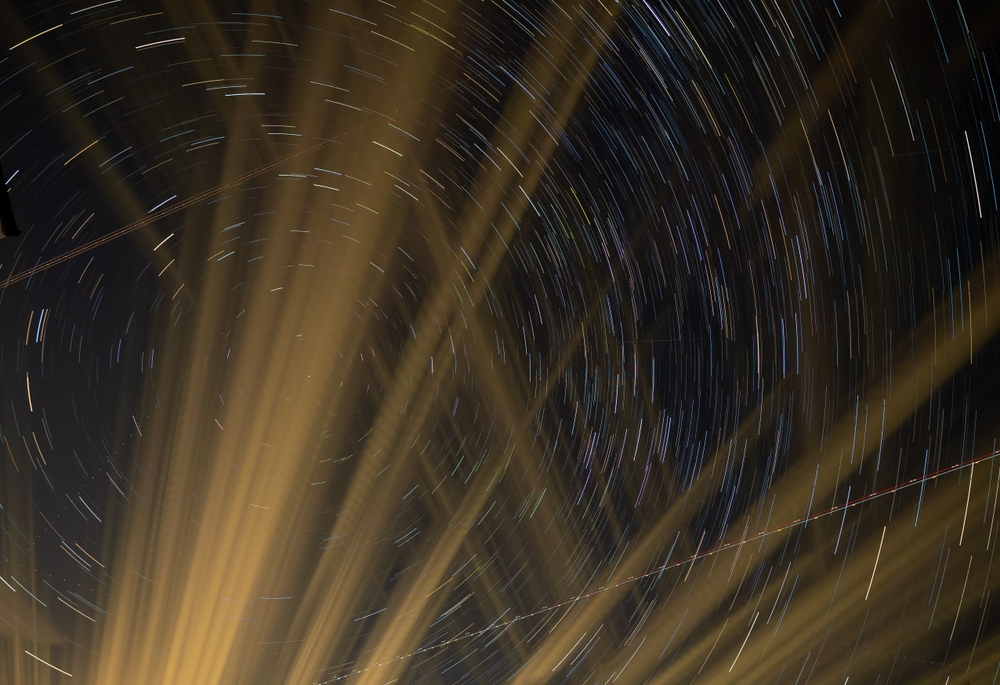
3S Northumbria examines the growing issue of light pollution, highlighting its impact on the visibility of the night sky due to both terrestrial sources and the increasing presence of satellites
For millenia, when humans looked upwards to the night sky, they would see the multitude of stars that surround our planet. They would see the evening ‘star’ of Venus on the horizon. They would see the ephemeral streak of our own galaxy, the Milky Way, and understand the meaning of its name. But too many of us now cannot see these wondrous things. Instead, they see inky blankness, a featureless abyss save for the silver of the moon, their eyes saturated by the lights of streets, buildings and cars. Or perhaps they see the orange haze of city glow, the unmistakable fingerprint of a town still using sodium lights. Their eyes may catch a shooting star, or was it just a satellite? The future of commercial space is looking bright, but at what cost?
A bright future?
Global trends of light pollution are difficult to determine. Astronomers, those who are most affected by bright skies and have the resources to accurately measure background sky light levels, purposely build observatories in remote and dark places. As a result, they are neither numerous nor spatially disparate enough to determine a truly global trend. Satellite observations are usually used, notably NASA’s Dark Marble project, which uses the Suomi National Polar-orbiting Partnership (NPP) satellite’s Visible Infrared Imaging Radiometer Suite (VIIRS).
This project highlighted a stark difference geographically; Europe seems to be getting darker whilst newly industrialised countries like India and China are brightening. However, it is not this simple. Kyba et al. (2023)1 determined that the specific sensor used for Black Marble was limited in its abilities, specifically in its sensitivity to shorter (bluer) wavelengths of light. As alluded to earlier, sodium lights are rapidly phasing out of fashion in places like Western Europe and moving to more efficient LEDs.2 In short, the light is changing from orange to cool, blue-white. Therefore, the dimming of Europe may not be happening as much as once thought: whilst long red wavelengths are decreasing, blue light is growing.
A different approach to determining the impact of light is using humans and their biological light sensors – eyes. This methodology was utilised in Kyba et al., getting participants to compare their night skies to reference images of known light pollution amounts1 (various light pollution amounts shown below). They found Europe’s night is brightening too, at a rate of ~10% a year.
The change in the colour of the light does not only cause an underestimation of absolute brightness levels. It also has stark consequences for the perception of the subsequent light pollution. The human eye is more sensitive to blue light in dark conditions; therefore, these new lights appear brighter to observers.
Is it a star? Is it a meteor? No, it’s a satellite
We have discussed how terrestrial light pollution inhibits free and uninterrupted access to the night sky, and a decade ago, that would be all there is to say. However, the dawn of a new space age has begun, and the commercialisation of space is in full swing.

This brings an armada of satellites and a new attitude towards space. Space actions are now having observable impacts on the general public through light pollution from on high. Terrestrial light pollution increases ambient light levels, producing a kind of fog in the night sky. Space-based light pollution is focused; it is targeted and, as such, has a different effect. Whilst a satellite wouldn’t prevent an observer on Earth from seeing the celestial sphere, it does subtract from the experience. As the most visible satellites orbit quite low, they move rapidly across the night sky, constantly flashing in and out of existence. Most famous are the Starlink trains (below), rows of moving dots in the sky which are actually Starlink satellites just after launch, before they spread out for operational use.3

But what is space-based light pollution? It is simply sunlight reflected from satellites down towards the Earth. At this point, self-luminous satellites are neither bright nor numerous enough to have any sort of effect on Earth for the human eye. As the light is not intrinsic to the satellite, it ceases to occur if they are hidden from the Sun, which occurs when they are in the Earth’s shadow. But night is also caused when in the Earth’s shadow, so how could satellites ever pose an issue for someone looking to the stars? Surely the satellites go dark when the sky does?
The issue lies in the geometry of the situation. The further away you are from a sphere (or black marble, say), the more of the spherical surface that can be seen. If an observer on the surface of the Earth looked around themselves, they would be able to see very little of the planet. But from the Moon, an observer would be able to see practically an entire hemisphere of Earth, seeing a bit of the day half and a bit of the night half simultaneously. The same is true for satellites, which orbit Earth much closer than the Moon. The effect is less extreme here, but it is possible for a satellite to be above a day point on Earth and yet be able to see over the terminator (the day/night transition line) to a point in night and thus have the chance of being seen. Pictures taken from the International Space Station (ISS, below) showcase this. The effect is that satellites that are further from Earth can be seen deeper into the night and appear as fast-moving stars.

A satellite’s position and orbital altitude do not fully determine its visibility, but it is one of the simplest methods to determine possible future impacts before launch. To truly predict the brightness of a satellite, so that actions can be taken to dim it, requires using a model for its surface reflectivity, a task that often calls for approximations.
Model a satellite as a spherical cow
To model opaque material reflections, the so-called Bidirectional Reflectance Distribution Function (BRDF) is employed. This is a function which describes the ratio of light coming in from some initial direction to the reflected light in any other direction (two directions hence bidirectional). It sounds trivially simple; the law of reflection states that the angle of incidence is equal to the angle of reflection. And this is true, called a specular reflection, for mirror surfaces. The BRDF of a mirror is zero everywhere apart from the classic angle of reflection, where it is one. But most materials are not mirror-like. Take, for instance, a white piece of paper. No one is using an A4 sheet to check their appearance, as it exhibits little to no specularity. Instead, it is often used as the archetypal example for diffusivity, a type of reflection where the intensity of the reflected light has no dependence on the angle of the observer. Such a perfect diffuse reflector has a BRDF of a constant value across all angles. In general, materials are some combination of specular and diffuse, producing a BRDF as seen below: a specular peak at the angle of reflection, with a diffuse baseline above zero and a transitionary blur between the two regimes.

The exact form of the BRDF model used varies from fast and overly simplistic (the spherical cow approach) to computationally expensive but highly accurate. Different uses call for these different approaches – with the large number of satellites in space (>10,000), being fast is key.
But why even bother considering a BRDF? Surely the brightness of the satellites can be directly measured like the stars they mimic? And yes, this is true. For instance, the International Astronomical Union’s (IAU) Centre for the Protection of the Dark and Quiet Skies (CPS) collates ground observations of satellites, recording their magnitudes (a system of brightness astronomers use). But crucially, this method can only inform in retrospect; once a satellite is up in space, it cannot be brought back down to make it darker. Therefore, to determine the possible impact of a satellite and whether any brightness mitigations would work requires this prelaunch data acquisition and modelling.
Roll like a stone and paint it black
Having methods to model a satellite’s brightness is very useful for prediction, ensuring that astronomers, both professional and amateur, can know in advance if any bright satellites could interfere with their observations. It also enables testing of dimming methods, measures taken to reduce the brightness of satellites, which are many and varied.
A deceptively simple way to make things darker is to simply paint them black, a method which is actually being tested.4 It does work as would be expected with less light reflected by the surface, but has some undesirable consequences. Light is a form of energy, and energy can neither be created nor destroyed. Therefore, the light that is no longer reflected has to go somewhere else, so it is absorbed by the satellite as heat, which can raise a satellite’s temperature dramatically and increase thermal stresses. This has knock-on effects for satellite operators and astronomers. The extra heat reduces the efficiency of the satellite and can even cause electronics to break. Also, whilst no longer as visible in the optical light regime, the satellite is like a beacon in infrared. So whilst simple, it’s not a great solution to apply a quick coat of pitch just before launch. Where it can be used is on the ends of antennae or particularly shiny, small parts of the satellites, which reduces the worst of the glare without overheating.
Another option is to change the type of reflection the surface exhibits. Making the surface shinier strengthens the specular peak at the cost of reducing the diffuse offset. Doing so makes the satellite fainter most of the time: an observer is not very likely to be at the exact angle required. However, this means that when the rare occurrence of being within the specular peak happens, the satellite can be blinding (to telescopes). The inverted approach is to make the surface fully diffuse: completely remove the specular peak. This would make an orbiting body visible to practically all viewing angles, but also make its brightness very consistent and lower. Both approaches are currently being studied, with a preference towards specularity.
Instead of changing the intrinsic nature of the satellite, operational approaches can be utilised. These include orbiting at lower altitudes to decrease the length of time illuminated, or orienting particularly shiny parts of the satellite, like solar panels, away so as not to reflect onto Earth.
Minimising space-based light pollution is still a burgeoning field, but is perhaps essential when looking towards the future trends in space.
Looking up to look ahead
The commercialisation of space shows no signs of flagging. SpaceX’s Starlink is the largest commercial satellite constellation and continues to grow month on month. Currently, there are over 10,000 of their satellites operational.5 The total population is around 17,000.6 Additional mega-constellations are regularly applying for filings with the International Telecommunication Union (ITU, a body which assigns what frequencies a satellite can communicate over). For instance, in December 2025, China filed for almost 200,000 satellites across two constellations.7,8 Of course, just because a filing has been made does not mean that all 200,000 satellites would ever launch. But it still points to an ever-increasing rate of populating space. The United States Space Force, in their Future Operating Environment 2040 report, places the satellite population at over 60,000 by 2030. Whilst space-based light population at current levels is not overly noticeable to the naked eye, it can appear quite novel to some. With this constant growth in satellite numbers, perhaps at some point it will start to become difficult to see the real stars from the artificial ones for the general observer. Astronomy, however, is already having to deal with real impacts from space-based light pollution (example below).

The Vera C. Rubin Observatory was in development for over 20 years, coming online in 2025. It was designed to take deep, long exposure images of the entire night sky continuously, from horizon to horizon. When it was conceived, the concept of space becoming a commercial region replete with satellites was not thought of. But now they are having to develop approaches to ensure the images they take are still usable, with estimates that their Legacy Survey of Space and Time (LSST) could have about 10% of images containing at least one satellite streak in the future.9 The future of ground-based optical astronomy is unclear, but it’s not looking good.
The future isn’t all doom and gloom; the world is not powerless to curb the effects of light pollution on space. But crucially, space won’t get darker passively; Pandora’s box is already open, and there is too much money to be made above our heads to stop launching satellites. Active approaches are required.
Communities can and do advocate for those in power to reduce terrestrial light pollution through either regulatory or behavioural changes. For example, the city of Tucson, in Arizona, USA, didn’t merely convert to high-efficiency LEDs but also implemented smart usage – dimming the streetlights by 30% after midnight. The results speak for themselves: a 34% reduction in blue-light emissions and over a million dollars saved each year on energy costs.10
Space as a commercial entity is still quite new, with legal and regulatory frameworks still being codified. But already several satellite constellation operators are working with the astronomical community to minimise their effects (e.g. Starlink) through operational changes, such as orbit lowering. National space agencies are also working towards a darker sky. France’s CNES has a technical regulation on mega-constellations (RT 48-10), defining a brightest magnitude of seven. The European Space Agency (ESA) has working groups in its Zero Debris office to assess the technologies already out there that can help to make satellites fainter, and has published a booklet which codifies potential solutions at a high level.
Perhaps the future of space isn’t looking so bright after all.
References
Christopher C. M. Kyba et al. “Citizen scientists report global rapid reductions in the visibility of stars from 2011 to 2022”. In: Science 379.6629 (2023), pp. 265–268. doi: 10.1126/science.abq7781. eprint: https://www.science.org/doi/pdf/10.1126/science.abq7781 url: https://www.science.org/doi/abs/10.1126/science.abq7781
Georges Zissis, Paolo Bertoldi, SERRENHO Tiago RIBEIRO, et al. Update on the Status of LED-Lighting world market since 2018. 2021.
WhatWeGetFromThisAdventure – Own work, CC0, https://commons.wikimedia.org/w/index.php?curid=141205291
University of Surrey. Surrey NanoSystems and University of Surrey partner to combat satellite reflectivity and protect astronomy. url:https://www.surrey.ac.uk/news/surrey-nanosystems-and-university-surrey-partner-combat-satellite-reflectivity-and-protect-astronomy (accessed: 22/04/2026).
Jonathan McDowell. Starlink Statistics. url: https://planet4589.org/
space/con/star/stats.html. (accessed: 23/04/2026)
ESA. Space Environment Statistics. url: https://sdup.esoc.esa.int/discosweb/statistics/ (accessed: 27/04/2026).
ITU. e-Submission of Satellite Network Filings. url: https://www.itu.
int/ITU-R/space/asreceived/Publication/DisplayPublication/66789
(accessed: 26/04/2026).
ITU. e-Submission of Satellite Network Filings. url: https://www.itu.
int/ITU-R/space/asreceived/Publication/DisplayPublication/66794
(accessed: 26/04/2026).
Jinghan Alina Hu et al. “Satellite Constellation Avoidance with
the Rubin Observatory Legacy Survey of Space and Time”. In: The
Astrophysical Journal Letters 941.1 (Dec. 2022), p. L15. doi: 3847/2041-
8213/aca592 . url: https://doi.org/10.3847/2041-8213/aca592.
Dark Sky. NIGHTS OVER TUCSON: How the Tucson, Arizona, LED Conversion Improved the Quality of the Night. url: https://darksky.org/news/nights–over-tucson/ (accessed: 25/04/2026)
By NASA – https://www.flickr.com/photos
nasa2explore/33820675238/ Public Domain, https://commons.wikimedia.org/w/index.php?curid=78372017
Please Note: This is a Commercial Profile
Please note, this article will also appear in the 26th edition of our quarterly publication.
Source link

